
How to See Angkor Wat by Bicycle: A Self-Guided Itinerary
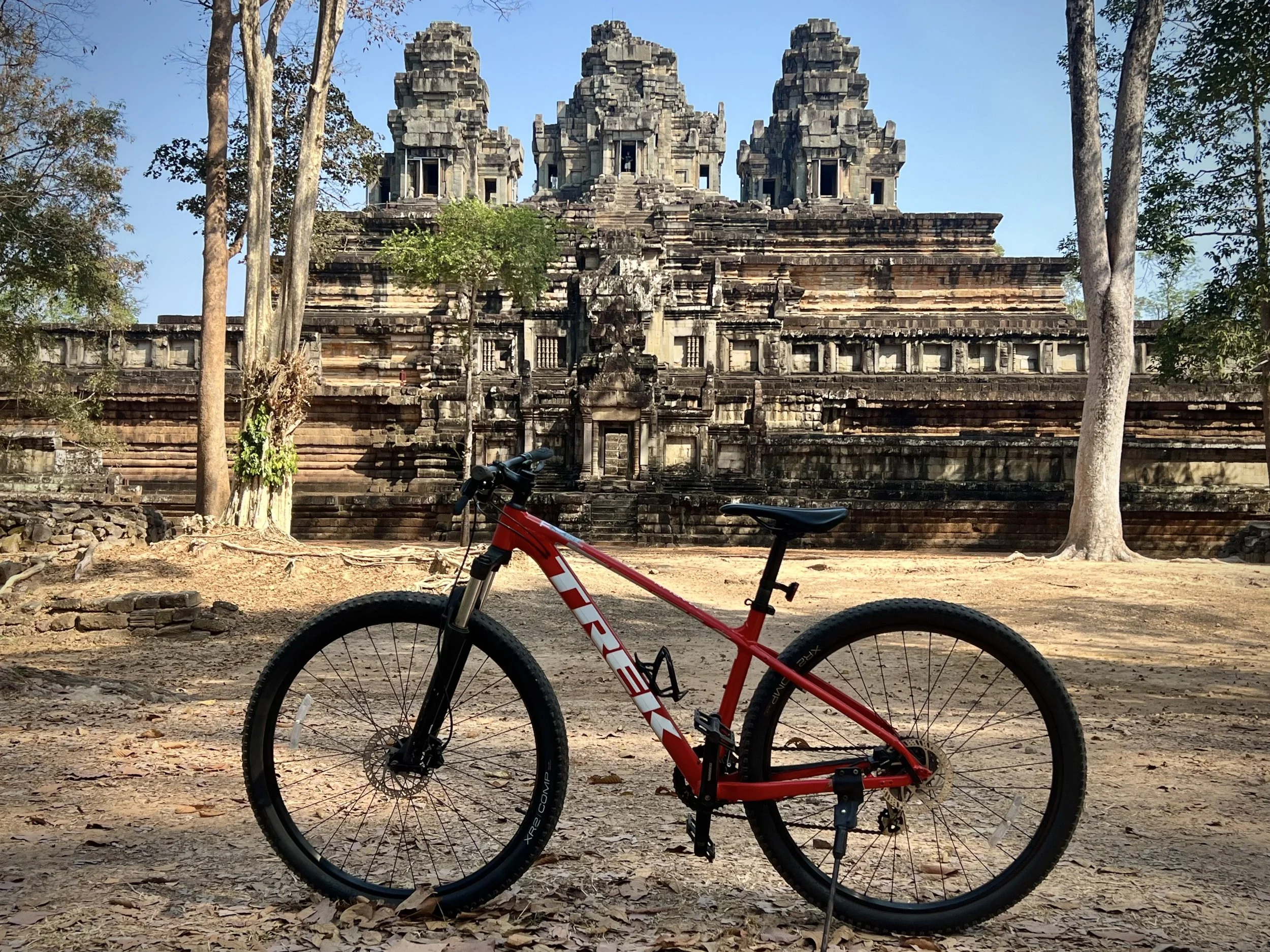
Most people who visit Angkor Wat pay up to $70 a day for a driver to take them around the same well-worn circuit to the same crowded sites that everyone else sees.
There’s a better way. A way that is cheaper, more flexible, and more rewarding. For just a few dollars, you can rent a bike and see all the famous ruins at your own pace as well as some others that the group tours rarely stop at, all while avoiding the worst of the crowds.
Here’s how to do it.
Bicycle Rental
This is the easy part. You have dozens of options. Pretty much any hotel or hostel in Siem Reap can arrange a bicycle for you, or you can inquire at any of the tour agencies around town. A basic beach cruiser bike will run you around $2 a day, but I highly recommend ponying up a few more dollars for a mountain bike. It’s a small price to pay that will give you greater comfort, as well as more options and flexibility later on.
Access
At the time of writing (September 2026), a one-day Angkor pass is $37 USD, a three-day pass is $62 USD, and a seven-day pass is $72 USD. These passes cover not just Angkor Wat itself, but almost all the major historic ruins inside the Angkor Archaeological Park (such as Bayon and Ta Prohm). Children under 12 years old enter for free if they show their passport. I recommend purchasing your pass ahead of time.
The itinerary featured in this guide is a two-day plan, but if you’re short on time, you could opt to do just one of the days.
Overview
The Angkor temple complex is actually dozens of sites spread across a fairly large area, and there are essentially two loops that everyone does: the small circuit and the big circuit. Now, here’s the trick — nearly everyone does the loops clockwise starting at the main Angkor Wat temple. But if you get an early start and do it in reverse, you’ll be arriving at places while most of the crowds are on the other side of the complex.
If you have time, I recommend doing both loops. I did the small loop on the first day, plus an optional add-on (more on that in a moment), and I did the big loop on the second day. The terrain is very flat, so it’s easy cycling no matter which option you choose.
The Small Loop
Cycling Distance: Approximately 35 km round trip from Siem Reap center.
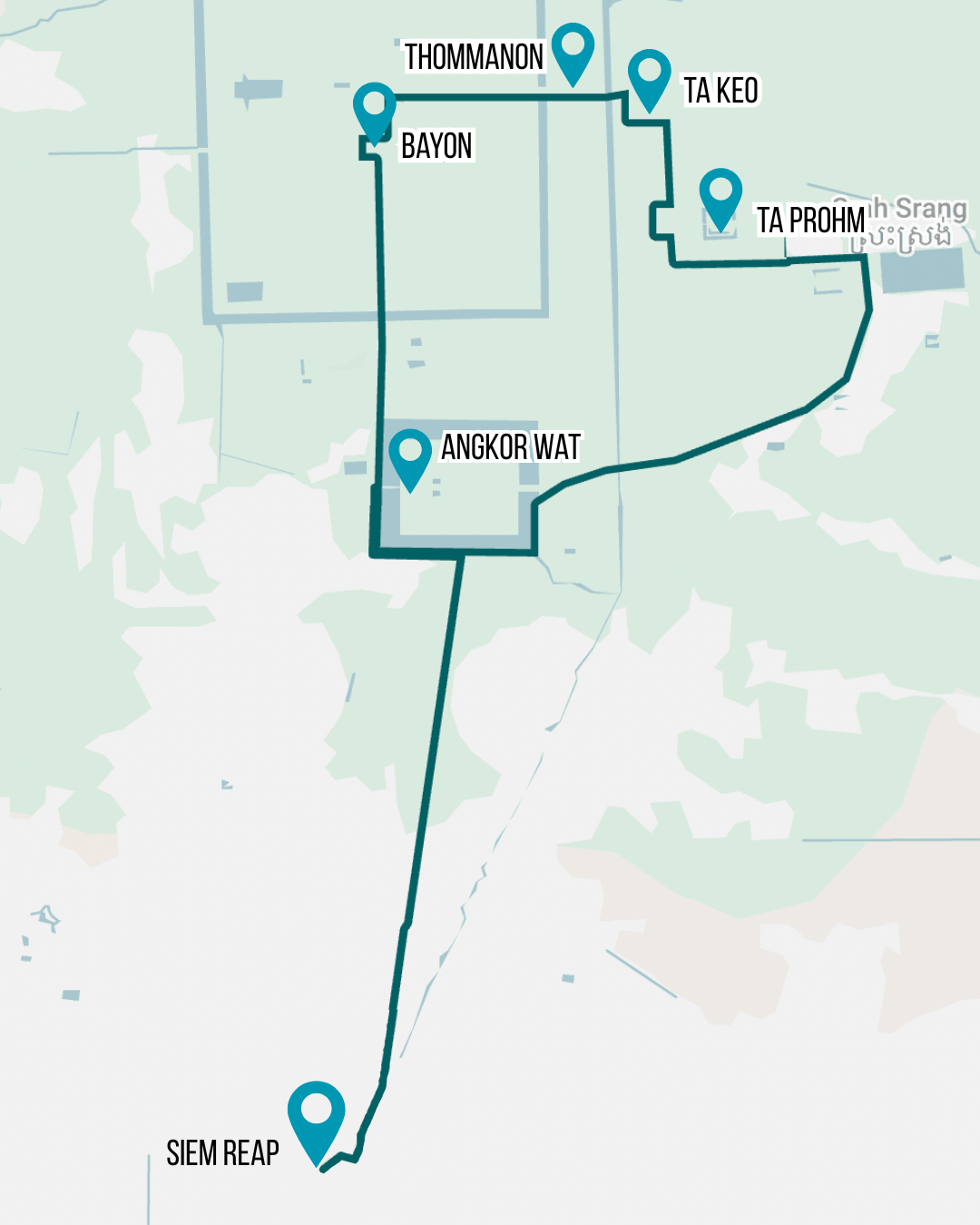
If you want to catch the sunrise from one of the ruins, you’ll need to get moving around 5:30 a.m., as it’s a 7-8km ride just to get into the temple complex from the city. You’ll be cycling in the dark initially, so make sure your rental bike is outfitted with a light, or bring your own headlamp.
Now, when I did this, I decided to brave the crowds at the main Angkor Wat temple for sunrise. I knew it would be crowded, but I did it anyway, because it’s supposedly one of the essential experiences at Angkor. Angkor Wat is one of the few temples in the complex that faces west, so at sunrise the sun rises directly behind its five towers instead of off to one side. The early start ensures you’ll get there in time, since the good spots along the water fill up fast and the light starts shifting well before the sun actually clears the horizon.
If you’re not too fussed about the sunrise, you could get a later start, bypass the main temple initially, and hit it on the way back later in the day when it’s likely to be less crowded.
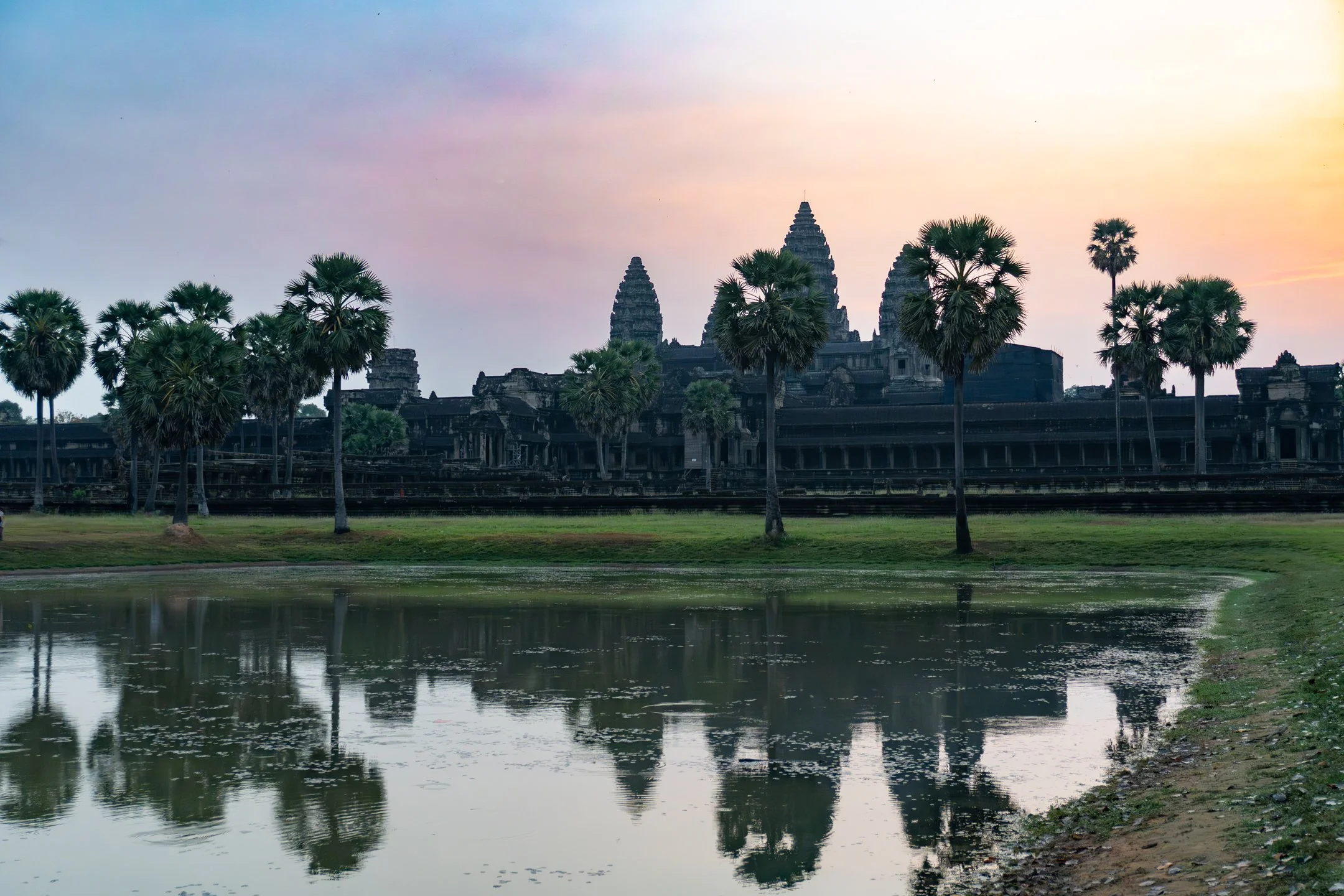
Sunrise at the main Angkor Wat temple
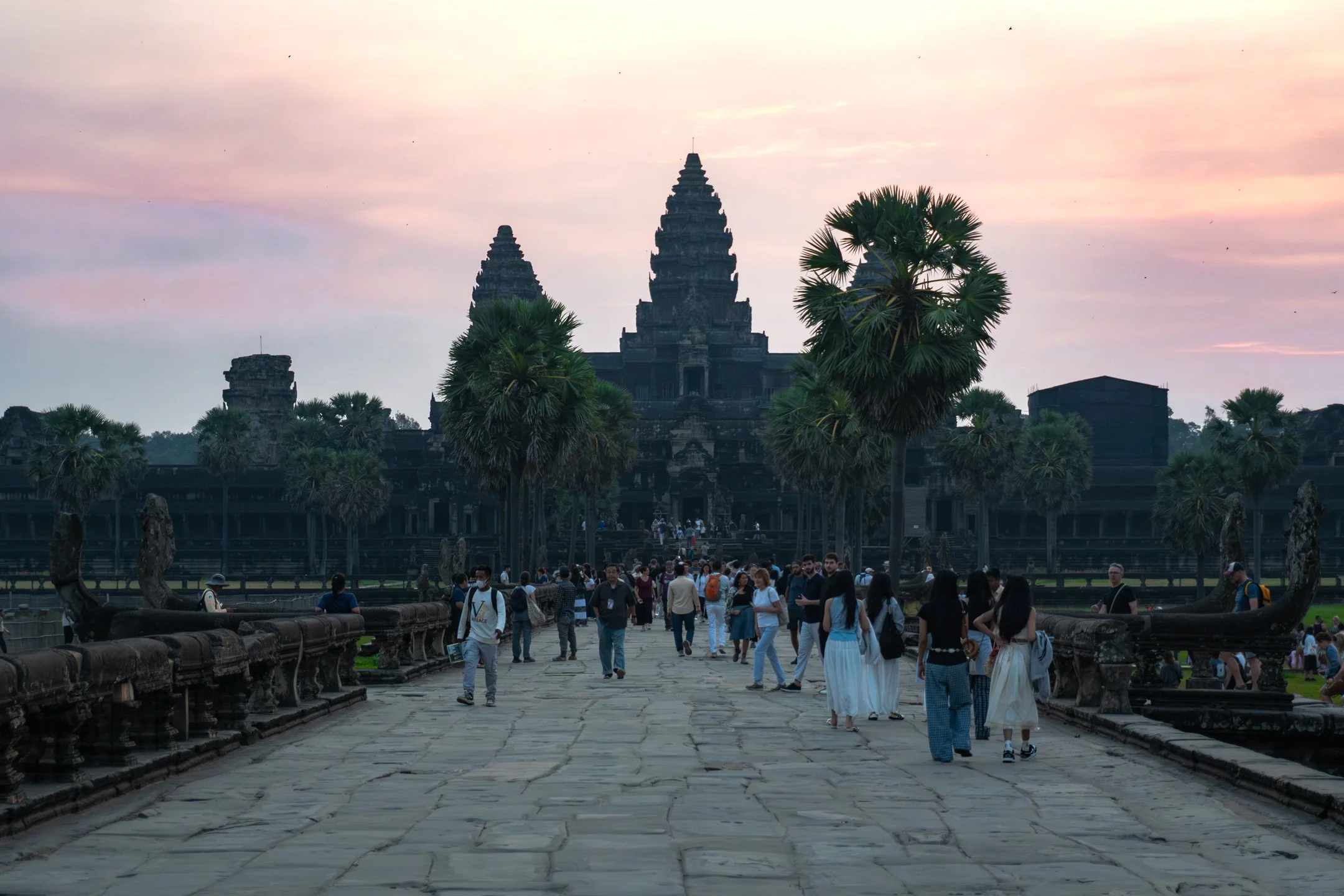
Sunrise at the main temple is bound to be crowded
Whether you start at the main temple or decide to save it for later, your next move is to follow the moat along the southern edge of Ankgor Wat and head for Ta Prohm. Known as the "jungle temple," or more recently, the “Tomb Raider temple”, Ta Prohm has been left largely as it was found — massive tree roots wrapped around and through the stone structures rather than cleared away. It's the temple most associated with Tomb Raider, which draws crowds, so an early or off-peak visit matters here more than almost anywhere else on the circuit.
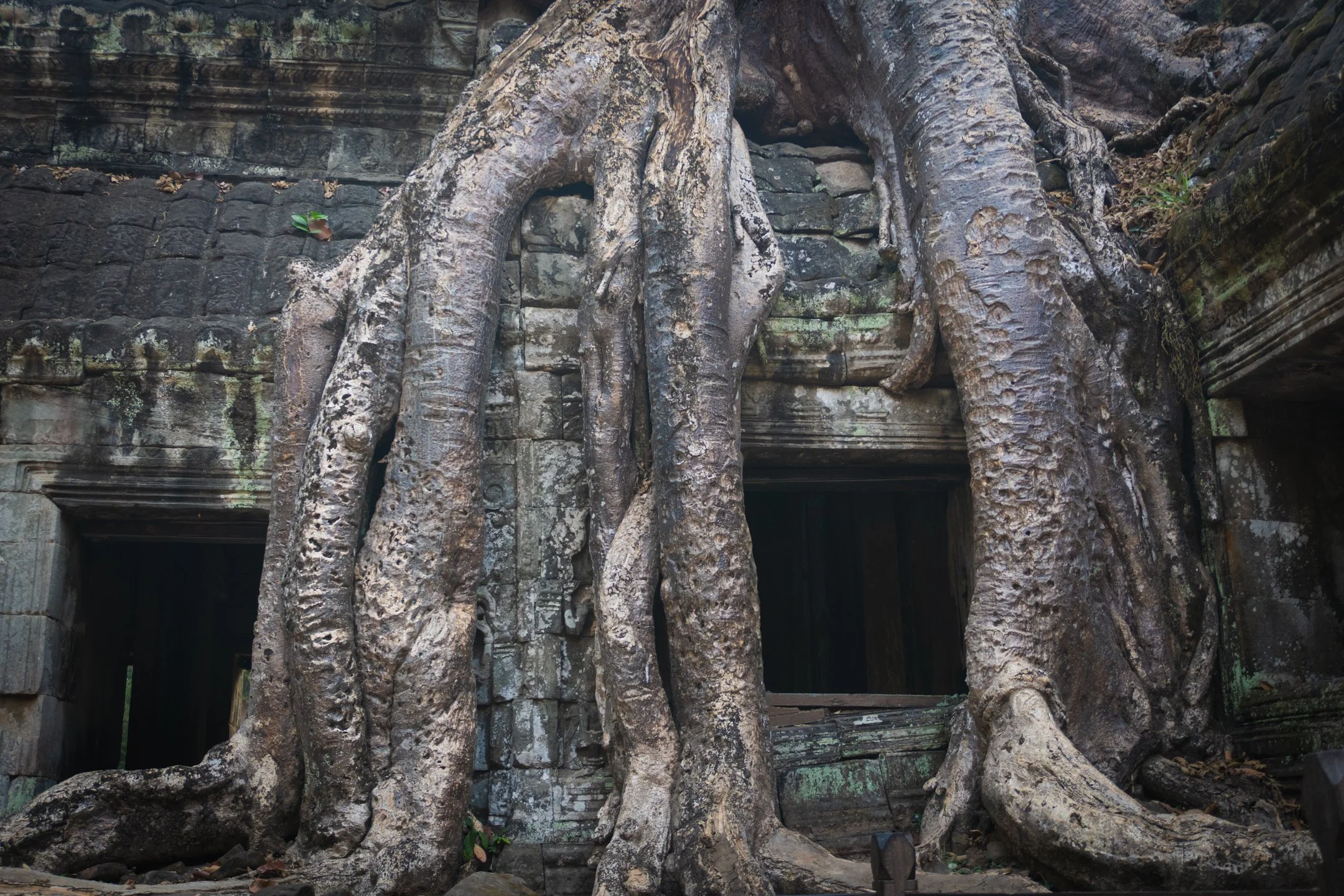
Tree roots swallowing ruins — a typical Ta Prohm sight
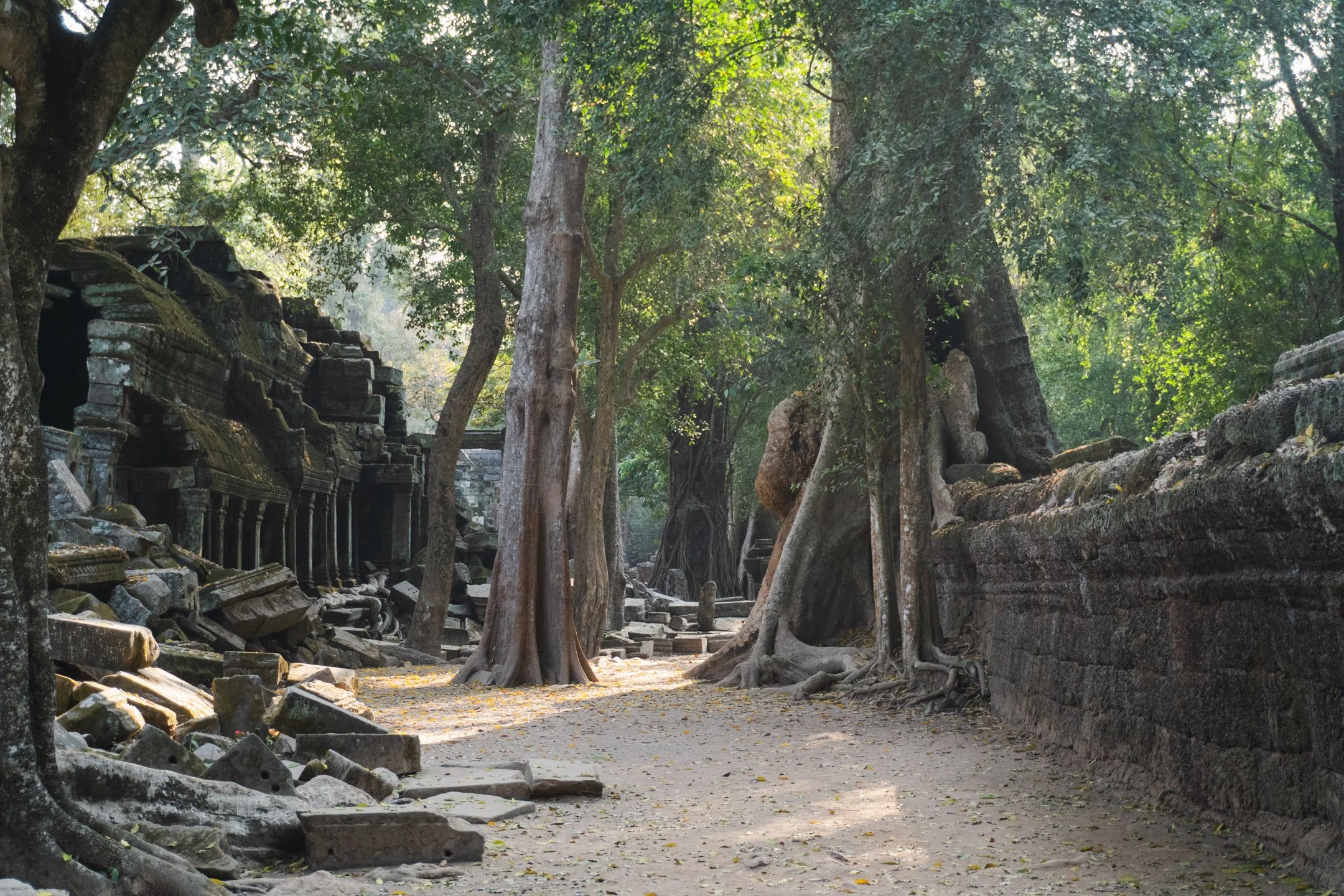
Ta Prohm scene
The next stop is Ta Keo temple, a massive step-pyramid built almost entirely of sandstone, but left unfinished. Most of the carved decoration was never added, giving the stone a stark, blocky look unlike the ornately carved temples nearby. The stairs to the top are notoriously steep, but the climb rewards you with one of the best elevated views on the small circuit.
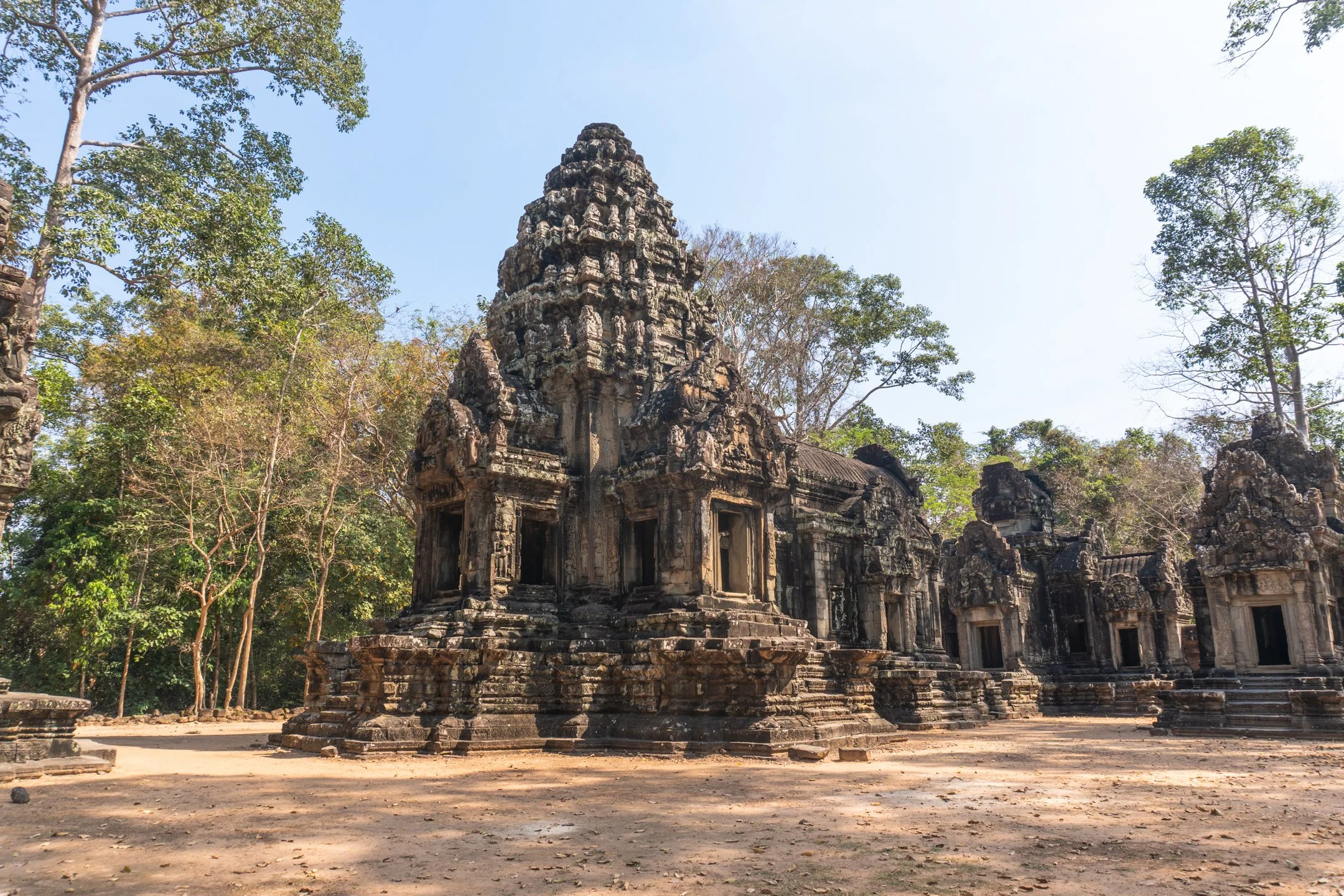
Thommanon Temple
A short distance away is Thommanon temple, a small, single-tower temple just east of the Victory Gate, built around the same era as Angkor Wat and sharing its architectural style. It's in excellent condition thanks to a 1960s restoration, with detailed carvings well preserved against the surrounding jungle. It’s easy to fold into the loop since it sits right on the road, and it's usually far less crowded than the bigger sites nearby.
After Thommanon, you’ll pass through the east gate, or Victory Gate, and enter the heart of the ancient Khmer capital, Angkor Thom. Your next stop is Bayon temple, the state temple of Jayavarman VII, sitting at the exact center of Angkor Thom. It’s instantly recognizable for its dozens of massive stone faces gazing out in every direction from the temple's towers. It's also ringed with detailed bas-relief carvings depicting everyday Khmer life, historic battles, and religious scenes. But be warned: this is one of the most photographed sites in the entire complex, which means it’s virtually impossible to avoid crowds regardless of what time you visit.
After Bayon, you’ll head back south toward Siem Reap. The route will take you past the main Angkor Wat temple, so if you didn’t catch the sunrise there, you’ll want to stop and look around before continuing back to town.
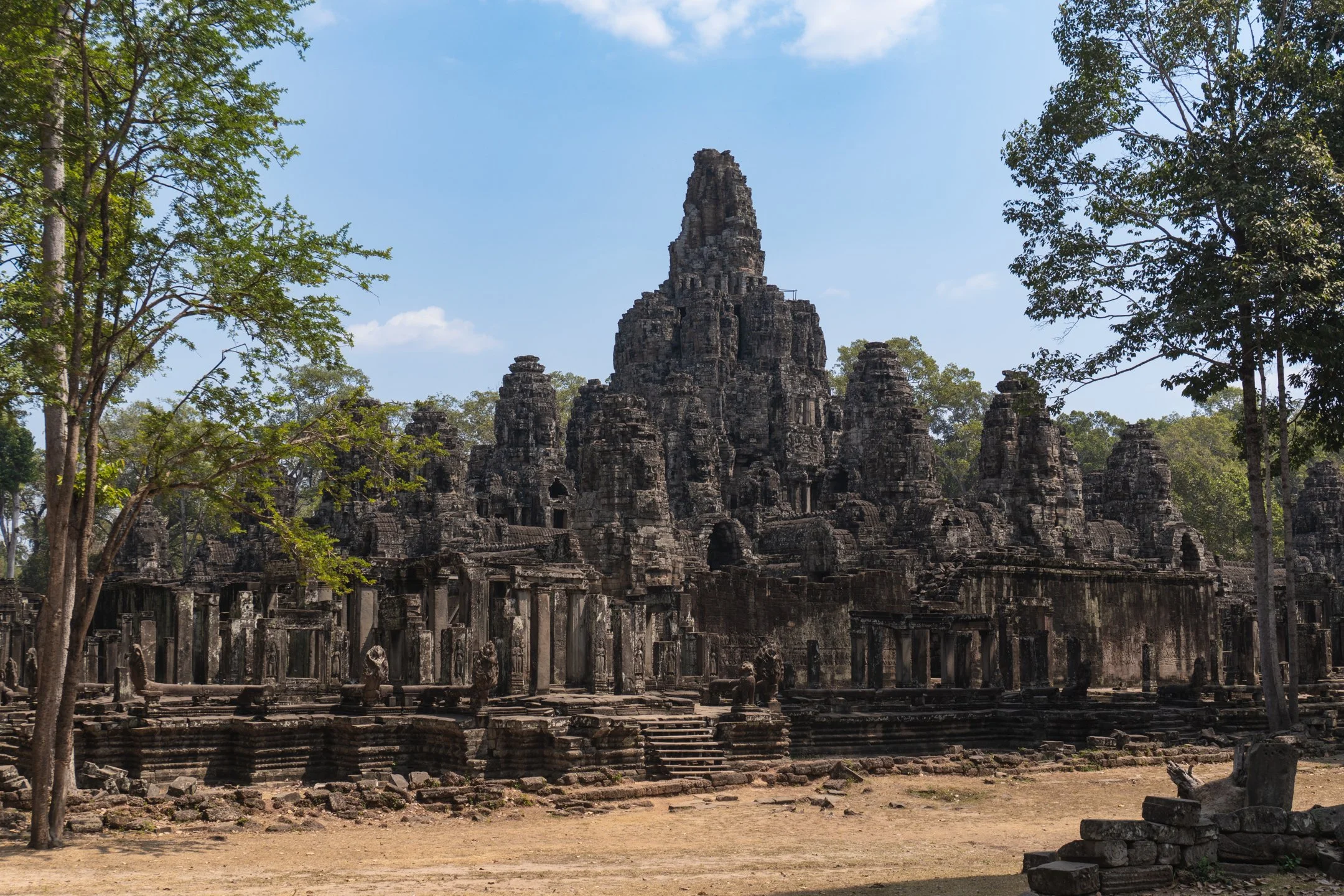
Bayon Temple
Optional Add-On: The Walls of Angkor Thom
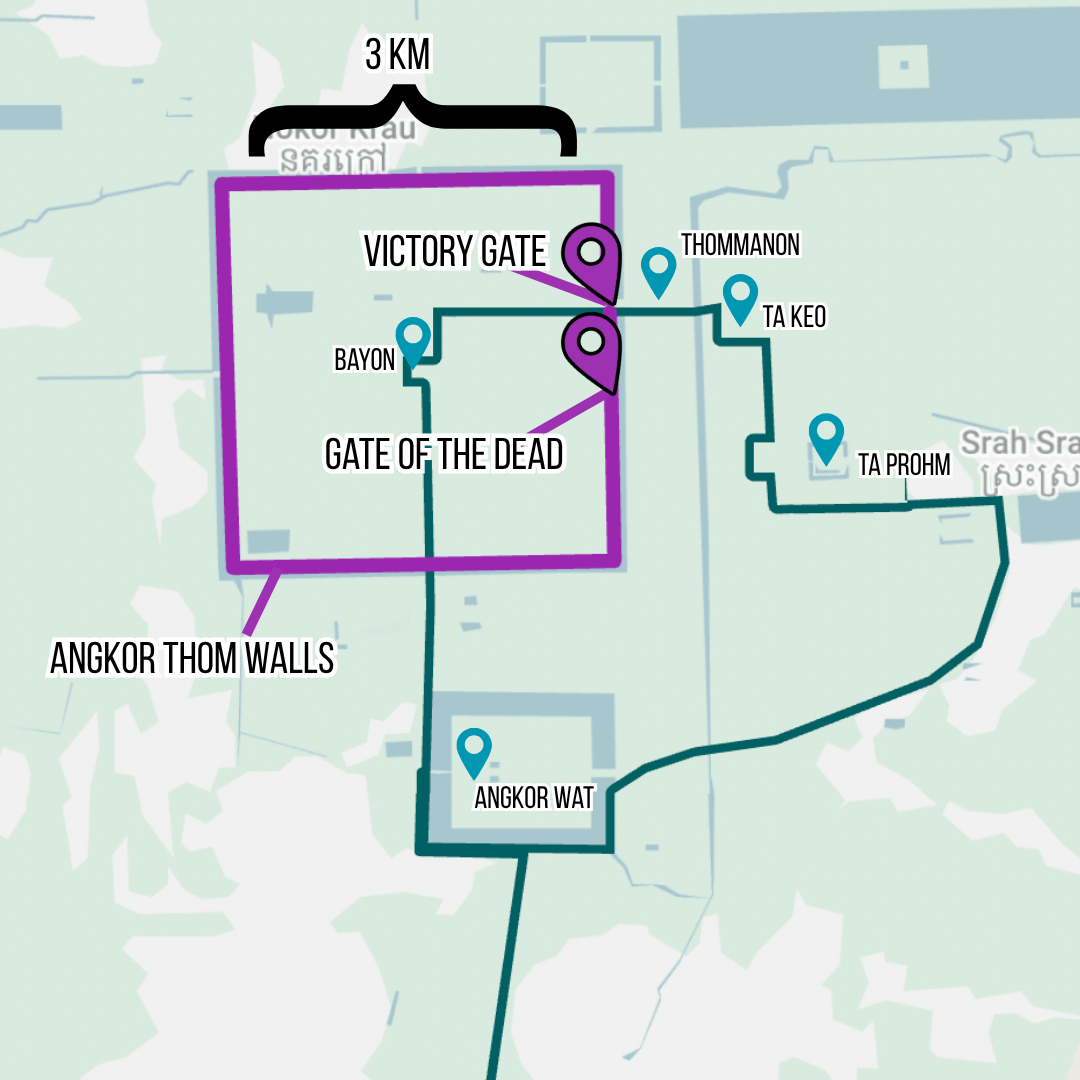
If you really want to escape the crowds and see Angkor from a unique perspective, there is a trail that runs atop the ancient walls of Angkor Thom, forming a perfect square enclosing entire site. It seems that few other tourists explore the walls, because I personally cycled the entire perimeter (about 12km total) without encountering another soul. You’ll see more crumbling ruins, massive stone-carved faces, as well as some glimpses of local village life on the outskirts of the complex. This path is not paved — which is one of the reasons I suggested opting for a mountain bike.
You don’t necessarily need to cycle the whole perimeter like I did. I would, however, recommend that you at least do the short section between the Victory Gate and the so-called Gate of the Dead. The Gate of the Dead is a quintessential Angkor scene — a dirt path passing through a ornately carved archway crowned with giant smiling stone faces — but because it isn’t accessible by road, you’re likely to have it all to yourself.
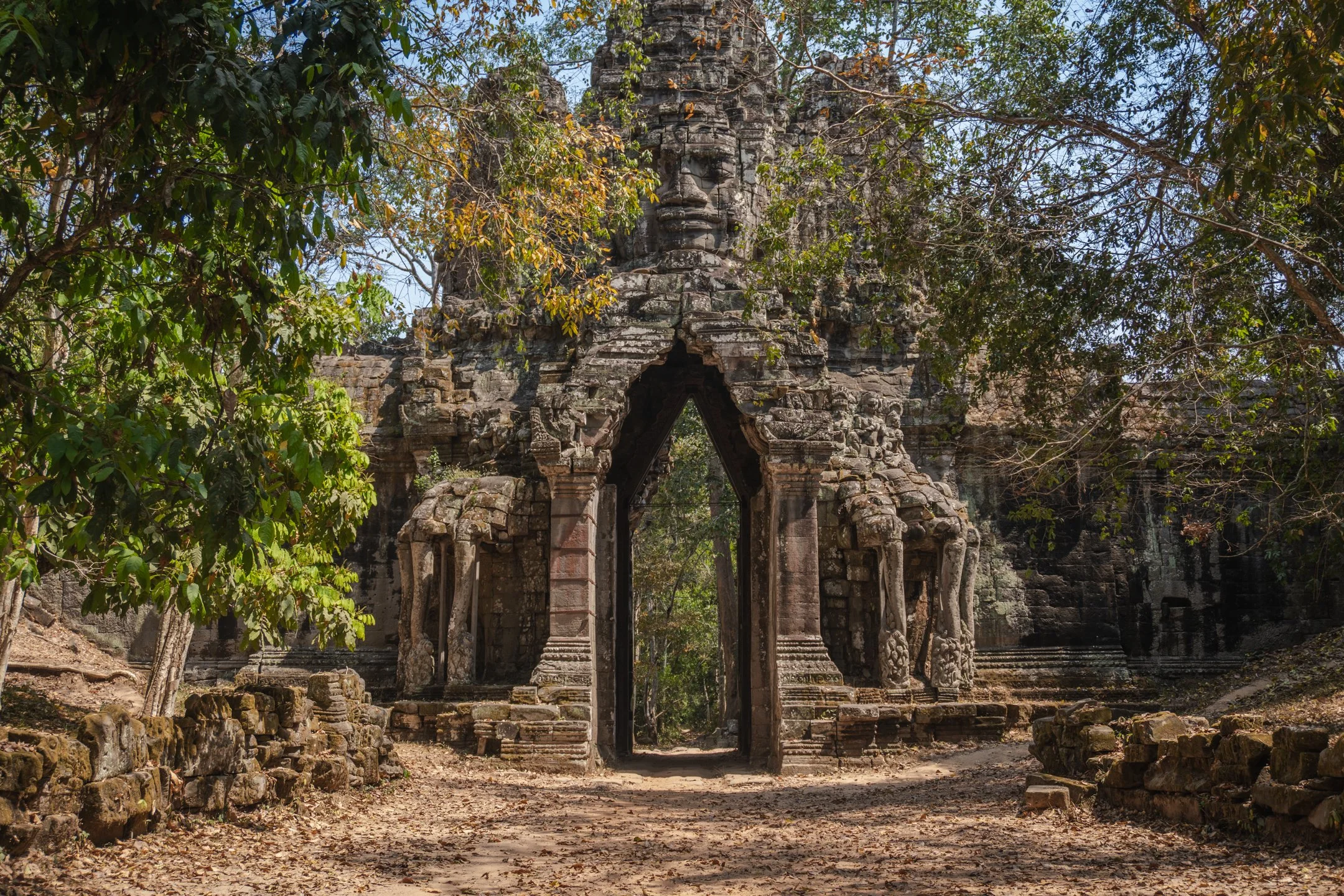
The Gate of the Dead
The Big Loop
Cycling Distance: Approximately 45 km round trip from Siem Reap center.
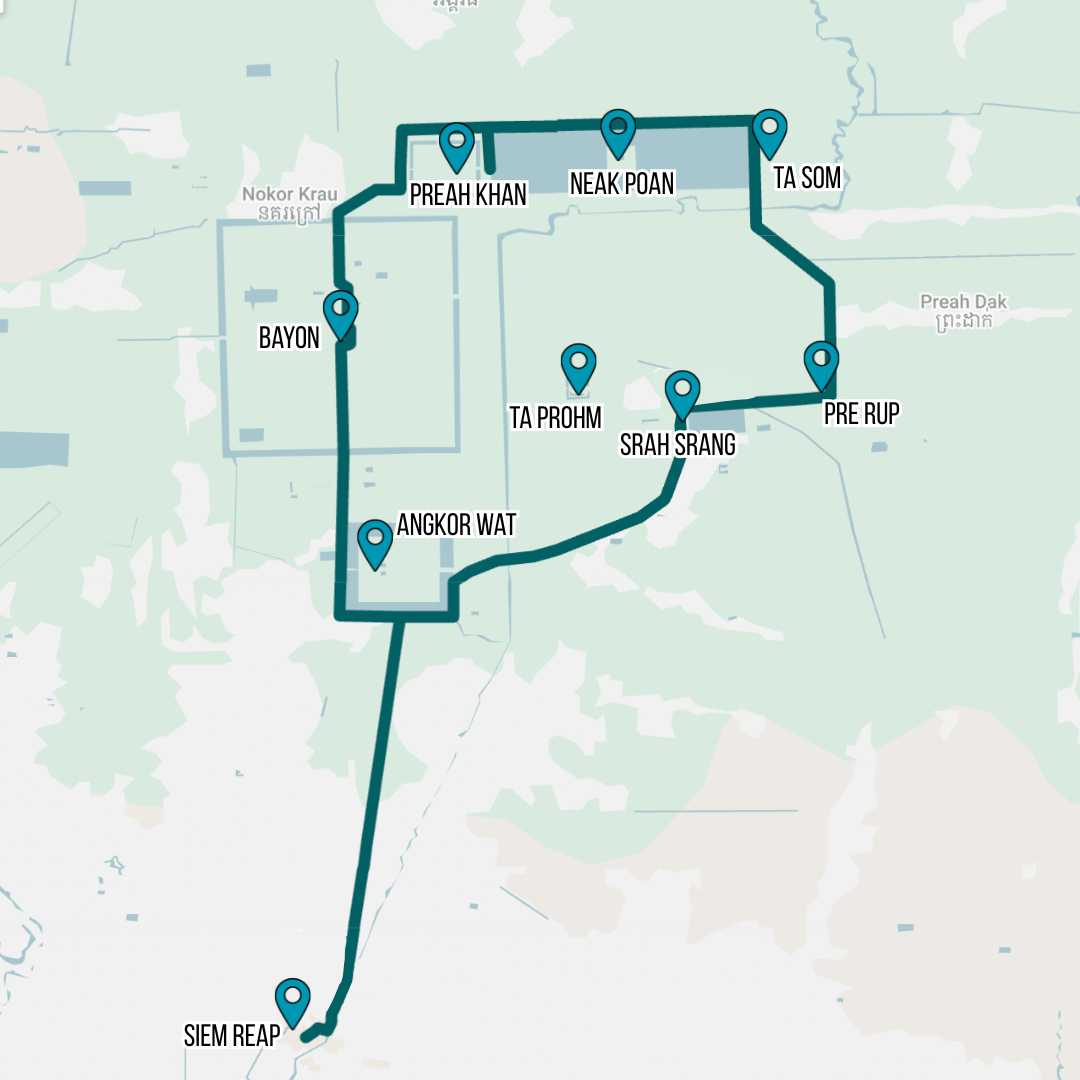
If you’re only going to do one of the loops, it should probably be this one. It takes you by some of the same sites as the small loop (Angkor Wat, Ta Prohm, Bayon) plus several more that are farther out.
Once again, getting an early start is essential if you want to catch the sunrise. You’ll begin in exactly the same way as the small loop, with a 7-8 km ride from town to the temple complex. Since I had done sunrise at Angkor Wat the previous day, I opted to head straight to Srah Srang to catch the sunrise this time, and there were very few people there. If you’re haven’t done it by this point, Ta Prohm is nearby, so that would be your next stop.
After Srah Srang (and Ta Prohm, if you’re doing it as part of this loop), you’ll head east, cycling along the water until you come to Pre Rup temple — a three-tiered temple mountain built in 961 as the state temple of Rajendravarman II, constructed from brick and laterite rather than the sandstone used in later temples.
Heading north from Pre Rup, you’ll cycle through some countryside and past a few smaller temples, like the Eastern Mebon temple. My next stop was Ta Som — a small, jungle-wrapped temple with the same Bayon-style faces-on-towers look as Ta Prohm, but on a much smaller scale, and its remote location on the big loop means far fewer visitors than its bigger cousins.
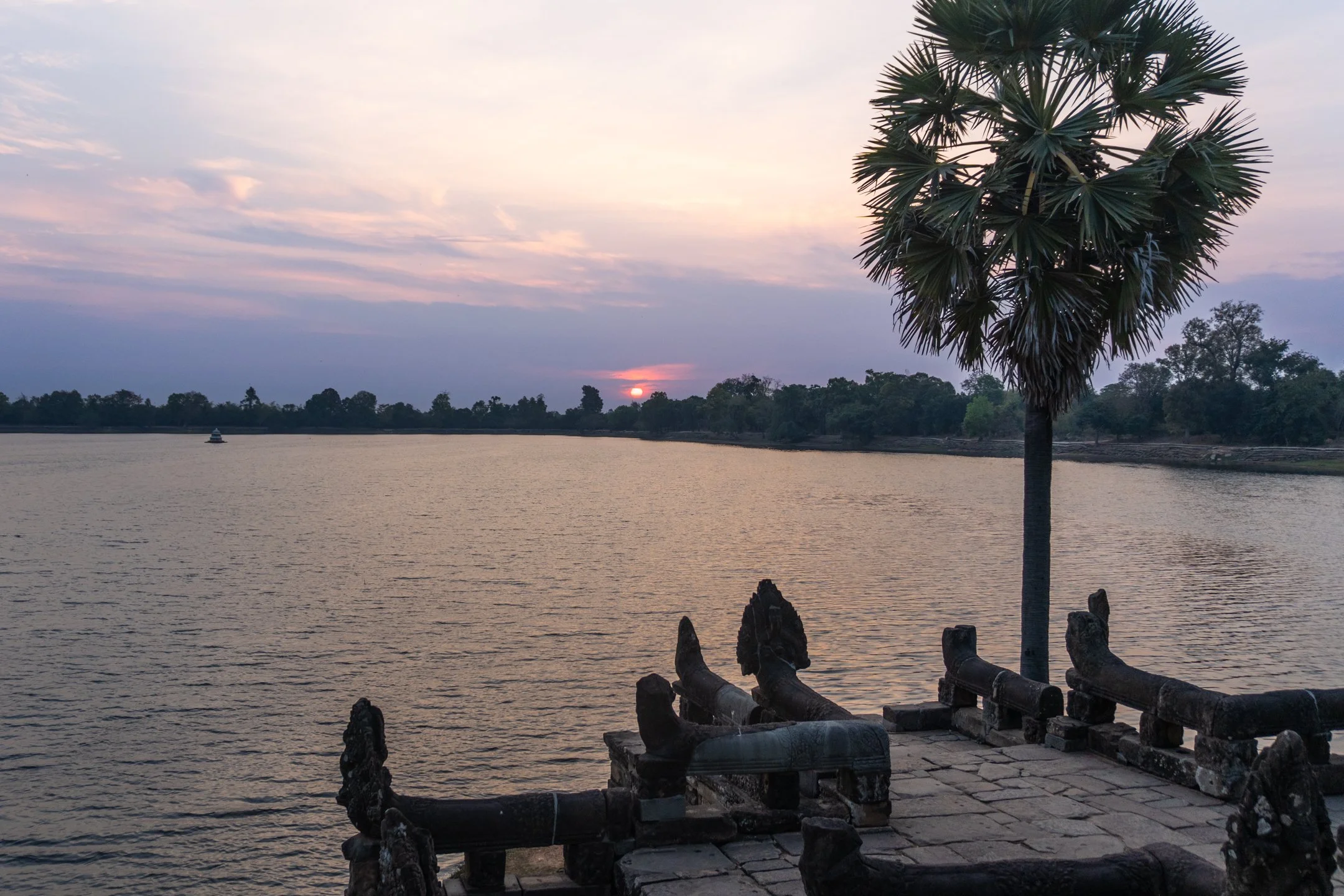
Sunrise from Srah Srang
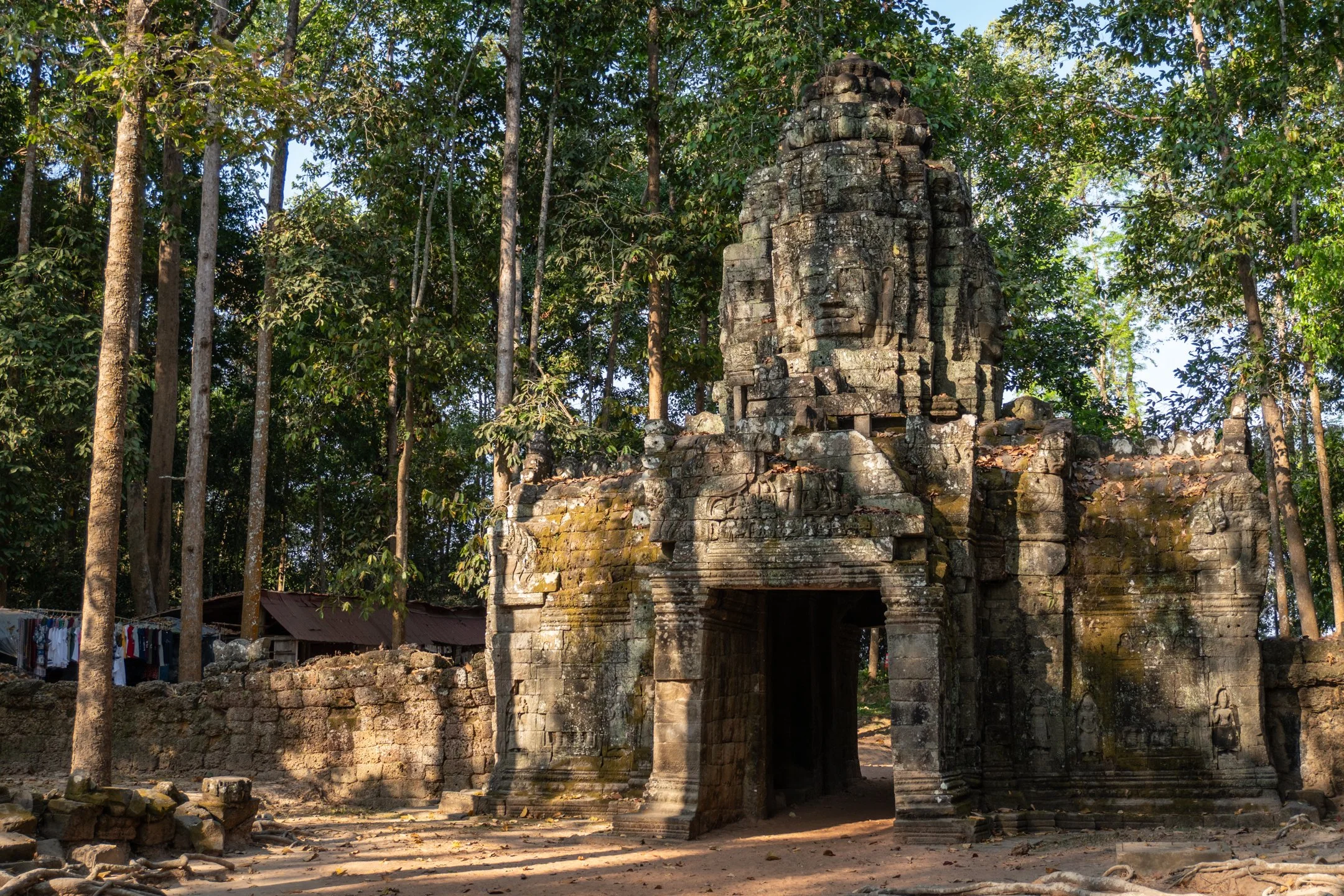
Ta Som
From here, you’ll turn west and cycle along the reservoir until you reach Neak Poan temple. Neak Poan is a small temple built on a man-made island in the middle of a reservoir, reached by crossing a walkway over the water. The design centers on a main pool surrounded by four smaller ones, each tied to a different element, and it's believed to have functioned as a kind of healing site — people came to bathe in the waters thought to cure specific ailments. It’s one of the more visually distinct stops on the loop.
The next stop on the big loop is Preah Khan temple. Like Ta Prohm, it's been left largely unrestored, so you get a maze of vine-covered corridors and courtyards, but with far fewer visitors — a strong, quieter alternative if Ta Prohm's crowds wear you out.
After Preah Khan, you’ll turn southward until you pass through Dei Chnang Gate (the north gate) into the ancient citadel of Angkor Thom, eventually reaching Bayon temple. If you didn’t catch it on the small loop, do so now. At this point, you’ll follow the same path of return to Siem Reap as the small loop, passing by the main Angkor Wat temple along the way.
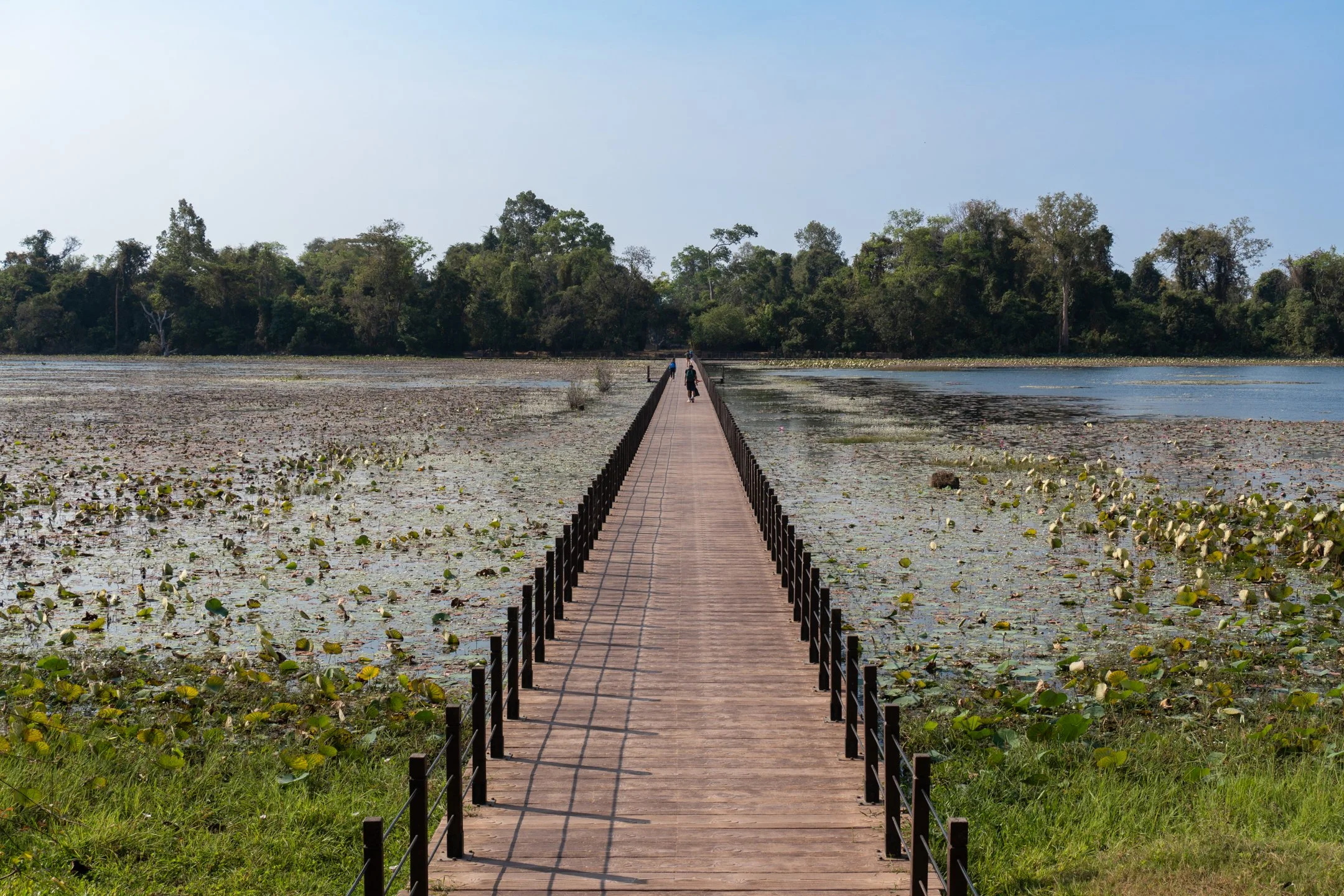
The walkway over the water leading to Neak Poan temple
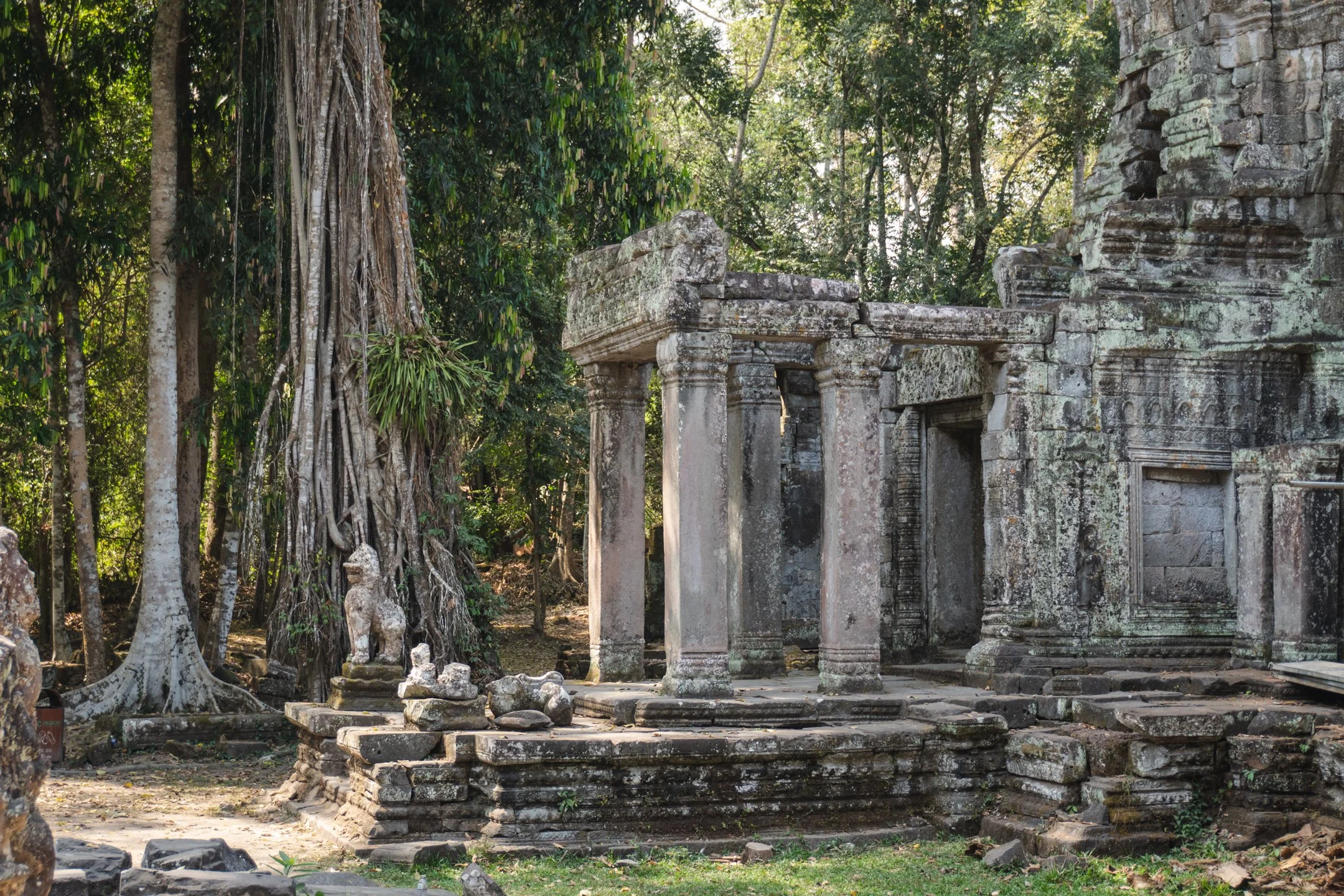
Preah Khan temple
If you’re an active person, this is in my humble opinion the best way to experience the Angkor ruins. You can experience the quieter side of this incredible site without being jostled by hordes of people. And there’s something about the slow pace of a bicycle tour that lends itself to a kind of immersion in the landscape that just doesn’t happen when you traverse the same roads in a car or a tuk-tuk.
If you like the idea of cycling around Angkor, but you’d rather do it with a guide, I’ve got good news: there are some excellent and affordable guided bicycle tours available.
No matter how you decide to do it, seeing Angkor is an experience you won’t soon forget. This is one of the world’s most atmospheric ancient sites. There’s something humbling about standing amidst the crumbling ruins of the once mighty Khmer empire as they are being slowly dismantled and reclaimed by the surrounding jungle — a testament to time, the elements, and finite nature of the works of man.
