
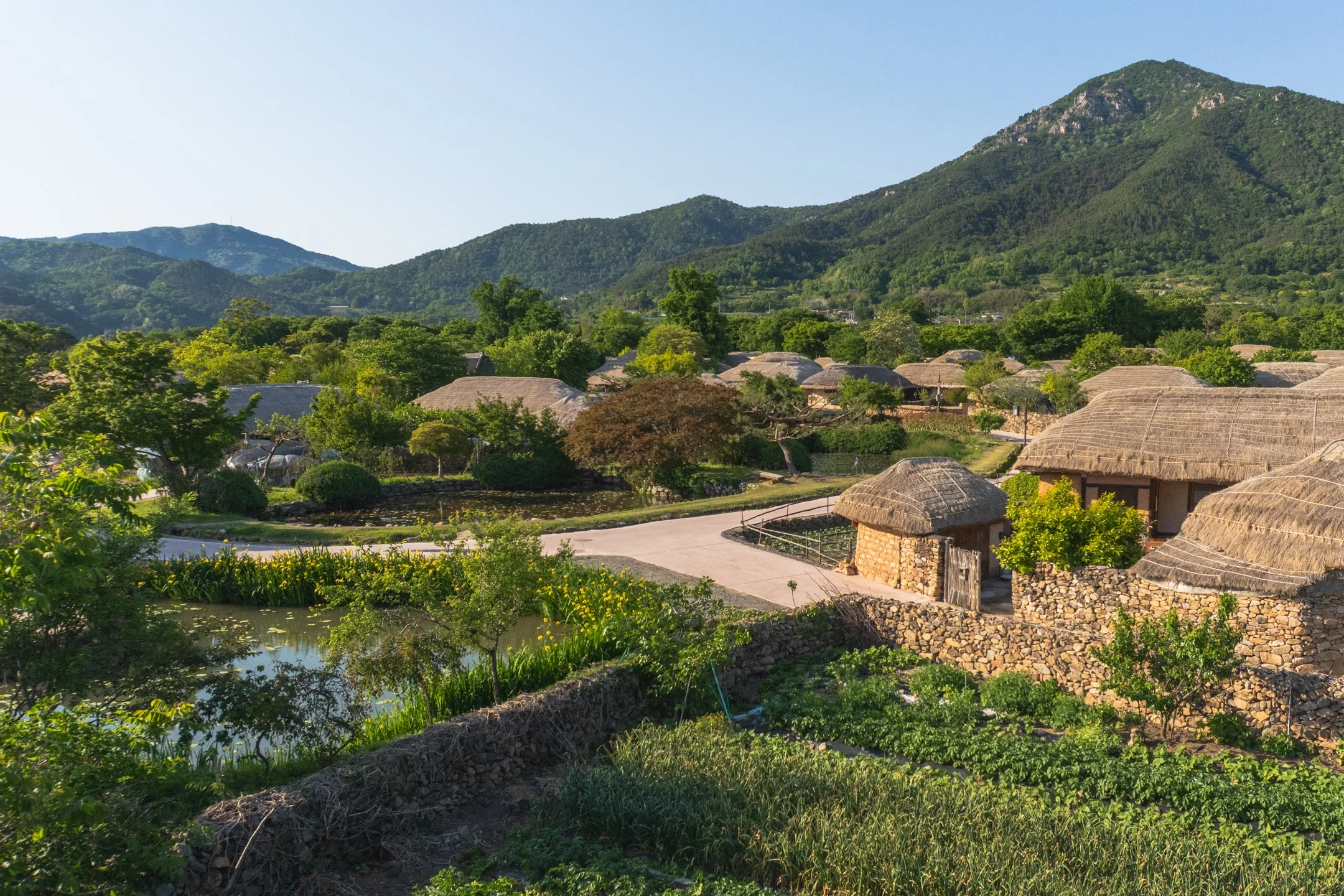
Nagan Eupseong in South Jeolla Province
When you think of South Korea, the image that comes to mind is likely that of a high-tech, ultramodern, highly developed country. Towering high-rises, K-pop glamour, and global companies like Samsung contribute to this image. However, a mere generation or two ago, Korea was a very different place. There are many Koreans still living today who remember a time when this was a desperately poor, war-ravaged agricultural society. Few countries on earth have achieved such an impressive level of modernization in such an impressively short span of time. Still, some traces of the old Korea remain in the form of its folk villages, a handful of which are scattered around the country. Here, culturally curious travelers can have the opportunity to experience a different, quieter, more traditional side of Korea.
In this guide, I'll introduce eight of Korea's most notable folk villages: what each one is, what makes it distinct, and what you can expect if you plan to visit.
First, What Counts as a "Folk Village"?
The term covers a few different kinds of places, and knowing which is which will save you from some mismatched expectations.
The most common is the living clan village: a settlement of historic houses, still inhabited, built around one or two family lineages. Many of the sites featured in this guide (Hahoe, Yangdong, Oeam, Museom, and Wanggok) fall into this category. Then there are the living walled towns (Nagan and Seongeup) where an inhabited village still sits inside the walls of a former Joseon county seat. And the Korean Folk Village in Yongin is something altogether different — an open-air museum, a collection of relocated and replica houses on a purpose-built site.
One more thing worth knowing up front: nearly every "preserved" village in Korea has been heavily restored. Even the most authentic of them have had roofs, walls, and gates rebuilt since the 1980s. So "original" is always a matter of degree, and I'll try to be clear about where each place falls on that spectrum.
Hahoe Village (하회마을) — Andong, North Gyeongsang Province
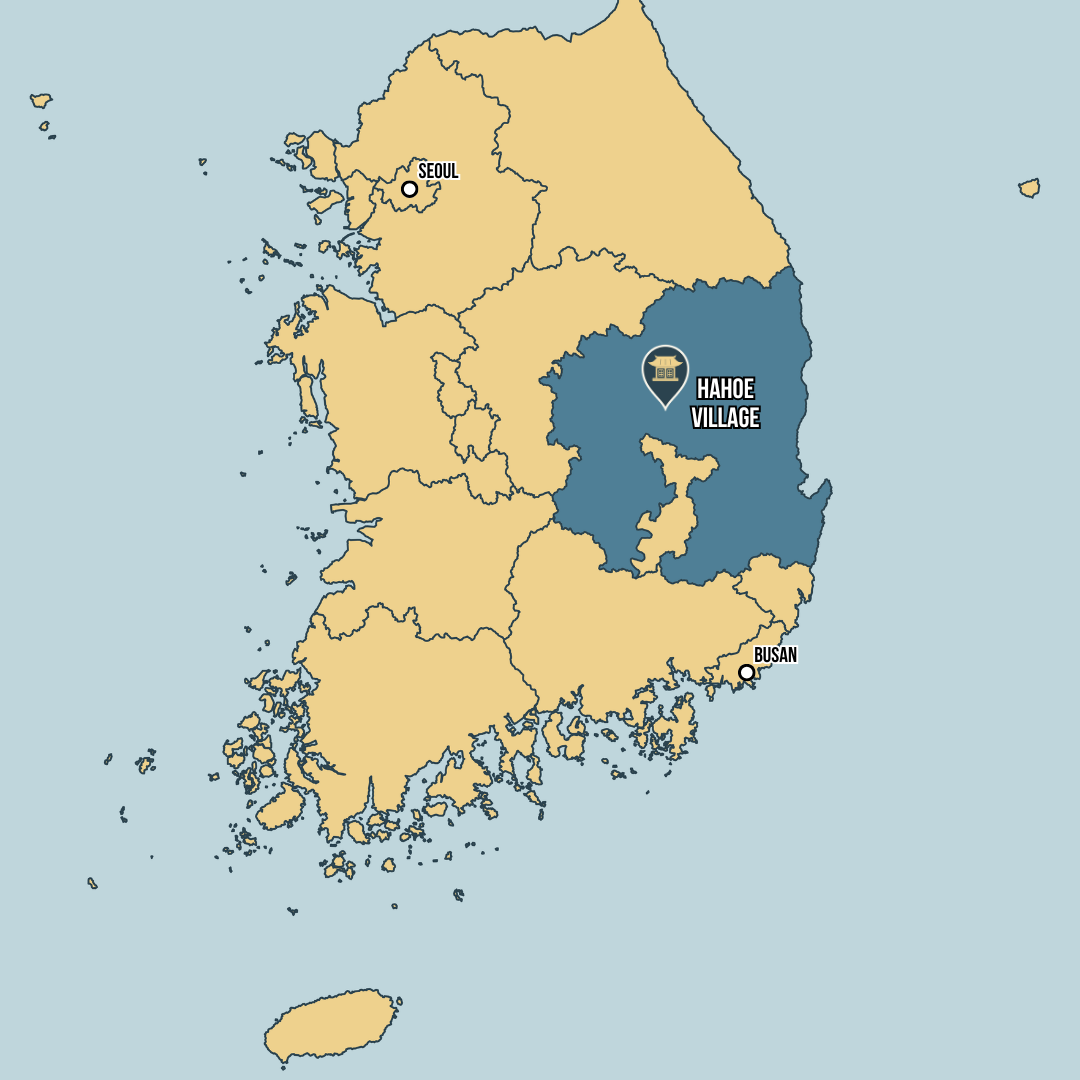
This is one of the more well known (read: touristy) sites featured in this guide. But it’s famous for good reason. Hahoe (pronounced ha-hweh) means "river turning back," which is a literal description: the Nakdong River loops around the village in a tight S-bend. Designated a UNESCO World Heritage Site, this historic settlement offers a fascinating glimpse into Korea’s past, with traditional hanok houses, thatched-roof cottages, and peaceful courtyards that reflect centuries of Korean culture and Confucian traditions.
The site is likely to be busy with day-trippers, giving the place more of an outdoor museum feel. But as you wander through the winding lanes, it will soon become apparent that this is, in fact, a living village. The Pungsan Ryu clan has lived here for around 600 years, since the end of the Goryeo dynasty, though they weren't the first. A local saying holds that "the Heo family laid the ground, the Ahn family built the gate, and the Ryu family set the table," a nod to the clans who came before them. Hahoe is the hometown of the brothers Ryu Un-ryong and Ryu Seong-ryong. The latter served as chief state councillor during the Imjin War (1592–98), steering Korea through the conflict, and wrote the Jingbirok. The two brothers' family lines are still centered on their head houses, Yangjindang and Chunghyodang.
What struck me as I walked the lanes is how organic the village feels. Traditional Korean houses usually face south. Hahoe's don't. Instead, they face the river and the old Samsindang zelkova tree at the center of the village, so they point in every direction. Folklore reads the whole site as a boat, and villagers traditionally avoided digging wells or building stone walls for fear of sinking it.
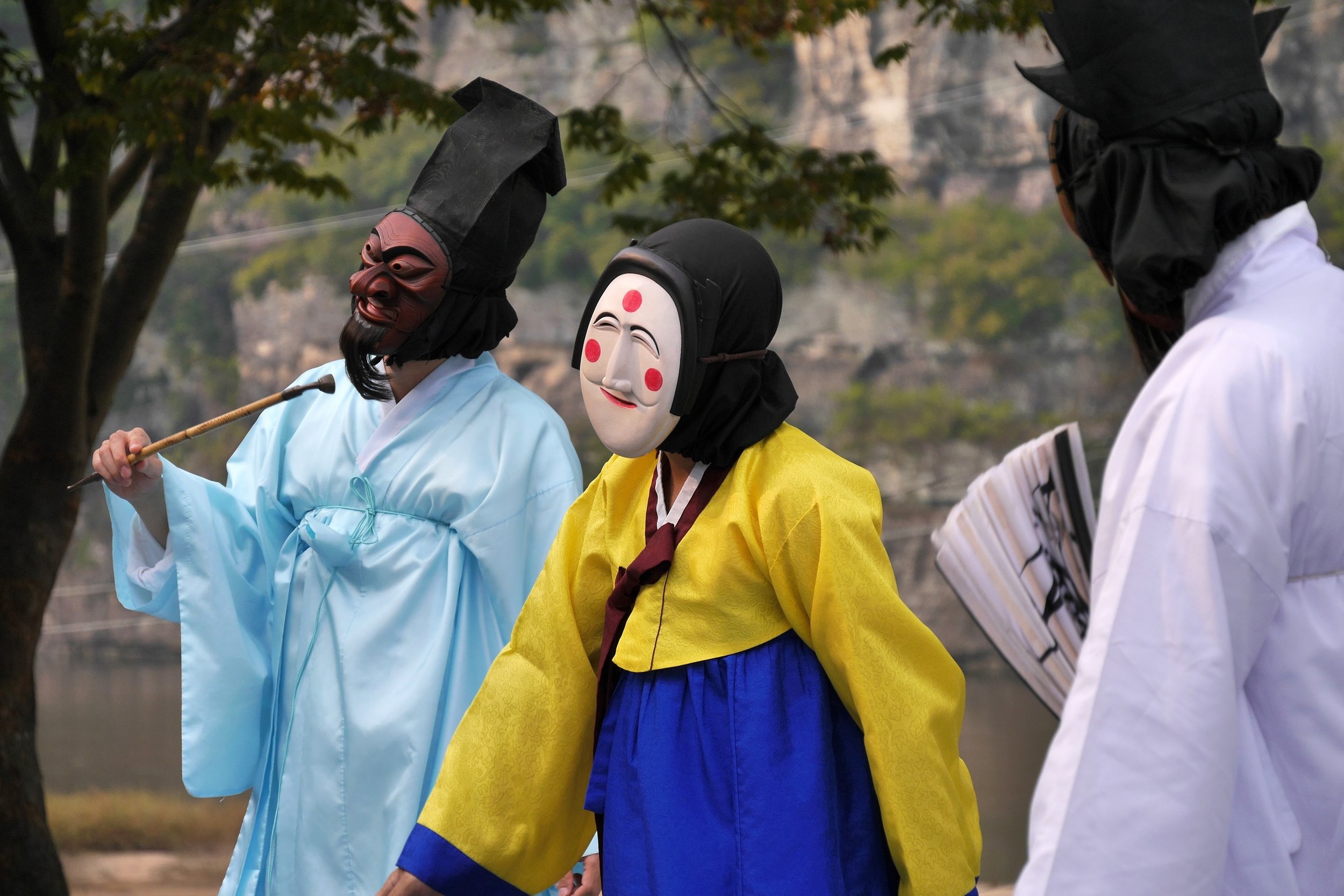
Masked performers of the Hahoe Byeolsingut Talnori
Hahoe is also as much about performance as architecture. It's home to the Hahoe Byeolsingut Talnori, a masked drama in which commoners satirize the yangban aristocracy, and the Hahoe masks themselves are a National Treasure. There is a daily traditional masked drama performance at 2:00, and the opportunity to watch the performance is included in the price of admission. This performance in particular is unique to Hahoe and is not offered at any of the other sites featured in this guide.
Now for the caveats. Hahoe is very touristed (about a million visitors a year, by one 2014 estimate), and it has a more polished, tourist-ready feel than its UNESCO twin, Yangdong. UNESCO itself describes the authenticity of the two villages as "slightly compromised" by restoration materials and remodeling, particularly at Hahoe, where some buildings have been converted to new uses. None of this makes Hahoe less worth seeing. Just go in with your expectations calibrated.
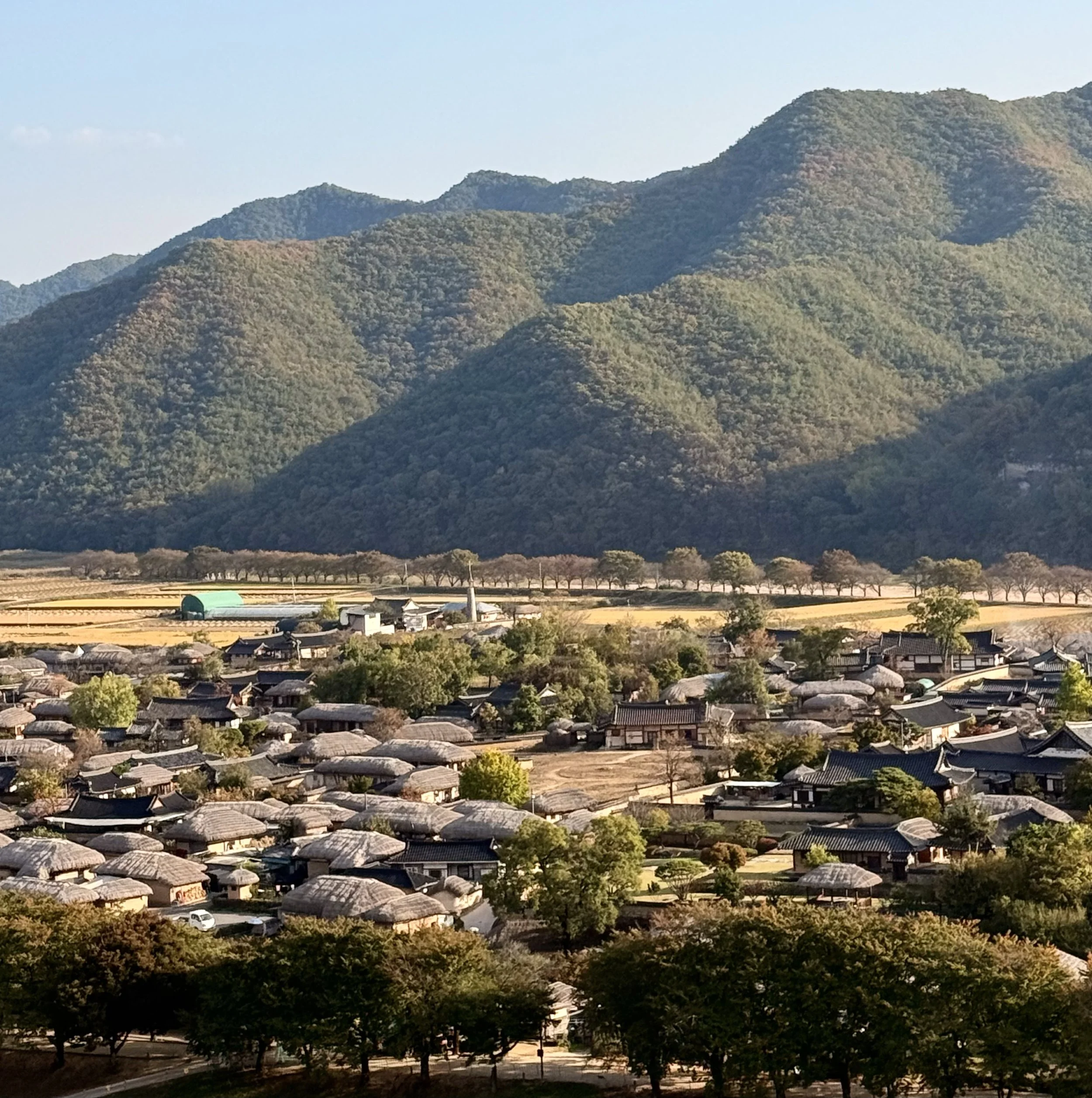
Hahoe Village seen from Buyongdae — a small cliff across the river
Location: 186 Jeonseo-ro, Pungcheon-myeon, Andong, North Gyeongsang Province
Getting there: Bus 210 runs from Andong Station and Andong Bus Terminal roughly once an hour, and the ride takes about 45 minutes. Buses and cars stop at the ticket office, where parking is free; private cars aren't allowed in the village itself. From there, a free shuttle covers the last 1.2 km to the village every 10 minutes or so, or you can walk it in 15 to 20 minutes. Note that the mask dance isn't performed in the village. It's held daily at 2 p.m. in a performance hall outside the village, on the ticket-office side of the shuttle stop.
Admission: 5,000 won for adults, 2,500 won for teens, and 1,500 won for children. No extra fee for the mask performance — it's included with admission.
Yangdong Village (양동마을) — Gyeongju, North Gyeongsang Province
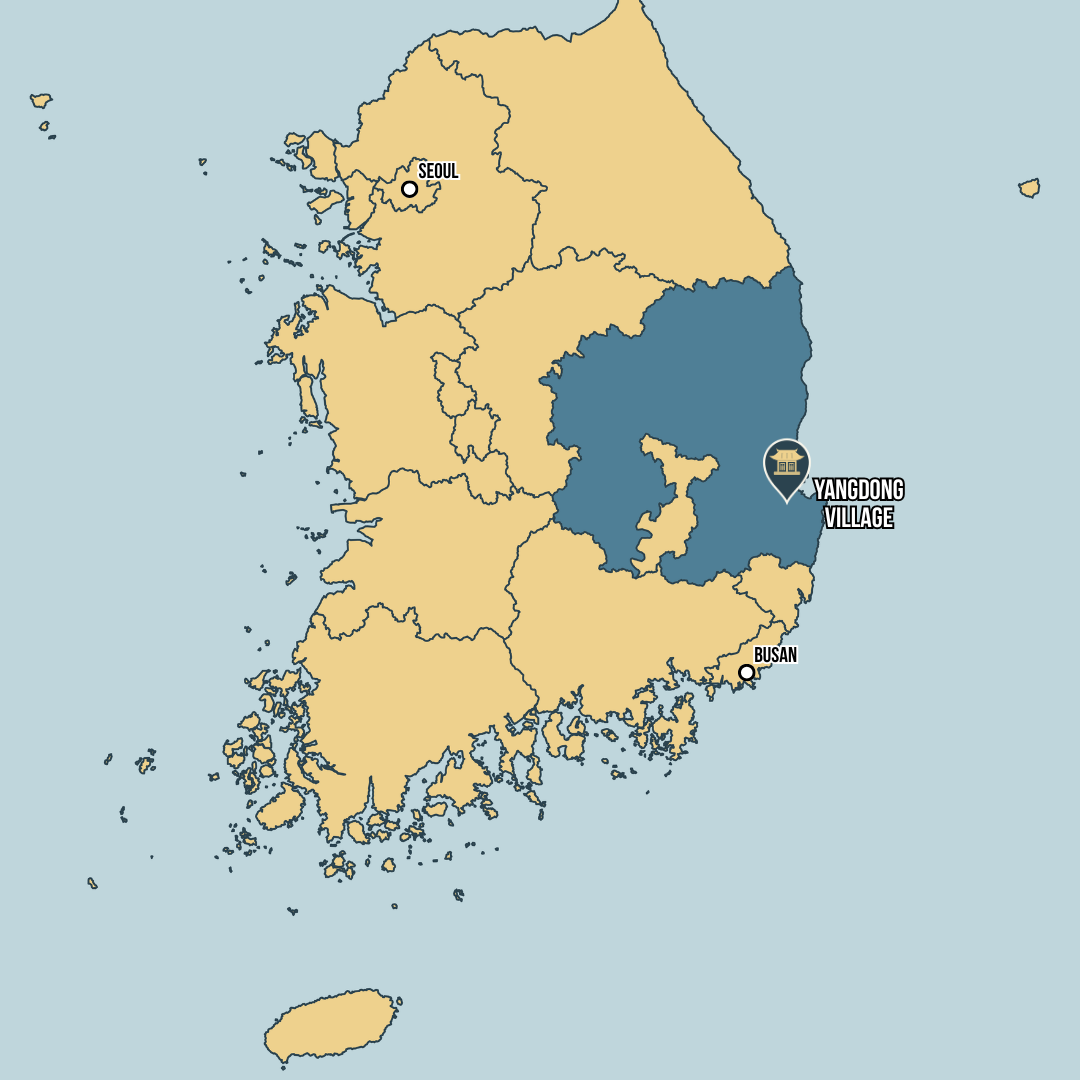
If you’re a history buff, there’s a good chance the city of Gyeongju itself is already on your radar. This ancient capital of the Silla kingdom is the number one place in Korea I would recommend for historically-inclined travelers, and Yangdong village would fit very nicely into a history-themed sightseeing tour alongside Gyeongju’s other noteworthy sites. The village shares its 2010 UNESCO inscription with Hahoe (the two are listed together as "Historic Villages of Korea"), but the two feel quite different. Yangdong is bigger, hillier, and noticeably quieter. It sits about 20 km northeast of central Gyeongju on the edge of the Angang plain, and instead of a flat river bend, it spreads across a series of ridges and valleys. The grand tiled houses of the old aristocracy sit up on the high ground, and thatched houses that once belonged to commoners cluster below. The social hierarchy is literally built into the landscape.
Like Hahoe, Yangdong is a living clan village. What makes Yangdong unusual, however, is that it's shared by two clans, the Wolseong Son and the Yeogang Yi, which was rare among yangban villages. The village grew from the Son family. Son So (1433–1484) made his home here after being rewarded for helping put down the Yi Si-ae rebellion of 1467. The Yi arrived by marriage. The Neo-Confucian scholar Yi Eon-jeok was born in 1491 at Seobaekdang, the Son head house and his mother's family home, and is credited with laying a foundation stone of the Yeongnam school of Neo-Confucianism. He and his maternal uncle, Son Jung-don, became the figureheads of the two clans.
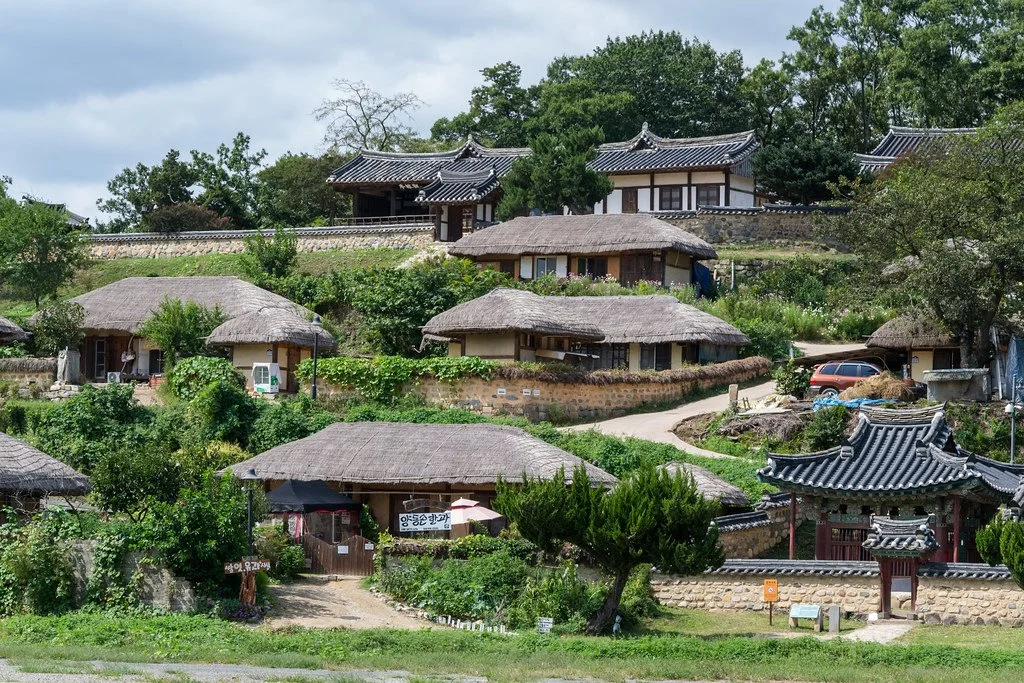
The two families intermarried, but they also competed hard, and you can see the results in the architecture. UNESCO counts 149 houses, 54 of which are more than 200 years old, according to the Korea Tourism Organization. Several are rated Treasures, a rare status for private homes. The best known, Gwangajeong and Hyangdan, are the showpieces of the Son–Yi building rivalry. Each clan also kept its own study hall: Allakjeong for the Son and Ganghakdang for the Yi. In the courtyard of Seobaekdang, look for a juniper said to have been planted by Son So himself.
A few caveats here too. Many of the houses are private and closed to visitors, and bikes and pets aren't allowed in the village. UNESCO also notes that bridges, roads, and a railway have compromised Yangdong's setting to some degree. But it's less commercial than Hahoe, and it rewards travelers who are happy to wander slowly. If Hahoe is the headliner, Yangdong is the one I'd point you toward if you'd rather have the lanes to yourself.
Location: 134 Yangdongmaeul-gil, Gyeongju, North Gyeongsang Province.
Getting there: From Gyeongju Intercity Bus Terminal, buses 200 to 208, 212, and 217 all run to the village, and the trip takes about 50 minutes. From Gyeongju's KTX station, bus 203 takes about 90 minutes. A taxi from the intercity terminal takes about 25 minutes. Parking is free.
Admission: 4,000 won for adults, 2,000 won for teens, and 1,500 won for children. Seniors 65 and over and children 6 and under get in free with ID.
Nagan Eupseong (낙안읍성) — Suncheon, South Jeolla Province
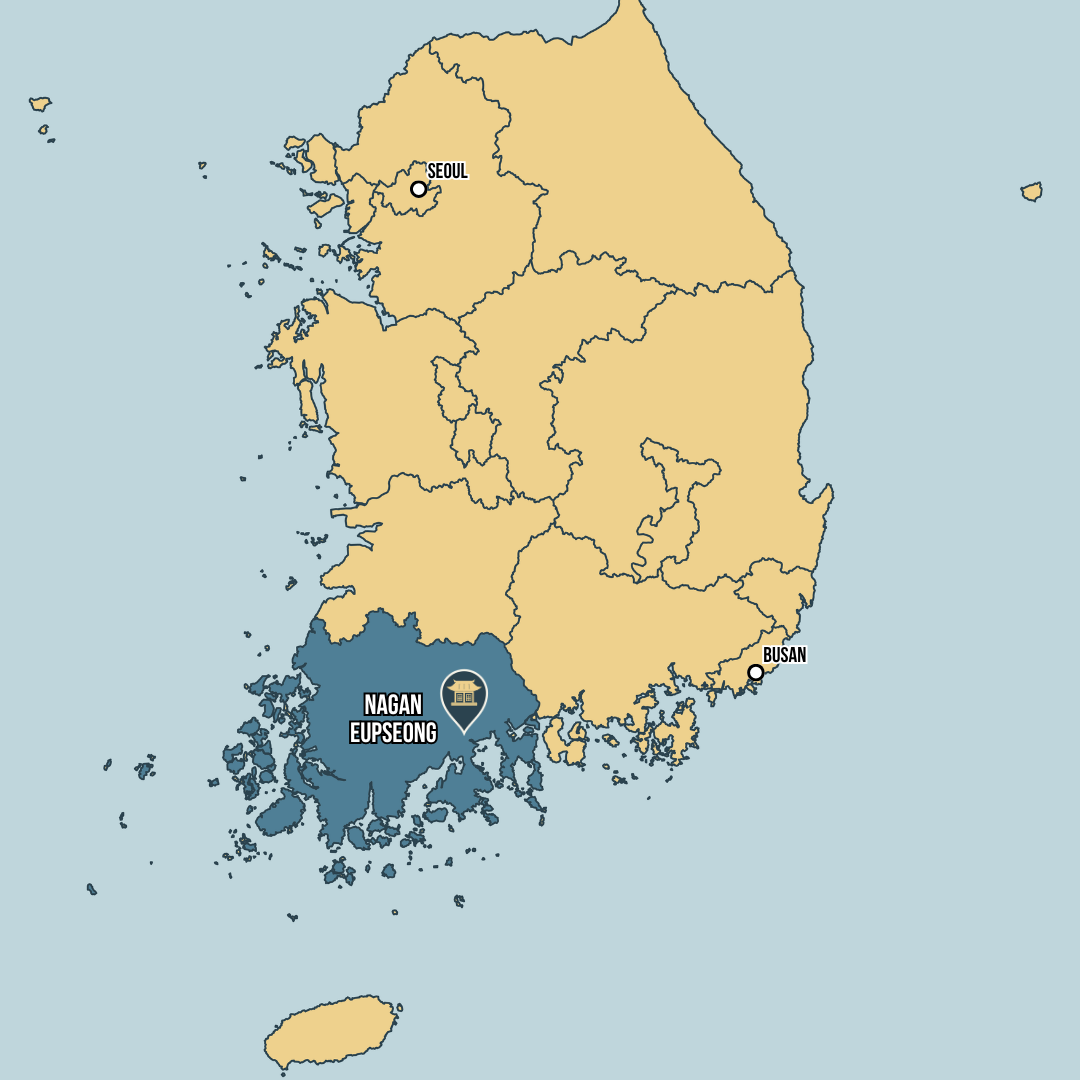
Nagan Eupseong might be the most evocative village listed in this guide. It is a 600-year-old continuously inhabited walled town dating back to the early Joseon dynasty, when it was established as an administrative center for the surrounding county. Where Hahoe and Yangdong are yangban villages built around powerful clans, Nagan was a commoners' town: farmers, a tavern, a clerk's house, and the administrative center they all answered to.
You can walk atop the wall around the entire perimeter of the town, with views over thatched roofs below. Inside the walls, there are about 90 households still living the way their ancestors did — thatched roofs, clay walls, vegetable plots tucked between the dwellings. Walking through the village feels like time travel.
Start by walking the full loop of the wall, which runs roughly 1.4 km, then drop down into the lanes. Look for the stone dog outside the East Gate moat, a geomantic guardian. And if you want to see the place after the day visitors leave, several of the thatched houses function as homestays.
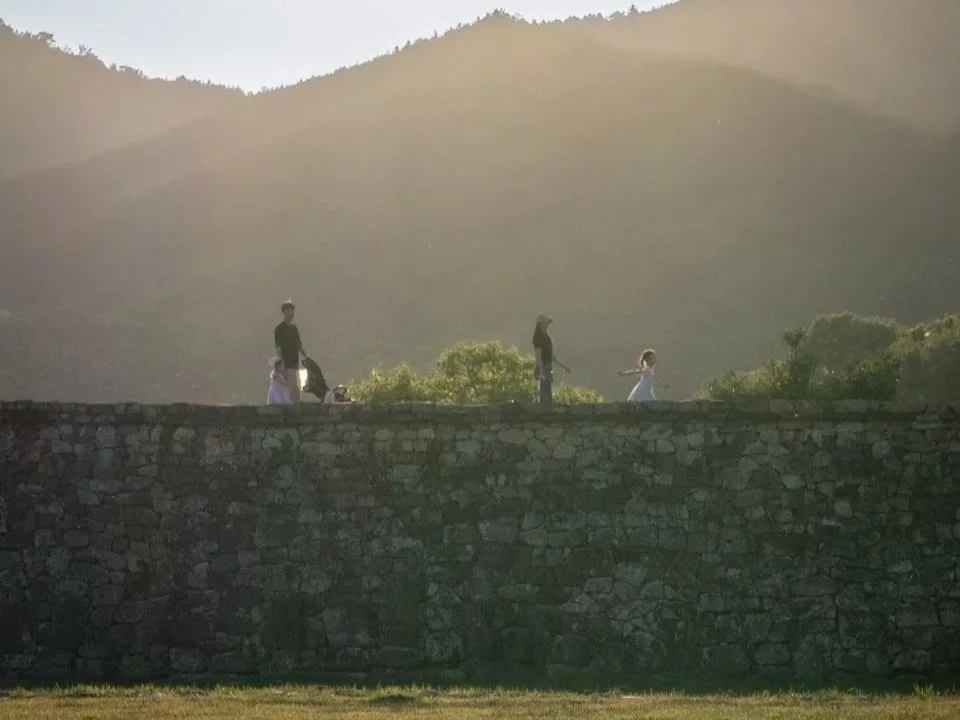
A family walking atop the restored walls of Nagan Eupseong
As for what's original, when Nagan was designated a Historic Site in 1983, only a few stretches of wall, mainly around the East Gate, were intact. Restoration beginning in 1984 rebuilt the east and west gates and the walls, and the government buildings inside — the magistrate's office, his residence, the guesthouse, and the jail — are also restorations. The houses on the other side of the main road, however, are lived in, and several are individually designated as National Folk Heritage, including the Ibang-daek (the clerk's house) and the Jumak (the tavern). This is very much a living, breathing village — people still reside, farm, run shops and taverns, and operate homestays inside the walls.
Location: 30 Chungmin-gil, Nagan-myeon, Suncheon, South Jeolla Province
Getting there: City buses 61, 63, and 68 run from Suncheon Station and the Suncheon bus terminal about once an hour, and the trip takes about an hour. Parking is free.
Admission: 4,000 won for adults, 2,500 won for teens, and 1,500 won for children.
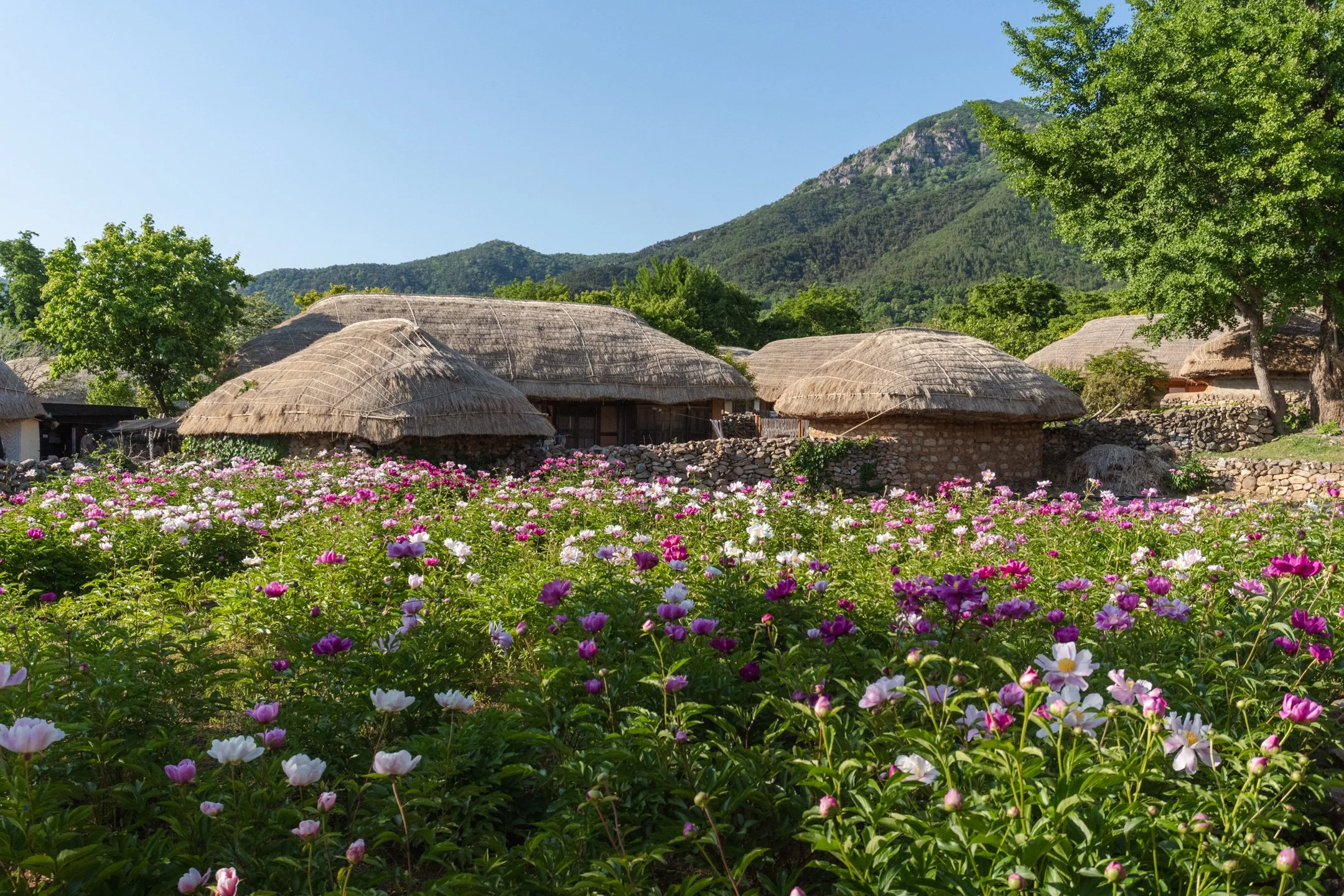
Nagan Eupseong dwellings with spring flowers blooming
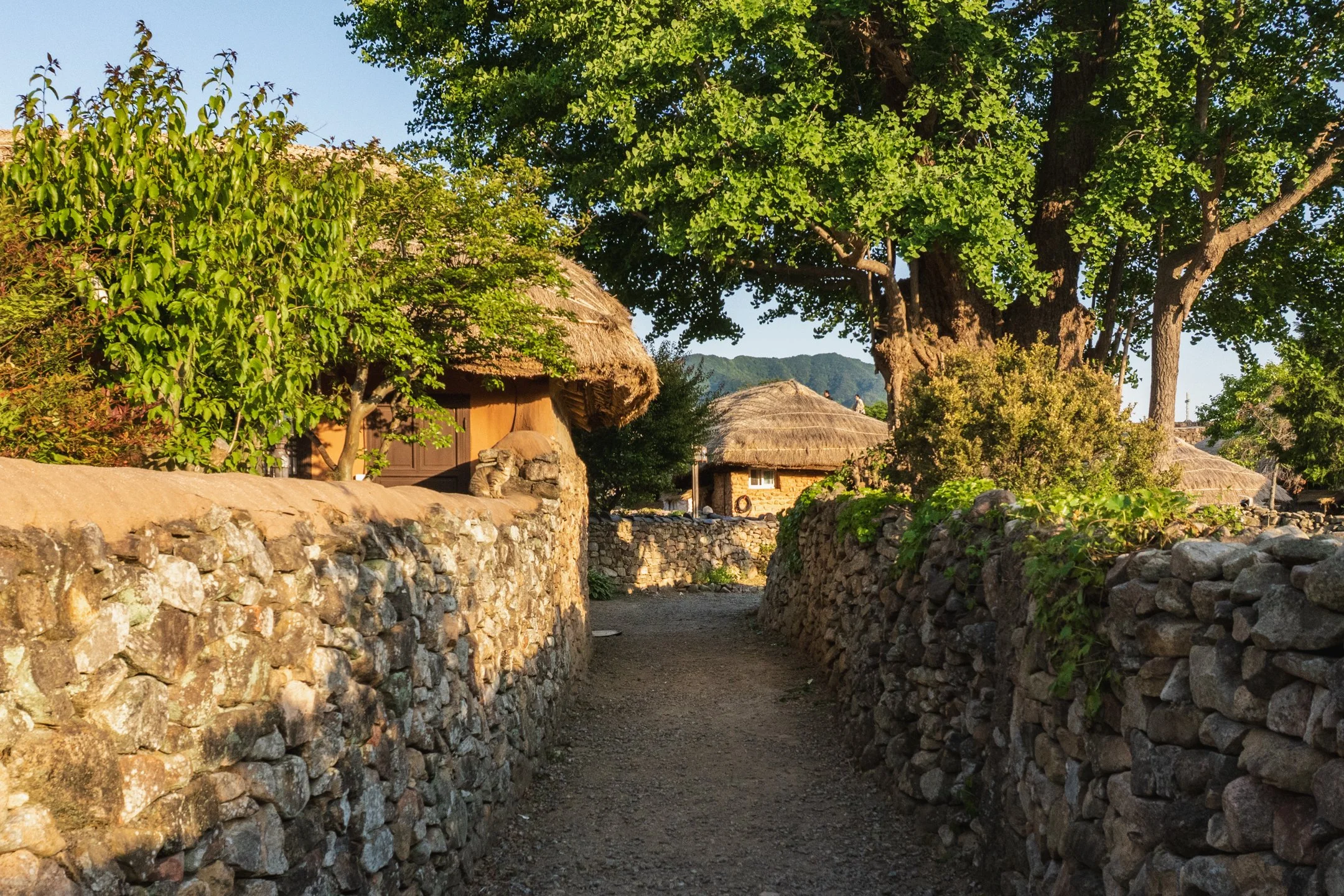
A representative lane in Nagan Eupseong
Oeam Village (외암마을) — Asan, South Chungcheong Province
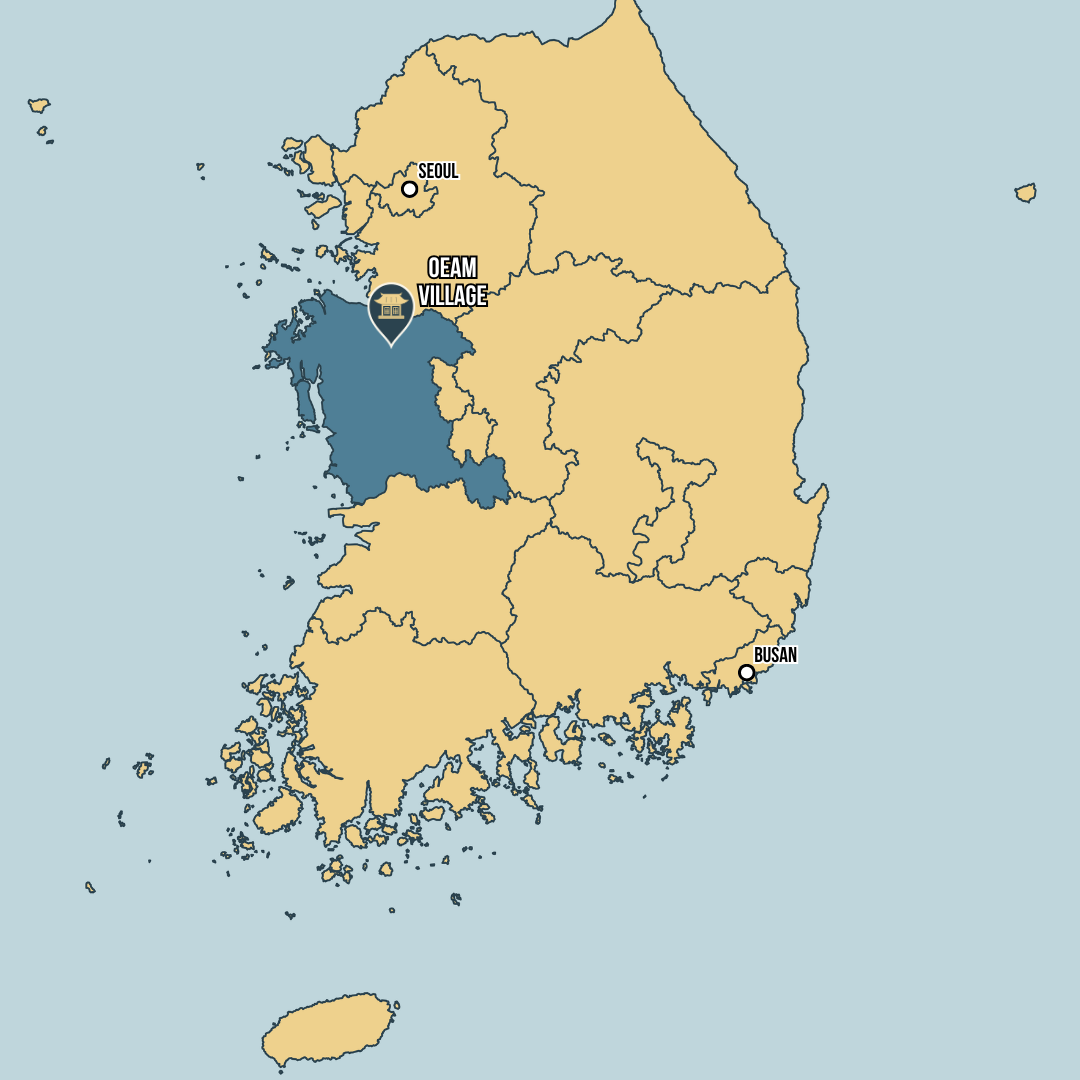
Situated at the base of Mt. Seolhwa in rural Asan, Oeam (pronounced whey-ahm) is half outdoor museum, half living village. As you stroll through its narrow lanes, you can see different classes of traditional Korean homes, get a glimpse inside them, and learn the significance of their layouts and rooms. Large tiled yangban houses sit side by side with thatched farmhouses, and every home is wrapped in dry-stone walls built from rocks gathered on site.
The museum part is in the front, so the first thing you’ll see when you enter the site are a few homes representing different classes of Joseon society — a “high class” home with a tiled roof, a “middle class” home, and a thatched roof “commoners” home. It’s not clear whether these homes are reconstructions, moved from elsewhere, or new builds made for display. But there are informative placards around the site explaining the layout of the different homes, the functions of various rooms, and so on. There are also lots of everyday objects on display — kitchenware, tools, farming implements, etc.
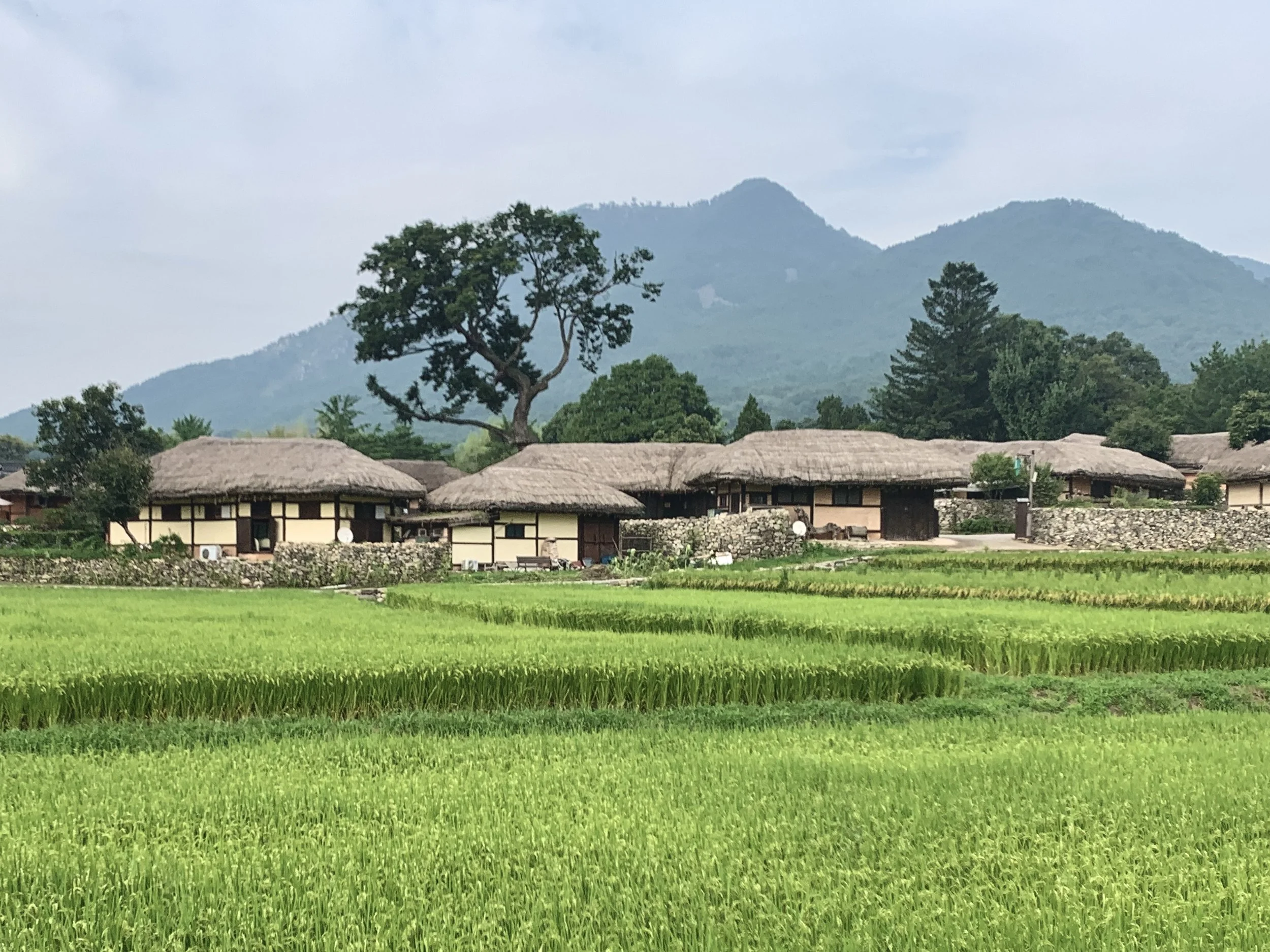
Oeam Folk Village in Asan, South Chungcheong
As you move further back from the parking lot, you’ll be leaving the museum part of the site and transitioning into the living village. The village is comprised mostly of small farmsteads growing rice, apples, jujube, and a variety of vegetables. There are also persimmon trees everywhere. The village was shaped by geomancy as much as by family history. Seolhwasan, the mountain behind it, was read as a "fire mountain," so villagers cut an artificial channel to run stream water through the house compounds and cool its fire energy. The water also fed garden ponds and doubled as a firefighting supply. Several late-Joseon yangban gardens survive. The best known belongs to Geonjae Gotaek, which has a rock garden, pines, and a signboard in Chusa-style calligraphy. Another notable house, Champan-daek, belonged to the official Yi Jeong-ryeol and is said to have been granted to him by King Gojong.
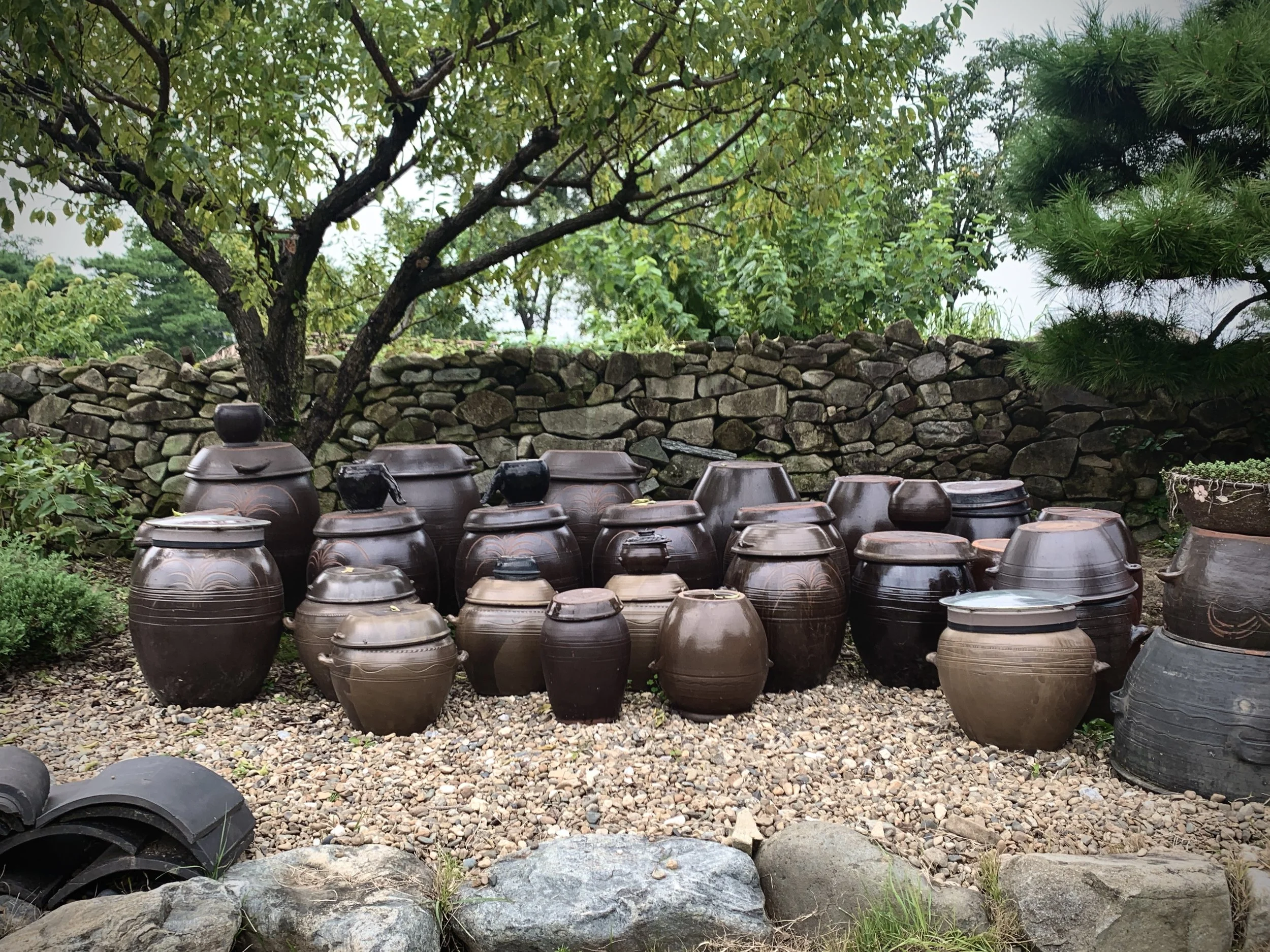
Earthenware onggi at a homestead in Oeam
What sets Oeam apart is its scale and ease. It's small enough to walk in an hour or two, but it still holds a real cross-section of Joseon society. This one feels a bit like a hidden gem — its scale and vibe are very similar to Hahoe, but it’s noticeably less touristed. Oeam is near where I live, so I’ve been there at least half a dozen times over the years, and I’ve never seen it busy or crowded. I’ve rarely seen foreign tourists there at all.
I would be remiss if I didn’t also mention that Oeam is a great place to eat. Outside the main entrance, the Oeam Folk Marketplace Street has eateries in thatched-roof buildings. The best known is Sangjeon (외암파전 상전), where the chef flips giant jeon (savory pancakes) on a massive griddle, and whose famous owner has been featured on a number of Korean television cooking shows. Wash it down with yeonyeopju, a lotus-leaf rice wine brewed in the village and designated as an intangible heritage item of South Chungcheong Province. There is also a cafe in the village itself as well as an old-school playground, which makes Oeam a nice outing for families.
Location: 5 Oeamminsok-gil, Songak-myeon, Asan, South Chungcheong Province
Getting there: Bus 100 runs to the village from in front of Onyang Oncheon Station, about 25 times a day. Trains from Seoul's Yongsan Station reach Onyang Oncheon in about an hour and a half. You can also get to Onyang Oncheon station by taking the KTX high speed rail from Seoul to Cheonan-Asan station, transferring there to subway line 1, and riding three stops. If you're driving, the village has two free parking lots.
Admission: 2,000 won for adults and 1,000 won for children. Entry is free for children under 7 and seniors over 65.
Museom Village (무섬마을) — Yeongju, North Gyeongsang Province
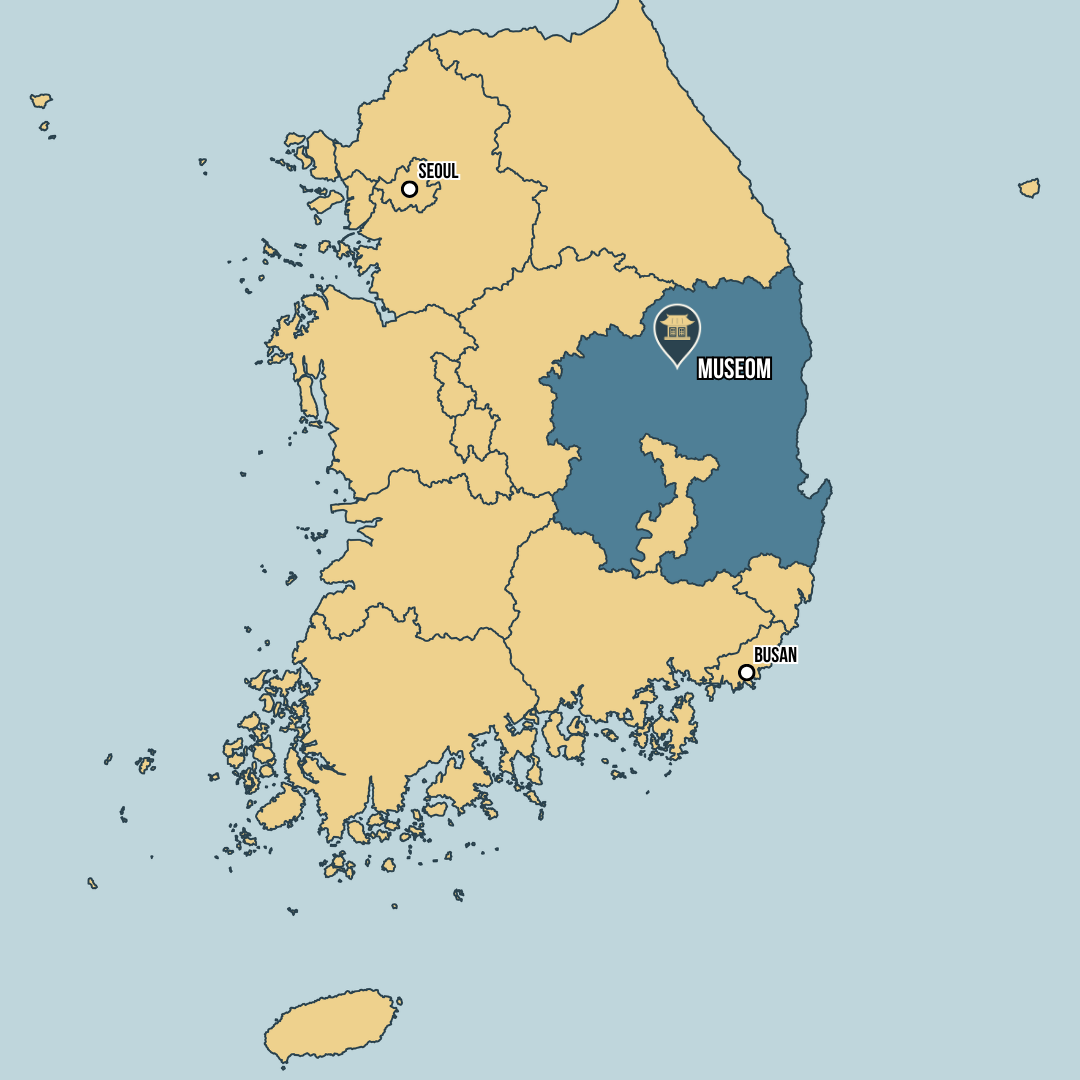
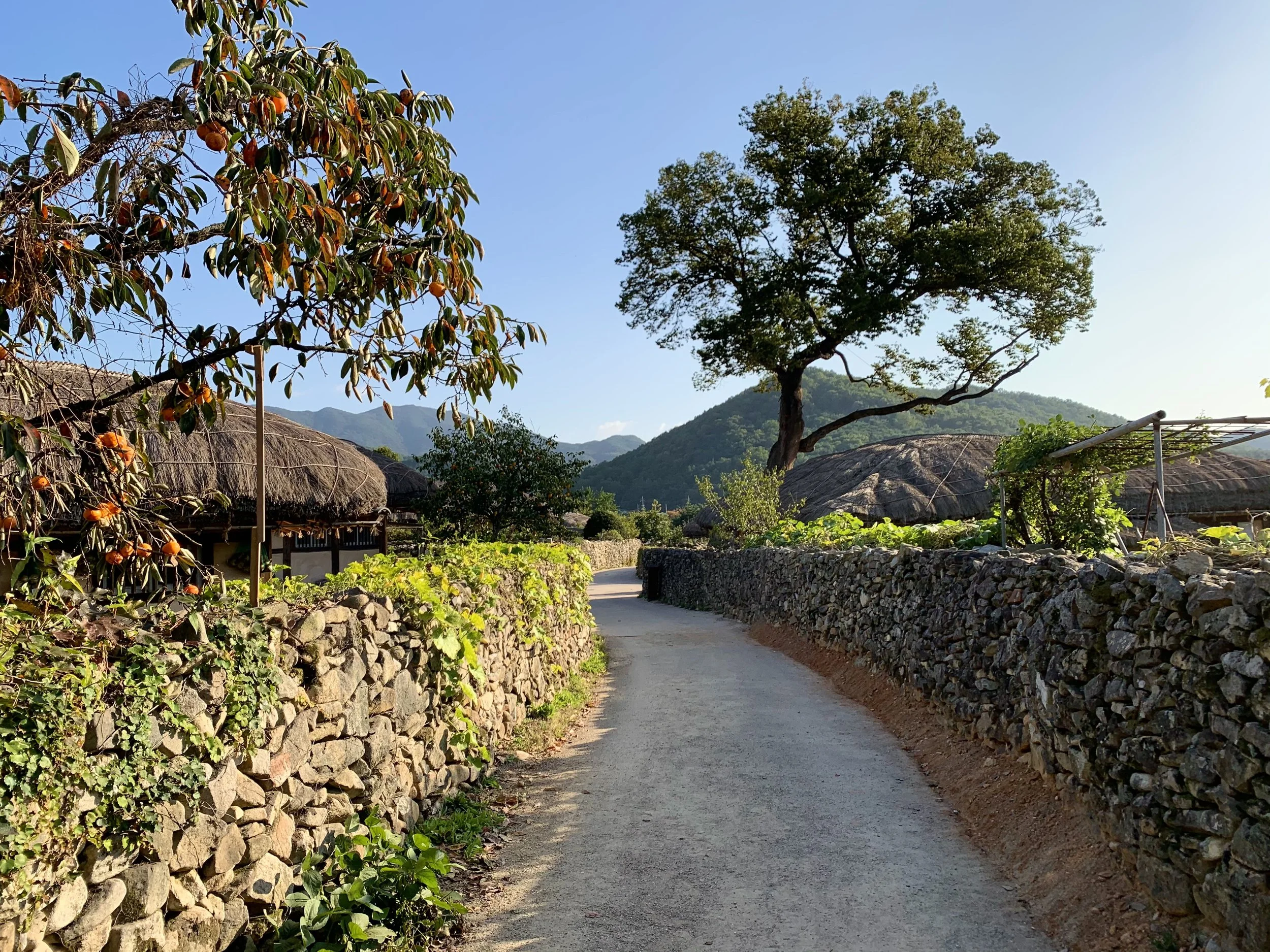
Museom (pronounced moo-sum) is the smallest and most intimate village in this entire guide. The Naeseong River wraps around it on three sides, so it sits like an island on land. The name says as much: Museom is the native-Korean form of Sudo-ri (水島里), meaning "island in the water." There are about 50 households and roughly 40 traditional buildings, with wide white sandbanks along the river. The scale is small enough that you can take in the whole place in a single slow walk.
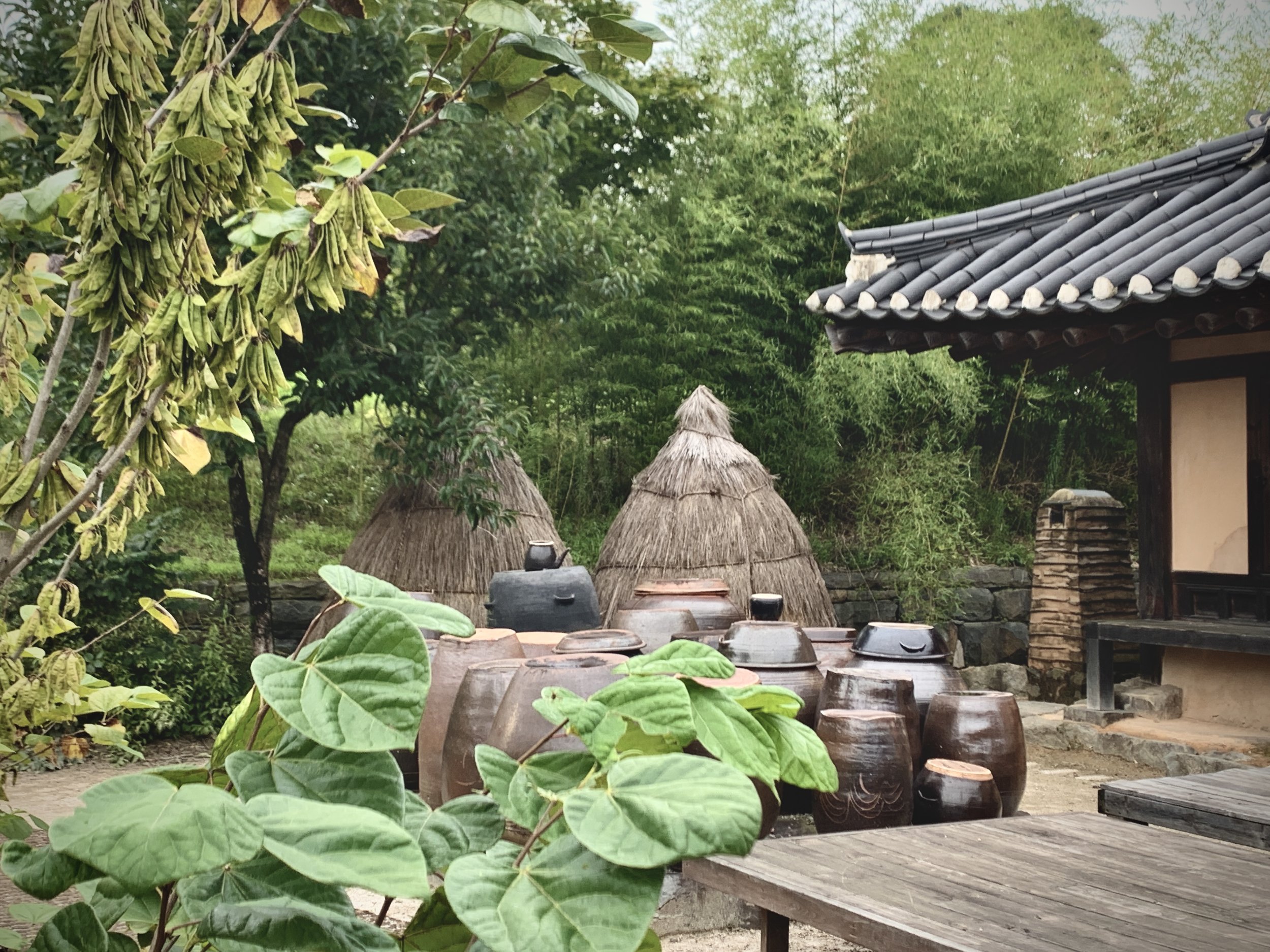
The village belongs to two lineages. Park Su (1641–1729) of the Bannam Park clan settled here in 1666 and built Manjukjae, which his descendants have held for 13 generations, some 360 years. The village’s design is a lesson in living with a river: because the village flooded often, crock jars were kept in a storeroom rather than outdoors, and the lofts were built high. In December 2024, both houses, along with their family documents and objects, were designated National Folk Cultural Heritage in their own right. Museom also has a history of resistance to Japanese colonial rule through Ado Seosuk, a community hall and school founded by villagers in 1928 that became a local center of the anti-Japanese movement.
But the image on most Museom postcards is its single-log footbridge, which was once the village's only link to the outside world. For generations, it was said that villagers crossed it only twice in a lifetime: once as a bride arriving in a palanquin, and once in a funeral bier. The footnote is that the original bridge disappeared, and what you see today was re-created starting in 2005 as part of an effort to restore the village's old look. It's now re-laid each year. That doesn't make it any less photogenic, but it's a reconstruction of a tradition, not a surviving structure. One more heads-up: in 2026, Museom and its bridge were picked for the culture ministry's "Local 100" promotion list, which may contribute to an increase in popularity.
Location: Sudo-ri, Munsu-myeon, Yeongju, North Gyeongsang Province
Getting there: Yeongju city bus 20 serves the village from downtown Yeongju, but only some of its runs actually go into Museom, so check the timetable before you set out. A car makes this one far easier, and parking is free.
Admission: Free
Wanggok Village (왕곡마을) — Goseong, Gangwon Province
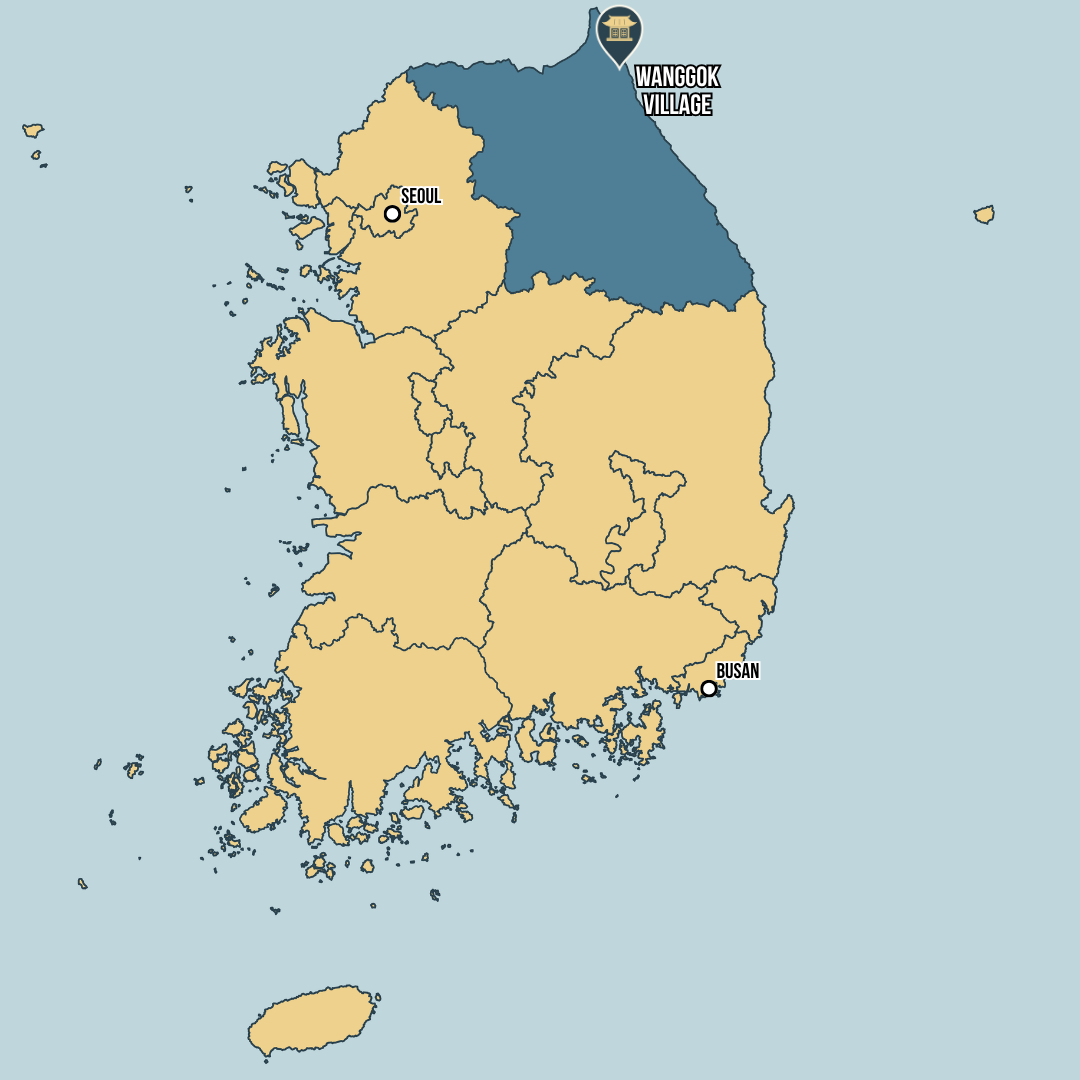
Wanggok is the folk village most visitors to Korea never hear about, and it’s one that I have not personally visited. I only just learned about it as I was researching places to write about in this guide. But Wanggok is supposedly one of Korea’s most distinctive folk villages. It's tucked into a small basin ringed by five low peaks on the far northeast coast in Gangwon Province — the area is called Obong-ri, "five peaks village.” Those same hills are credited with sparing most of the village from bombing during the Korean War, which is why its 18th- and 19th-century houses survived when so much else in the region didn't.
According to the Encyclopedia of Korean Culture, the village traces back to Ham Bu-yeol of the Yanggeun Ham clan. He was one of the "72 sages of Dumundong," the Goryeo loyalists who refused to serve the new Joseon dynasty, and he retired to nearby Ganseong. His grandson, Ham Yeong-geun, settled Wanggok. Today the main lineages are the Yanggeun Ham and the Gangneung Kim.
What sets Wanggok apart is its architecture, which belongs to the cold north rather than the warm south. Most of the houses are gyeopjip, compact double-row houses typical of Hamgyeong Province and the far north, built to hold heat. The stable is attached directly to the kitchen, giving the house an ㄱ shape and keeping the livestock warm through the winter. Look for the chimneys, too. Called hangari gulttuk, they're built from layers of mud and roof tiles and capped with an upturned clay jar, said to keep sparks off the thatched roofs. Compared to southern villages like Nagan and Hahoe, Wanggok looks like a different country.
Location: Obong-ri, Goseong County, Gangwon Province, about 1.5 km inland from the East Sea.
Getting there: Public transport here is minimal. A single local Goseong County bus route (No. 71) stops at the village entrance only a handful of times a day. Realistically, Wanggok is a place to visit by car, ideally as part of a drive up the east coast.
Admission: No admission fee is listed, and the village is open around the clock.
Seongeup Folk Village (성읍민속마을) — Jeju Island
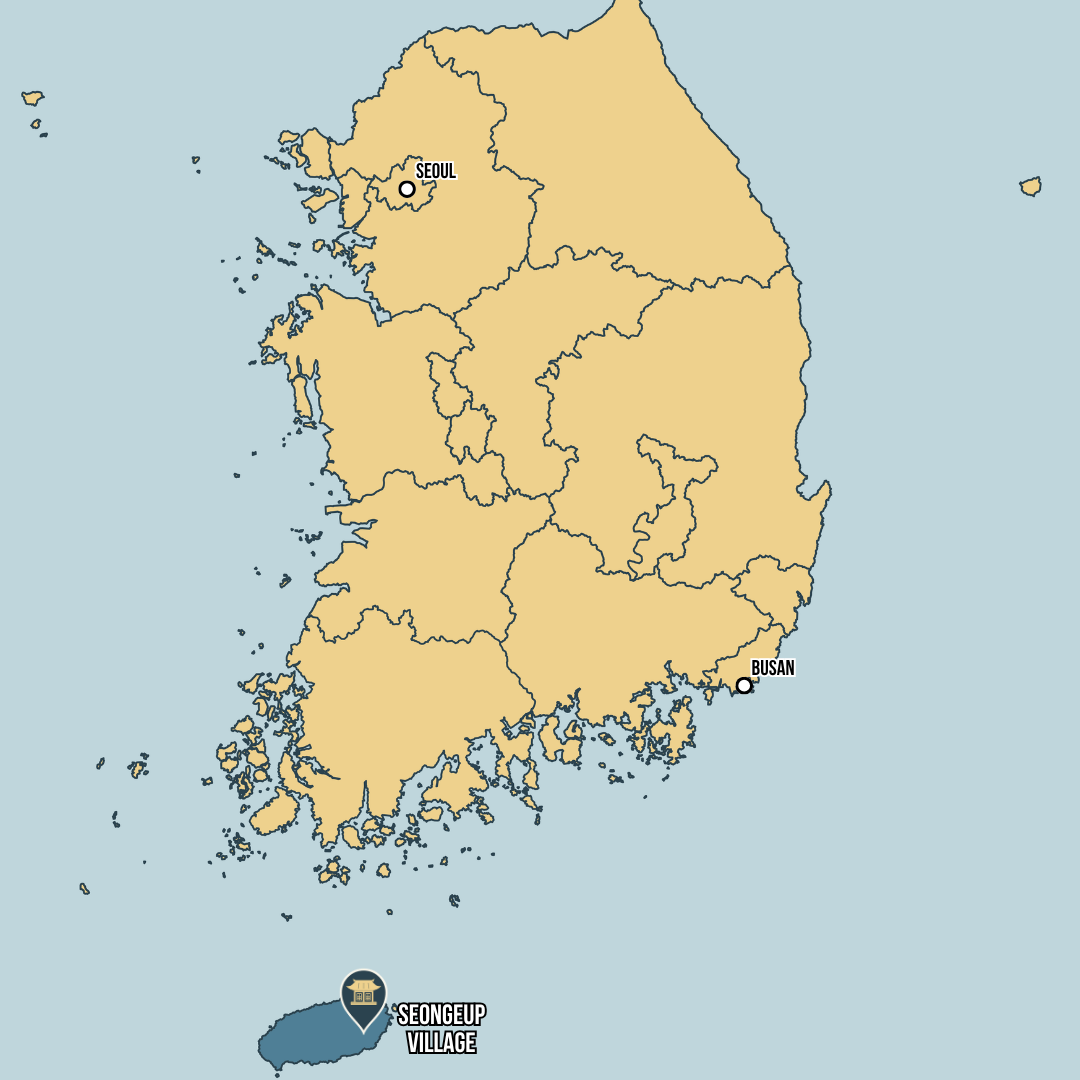
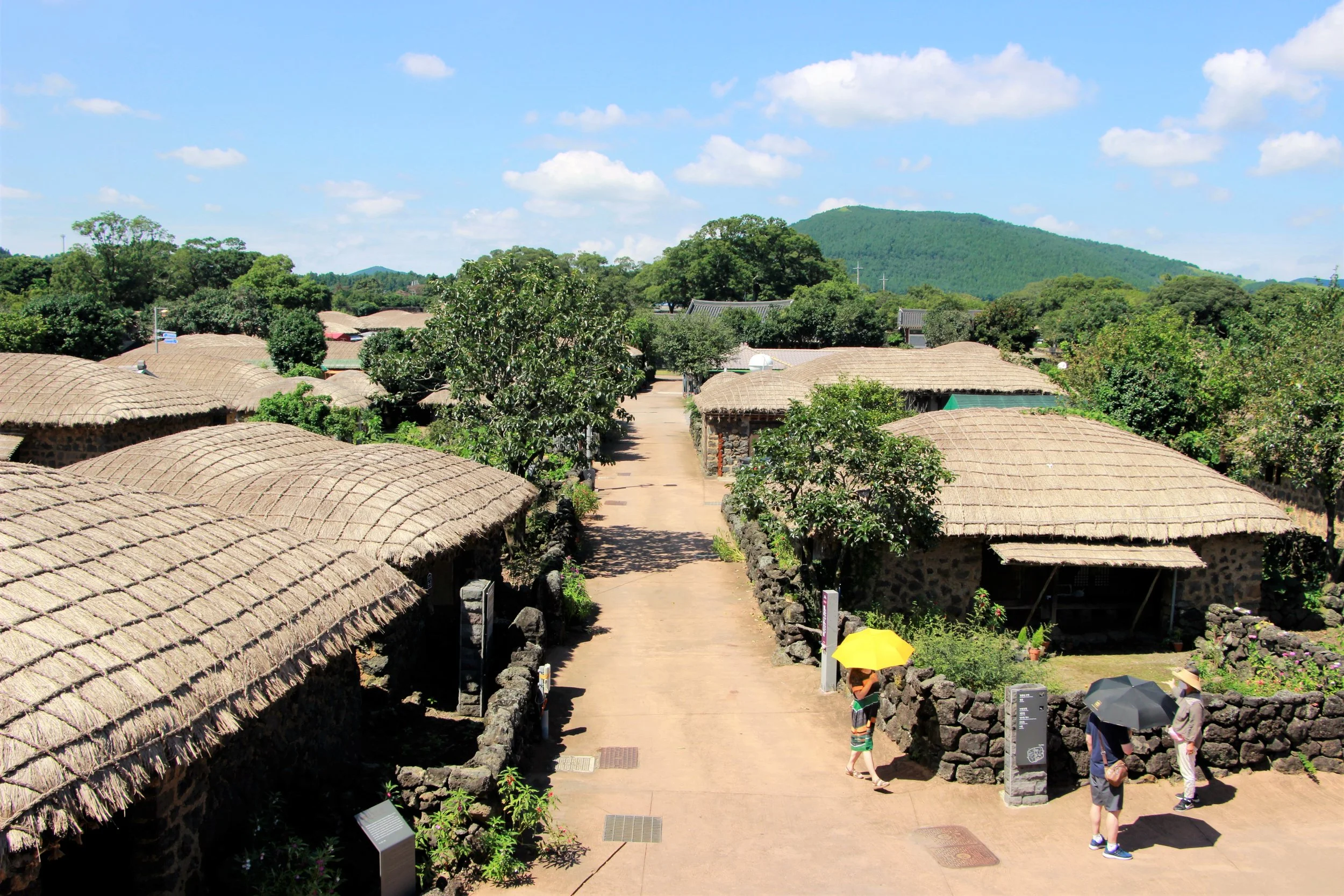
Seongeup is Jeju's own walled town, and like most things on Jeju, it’s quite distinct from the mainland. The houses are low thatched cottages behind black basalt walls, and the roofs are made from a wild grass Jeju people call sae, rather than rice straw. Under the Joseon dynasty, Jeju was governed as three districts, and from 1423 until the end of the dynasty, Seongeup was the seat of one of them, Jeongui County. People still live in its houses today.
The county office was moved here in 1423 from Goseong-ri, in today's Seongsan. The old site had too many problems: it was so close to the island of Udo that drums and horns could be heard day and night, and it suffered typhoon crop failures and pirate raids. Old records describe about 110 houses inside the new walls, with twelve dol hareubang — Jeju's famous stone guardian statues — standing outside the gates of the government office.
What sets Seongeup apart is how clearly it shows traditional Korean life adapting to a volcanic island: different materials, different house layouts, even a different kind of outhouse. Look for the tongsi, a traditional pig-pen toilet. (It’s…exactly what it sounds like.) Like Nagan Eupseong on the mainland, Seongeup is a former county seat with a village still inside. Five of its houses were individually designated National Folk Heritage in 1979, including an inn and a smithy. Restoration of the walls and county seat began in 1986, and the magistrate's office, Ilgwanheon, was rebuilt in 1975. The village's old zelkova and hackberry trees are designated natural monuments.
Seongeup Folk Village
Seongeup is also a reminder that "living village" status is fragile. In August 2026, Jeju's governor told the national heritage agency that Jeju's traditional materials — sae thatch, walls of volcanic soil rather than clay — are weaker than mainland ones, and asked for Jeju-specific restoration standards. The province also requested a five-year, 20 billion won program (2027–2031) to keep resident life in the village going. Whether or not that money comes through, it's a signal that the people who make Seongeup a living village rather than a museum are under real strain.
Location: Seongeup-ri, Pyoseon-myeon, Seogwipo, Jeju
Getting there: From Jeju Intercity Bus Terminal, take a bus bound for Beonnyeong-ro and get off at Seongeup 1-ri Office, about 200 m from the village. The trip takes about 1 hour 40 minutes. From Seogwipo, the trip takes about 45 minutes with a transfer at Pyoseon. Jeju's bus routes change fairly often, so check a transit app before you go. Parking is free.
Admission: Free, though hands-on programs cost extra.
Korean Folk Village (한국민속촌) — Yongin, Gyeonggi Province
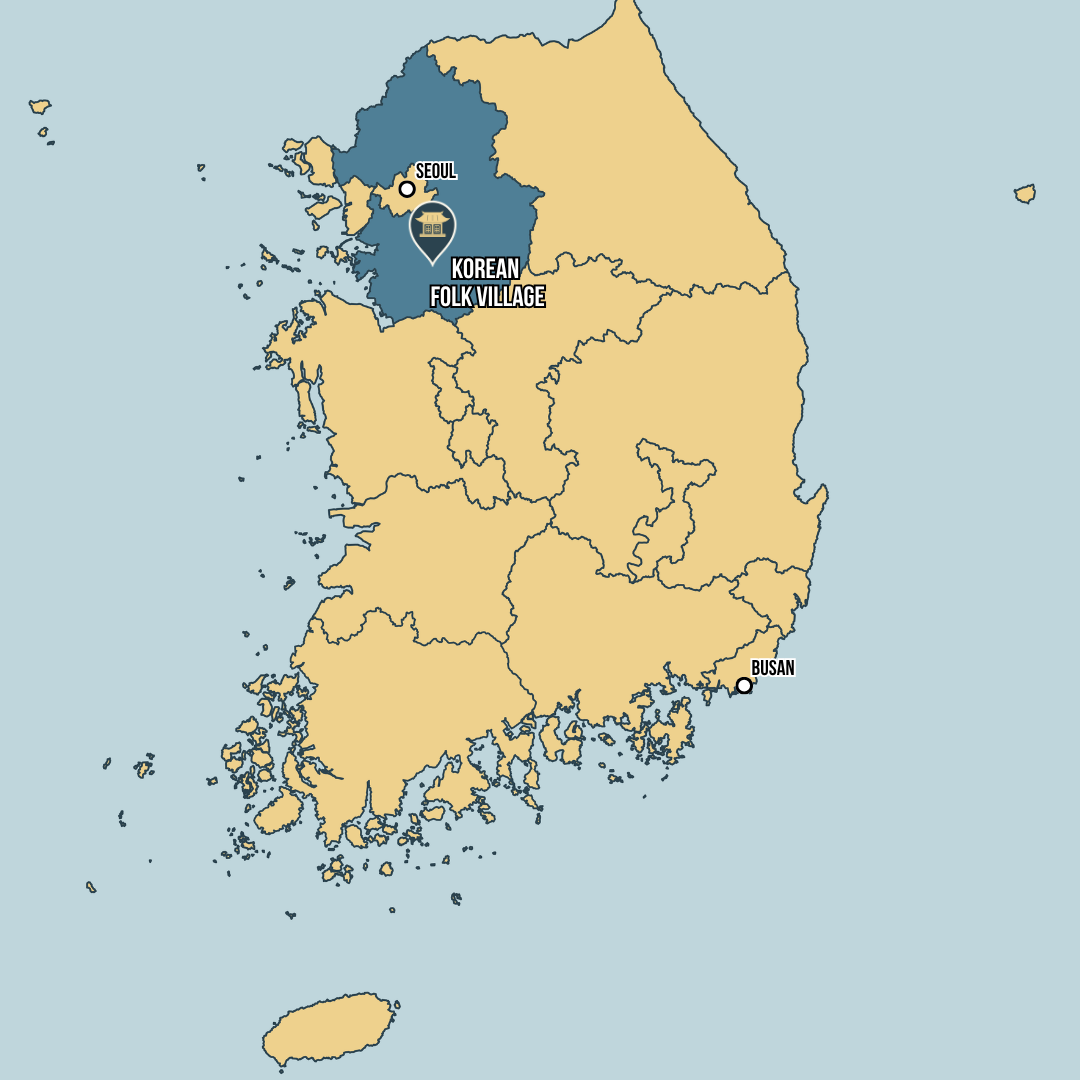
I debated whether or not to include this place in this guide. It is easily the least authentic place I’ve mentioned. It’s not a living village. It’s a purpose-built open-air museum where traditional houses from around the country were relocated and rebuilt alongside replica buildings. But I decided to include it for a few reasons. First, it’s close to Seoul, making it a very accessible day trip option for those staying in the capital. Second, it’s practically a theme park — imagine a Korean take on a renaissance faire — which makes it the best fit on this list for families with young children. Finally, as I’ve already mentioned, it’s not completely inauthentic, as around 30 or so of the buildings are in fact traditional structures that have been relocated from elsewhere. If your goal is catch a glimpse of what life in Korea was like before modernization, you can do that here. Staff in period dress run craft workshops, farmers' music performances, tightrope walking, and horseback acrobatics. It also doubles as one of Korea's busiest historical-drama film sets, so if you watch Korean period dramas, parts of it may look familiar.
For decades, the Folk Village was best known as a school field-trip destination. That changed around 2012, when its costumed staff characters went viral on Korean social media and young adults started showing up in force. Today it runs seasonal festivals like "Welcome to Joseon," along with a market street and a full program of shows. Recently, you may have seen some viral clips from the village’s autumn festival called Gwisinsaba Ghost Play (귀신사바 귀신놀이) in which staff members dressed as terrifying characters from Korean folklore (virgin ghosts, grim reapers, a gumiho nine-tailed fox) interact with the guests — chasing guests, wedging themselves between couples for photos, and pretending to carry off children (with the parents’ permission).
If you go into this place knowing what it is — not a real village, but a purpose-built replica — you can learn a bit about Korean culture and history, and you’ll have a good time doing it.
Location: 90 Minsokchon-ro, Giheung-gu, Yongin, Gyeonggi Province
Getting there: Express buses run directly from Seoul: No. 5001-1 from Sinnonhyeon Station, No. 1560 from Gangnam Station, and No. 4101 from Seoul Station. By subway, take the Suin-Bundang Line to Sanggal Station (Exit 3), or Line 1 to Suwon Station (Exit 4), then transfer to bus 37 or 10-5. Parking costs 2,000 won for a car.
Admission: On weekdays, 37,000 won for adults and 30,000 won for children; on weekends, 39,000 won and 32,000 won. Middle-school students and older pay the adult rate, and children under 36 months get in free.
Things to Know Before You Visit a Folk Village
These are people's homes. With the exception of the Korean Folk Village in Yongin, every place in this guide is a working village, and many of the houses are private. Not every house is open to visitors, so be mindful of where you wander.
Time your visit intentionally. Several villages come alive on specific dates. Nagan and Oeam both hold rites on the first full moon of the lunar year. Oeam also hosts a three-day night festival every late May and a straw-craft festival each autumn. At Hahoe, the Seonyu Julbullori only runs on certain nights, so check the schedule if you want to see it.
Consider staying the night. Several of the thatched houses at sites like Nagan Eupseong and Hahoe run as homestays, which lets you experience a living village after the day-trippers have gone home.
Manage your expectations about "original." As I mentioned at the start, nearly every site in this guide has been restored, some of them heavily. That's not a reason to skip any of them. But it helps to know what you're looking at, and to appreciate the places where the living part of "living village" is still holding on.
Korea's folk villages are some of the best places in the country to slow down and see how people lived before the high-rises — and, in a few of them, how people still do. If you'd like help building one or more of them into a trip to Korea, I'd be happy to help you plan it.
