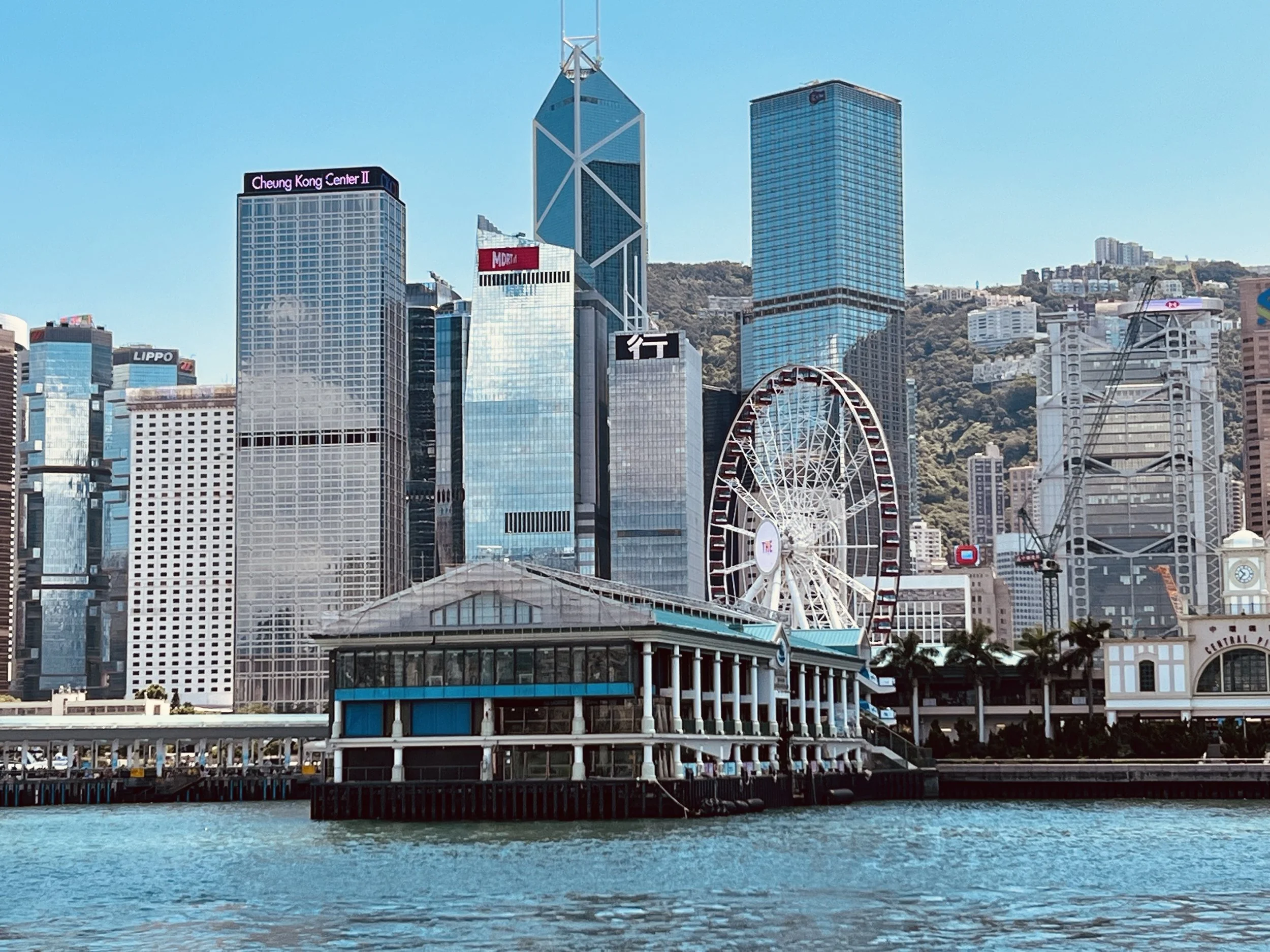
Essential Hong Kong: A Complete Travel Guide
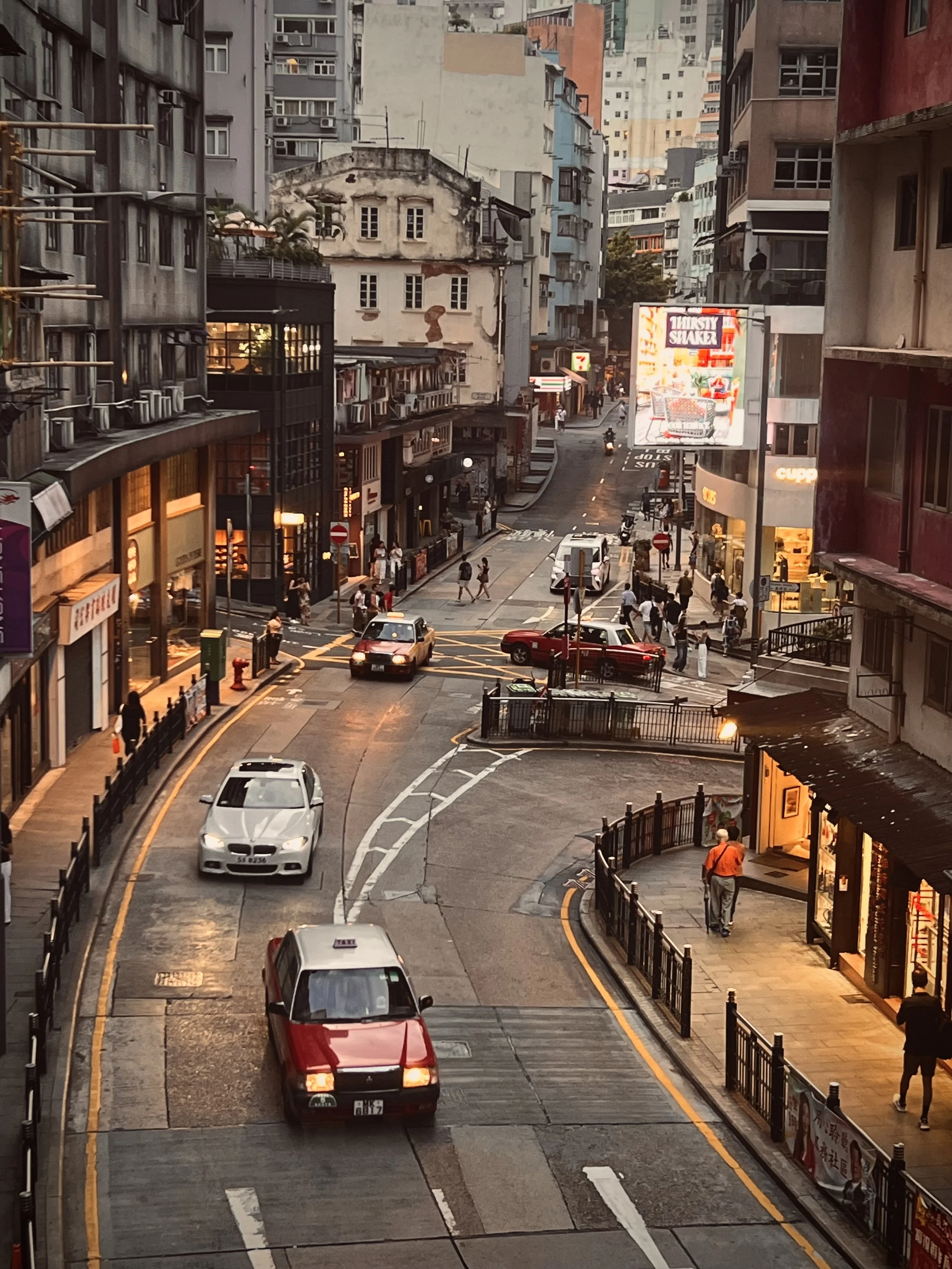
Hong Kong is one of those cities that grabs you immediately and doesn't let go. I've visited multiple times over the years, and it never gets old — stepping off the MTR into the humidity and noise and sheer density of it, looking up at a skyline that seems to defy physics, smelling roast meat and diesel and the sharp salt of dried seafood from a wet market stall all at once. Few cities in the world pack as much into such a small space: world-class food, dramatic urban landscapes, colonial history, bustling markets, serene hiking trails, and outlying islands that feel a world away from the urban rush. The contrast is what makes it extraordinary. You can hike a quiet ridge trail in the morning with the South China Sea spread out below you, and be eating Michelin-starred roast goose over rice at a no-frills lunch counter by noon. That kind of range, compressed into a city of this size, is genuinely rare.
What follows are my recommendations for getting the most out of this extraordinary city.
Where to Stay:
Kowloon vs. Hong Kong Island
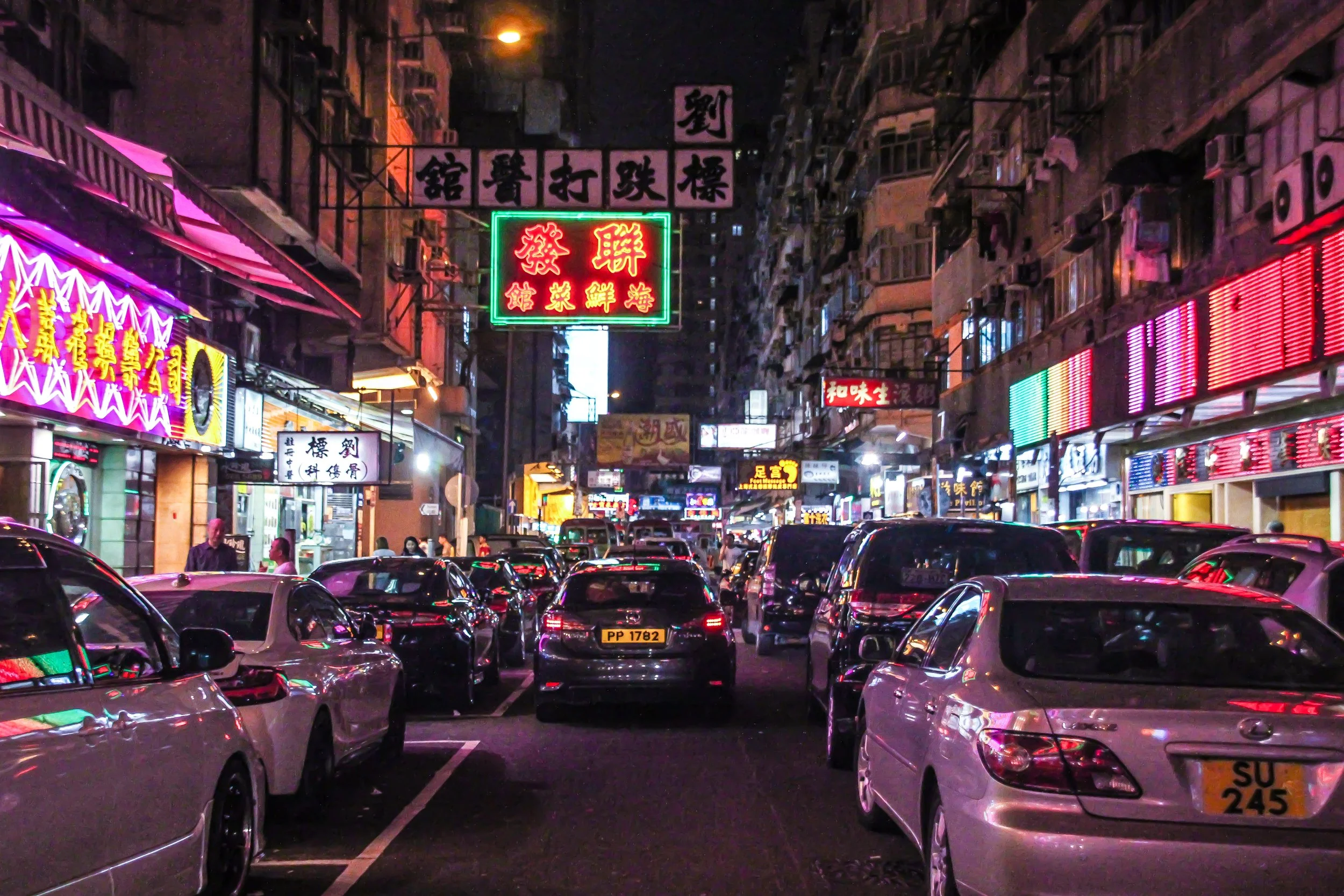
The two main parts of urban Hong Kong are separated by Victoria Harbour. Most first-time visitors default to the Hong Kong Island side of the harbor — Central and Wan Chai in particular — and it's easy to see why. The addresses feel prestigious, the MTR connections are excellent, and you're close to major attractions like Victoria Peak and the Mid-Level Escalators. But my personal preference is to stay on the Kowloon side, around Jordan or Tsim Sha Tsui, and I acknowledge that's probably a minority opinion. Kowloon is grittier, denser, and (to my eye) more authentically Hong Kong. The streets feel more lived-in, the markets are better, and the harbor views from the waterfront look back at the full sweep of the Hong Kong Island skyline rather than away from it. Getting across to the Island side is never more than a short MTR ride or Star Ferry crossing away. For first-timers who want the full Hong Kong experience, I'd encourage you to at least consider it before defaulting to the Island.
Things to do in Hong Kong
Victoria Peak
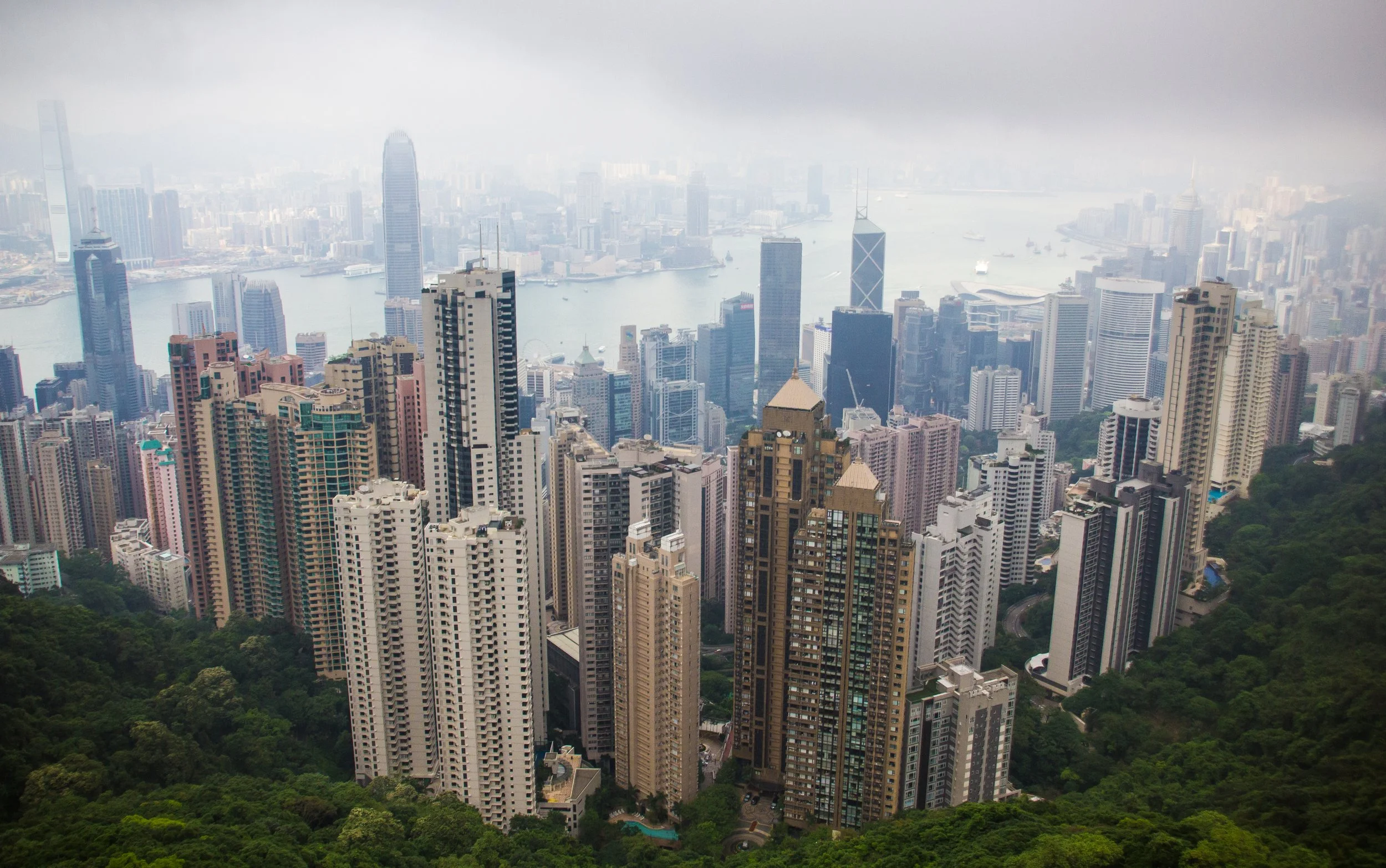
No visit to Hong Kong is complete without going up the Peak. The views from the top are as dramatic as advertised — the full sweep of Hong Kong Island's skyline, Victoria Harbour, and Kowloon laid out below you, with the green hills of the New Territories beyond. You can reach the summit via the historic Peak Tram, a funicular that has been running since 1888, or by bus if you prefer. Go on a clear day, and if your schedule allows, time it for late afternoon so you can watch the city transition from day to night. Skip the commercial Peak Tower if crowds aren't your thing — the public viewing terrace at Lion's Pavilion, just a short walk further up the path, offers the same views without the queues.
Ride a Tram and the Star Ferry
Hong Kong's double-decker trams — known locally as "ding dings" for the sound of their bells — have been trundling along the northern shore of Hong Kong Island since 1904. They are absurdly cheap and one of the most underrated ways to experience the city. Grab a seat on the upper deck and ride east from Kennedy Town toward Causeway Bay, watching the character of the neighborhoods shift around you. The Star Ferry, meanwhile, is one of those rare tourist experiences that is also genuinely useful — a 10-minute harbor crossing between Central and Tsim Sha Tsui that offers a front-row view of the skyline for the price of a few Hong Kong dollars. Take it at least once in each direction.
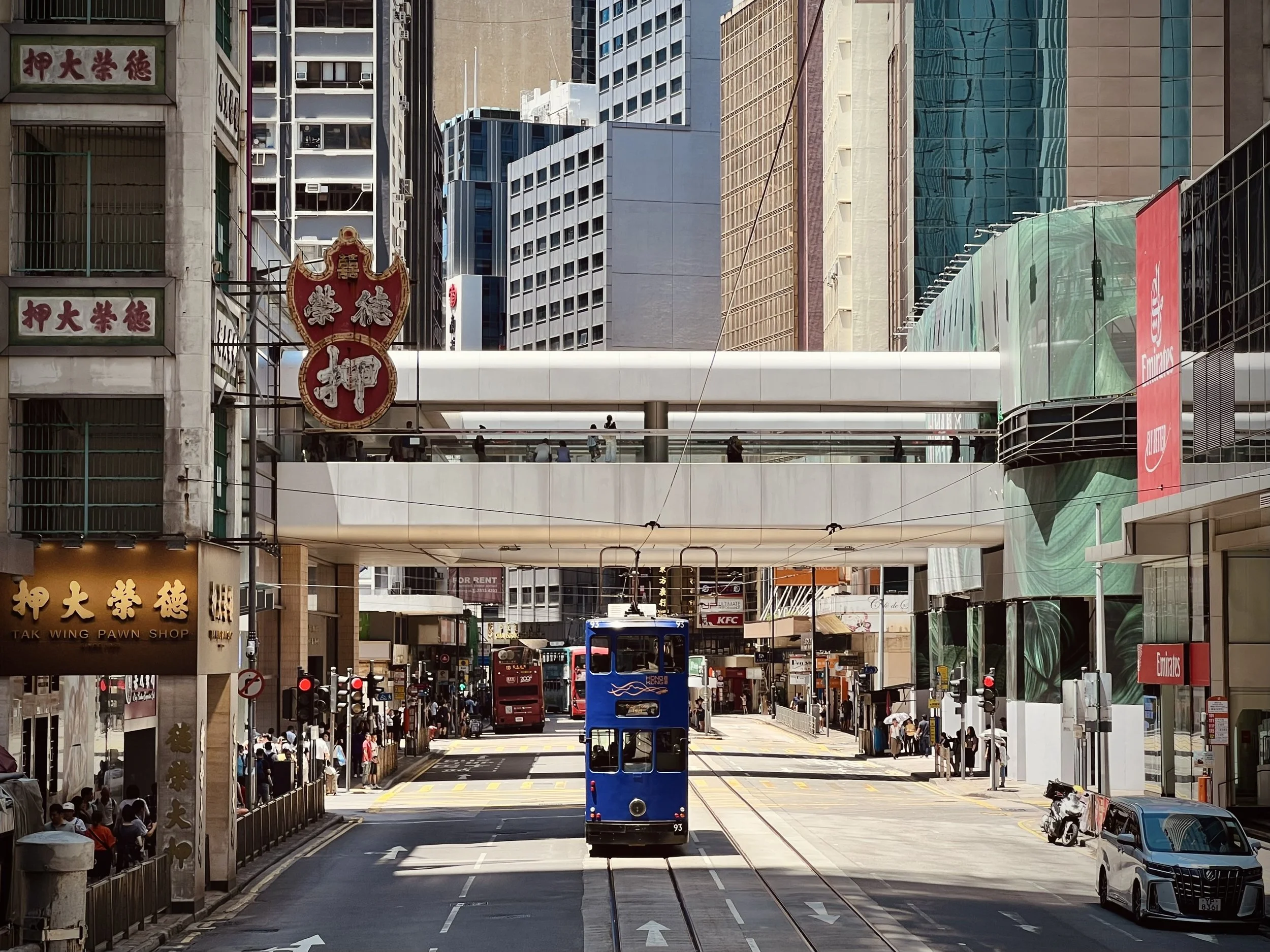
A tram, or '“ding ding”, trundling down the street in Central.
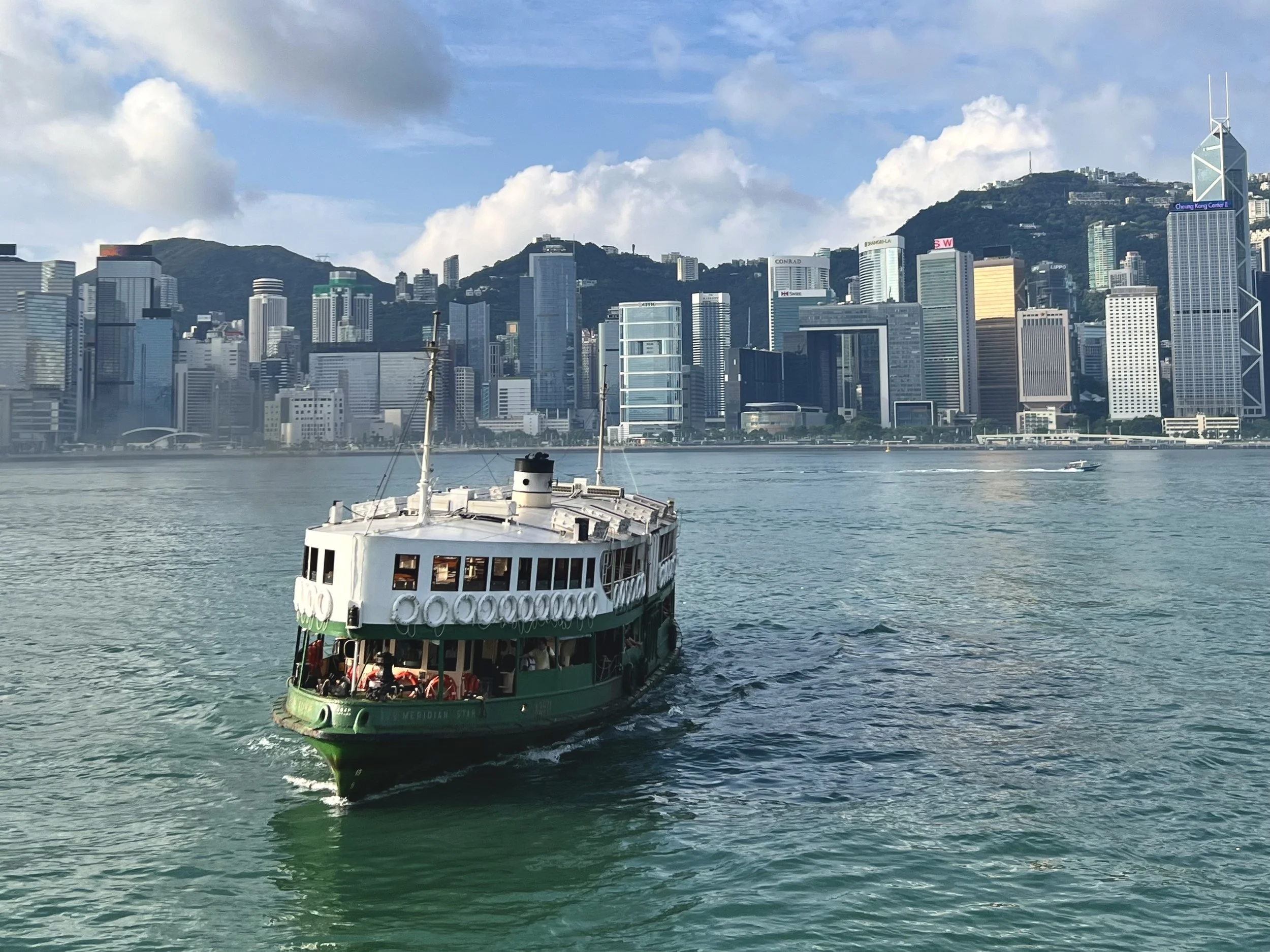
The Star Ferry crossing Victoria Harbour, with the Hong Kong Island skyline behind it.
The Mid-Level Escalators
The world's longest outdoor covered escalator system, climbing 135 vertical meters through the hillside neighborhoods of Central. It exists primarily as commuter infrastructure — running downhill in the morning, uphill from late morning onward — but for visitors it doubles as an unconventional, self-guided tour of one of Hong Kong's most intriguing areas. Ride it uphill and hop off wherever something catches your eye. The stretch through SoHo is lined with cafes, bars, and restaurants; higher up, the streets get quieter and more residential. It's a great way to get pleasantly lost.
Symphony of Lights
Every night at 8pm, more than 40 buildings across the Hong Kong and Kowloon waterfronts participate in a choreographed display of lights, lasers, and searchlights set to music. It's best experienced from the Kowloon side — the Avenue of the Stars along the Tsim Sha Tsui waterfront gives you the full panorama across the harbor. Arrive 20 minutes early to secure a good spot along the promenade, and stay for a walk along the waterfront afterward. The nighttime skyline, even without the show, is worth seeing.
Browse the Markets
Hong Kong has a handful of markets that are worth building into your itinerary. Stanley Market, on the southern side of Hong Kong Island, is a daytime market set in an attractive waterfront village — the scenic bus ride over the hills from Central is part of the appeal. The stalls sell clothing, art, and souvenirs to a mix of tourists and local expats, and the surrounding area has good cafes and restaurants for a leisurely lunch afterward.
On the Kowloon side, Mong Kok is the neighborhood to explore for market culture. Within a short walk of each other, you'll find the Ladies' Market, a dense stretch of clothing and accessories stalls with a very local atmosphere; the Flower Market, which is exactly what it sounds like and is visually worth the detour (incidentally, it’s also probably the best-smelling street in the city); and the Goldfish Market and Bird Garden, which are genuinely strange and wonderful in the way only Hong Kong can produce. It makes for a good half-day of wandering.
For atmosphere after dark, Temple Street Night Market in Yau Ma Tei is the classic Hong Kong night market experience — a neon-lit corridor of stalls selling everything from jade to electronics to street food, with fortune tellers and occasional live Cantonese opera adding to the sensory overload. Go after dark, go hungry, and be prepared to bargain.
Cable Car to Tian Tan Buddha
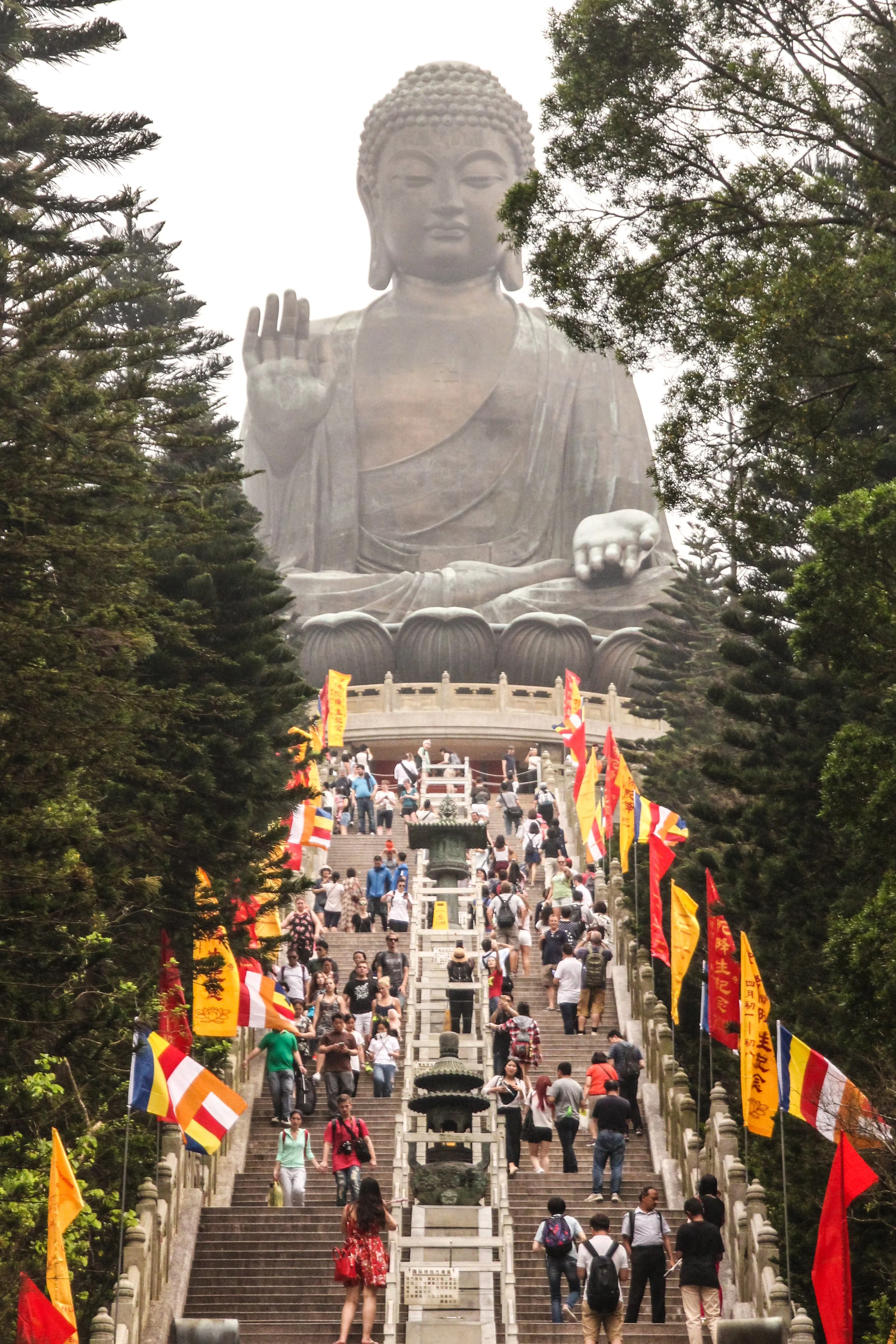
The Ngong Ping 360 gondola on Lantau Island is one of the most scenic rides in the region — 25 minutes over forested hills with sweeping views of the South China Sea and the airport below. At the top sits the Tian Tan Buddha, one of the world's largest outdoor bronze Buddha statues, perched at the top of a long staircase above the Po Lin Monastery. The complex is genuinely impressive, and the surrounding Ngong Ping Village, despite being somewhat developed for tourism, provides a striking contrast to the urban density you've left behind. Book the gondola tickets in advance, especially on weekends — queues can be brutal.
Visit the Smaller Islands
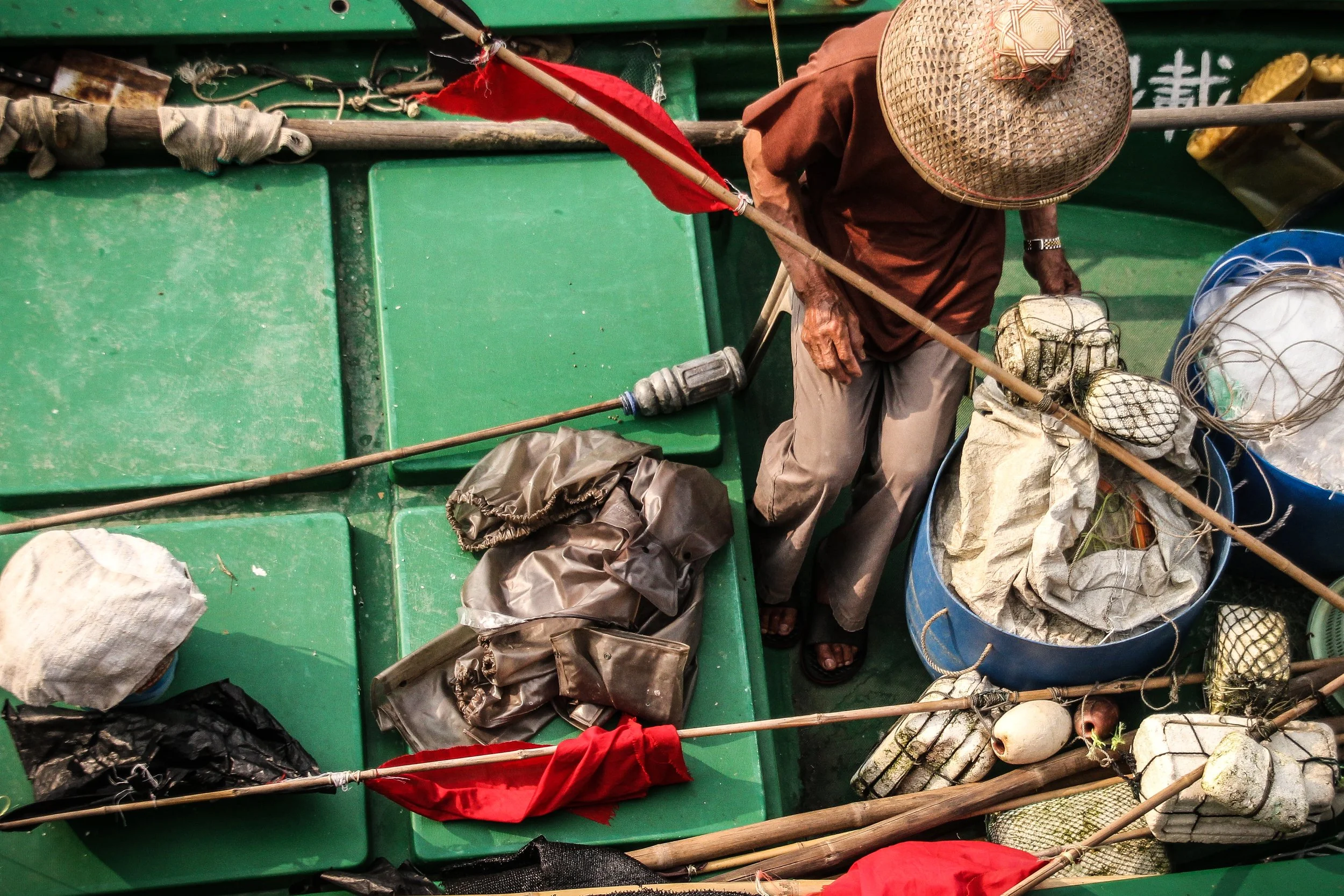
A short ferry ride from the city, Hong Kong's outlying islands offer a completely different pace of life. Tai O Fishing Village on Lantau Island is the most evocative — a community of stilt houses built over the water, narrow lanes crowded with fishing nets and dried seafood, and a way of life that feels largely unchanged by the modern city nearby. Cheung Chau is another favorite: a small, car-free island with a relaxed village atmosphere, good seafood restaurants along the waterfront, and the famous Cheung Chau bun towers if you happen to visit during the annual Bun Festival. Both are easy half-day trips and well worth the ferry ride.
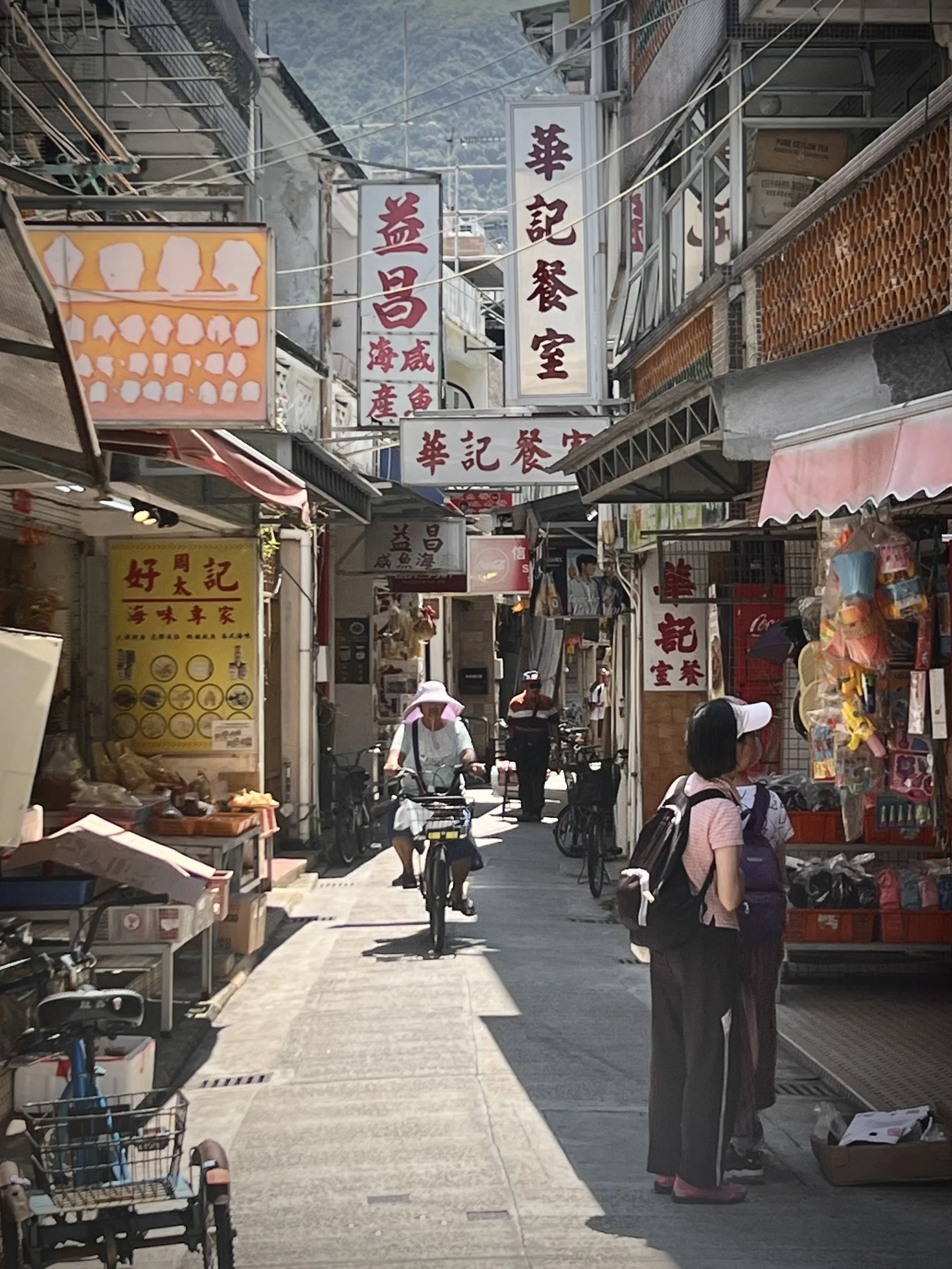
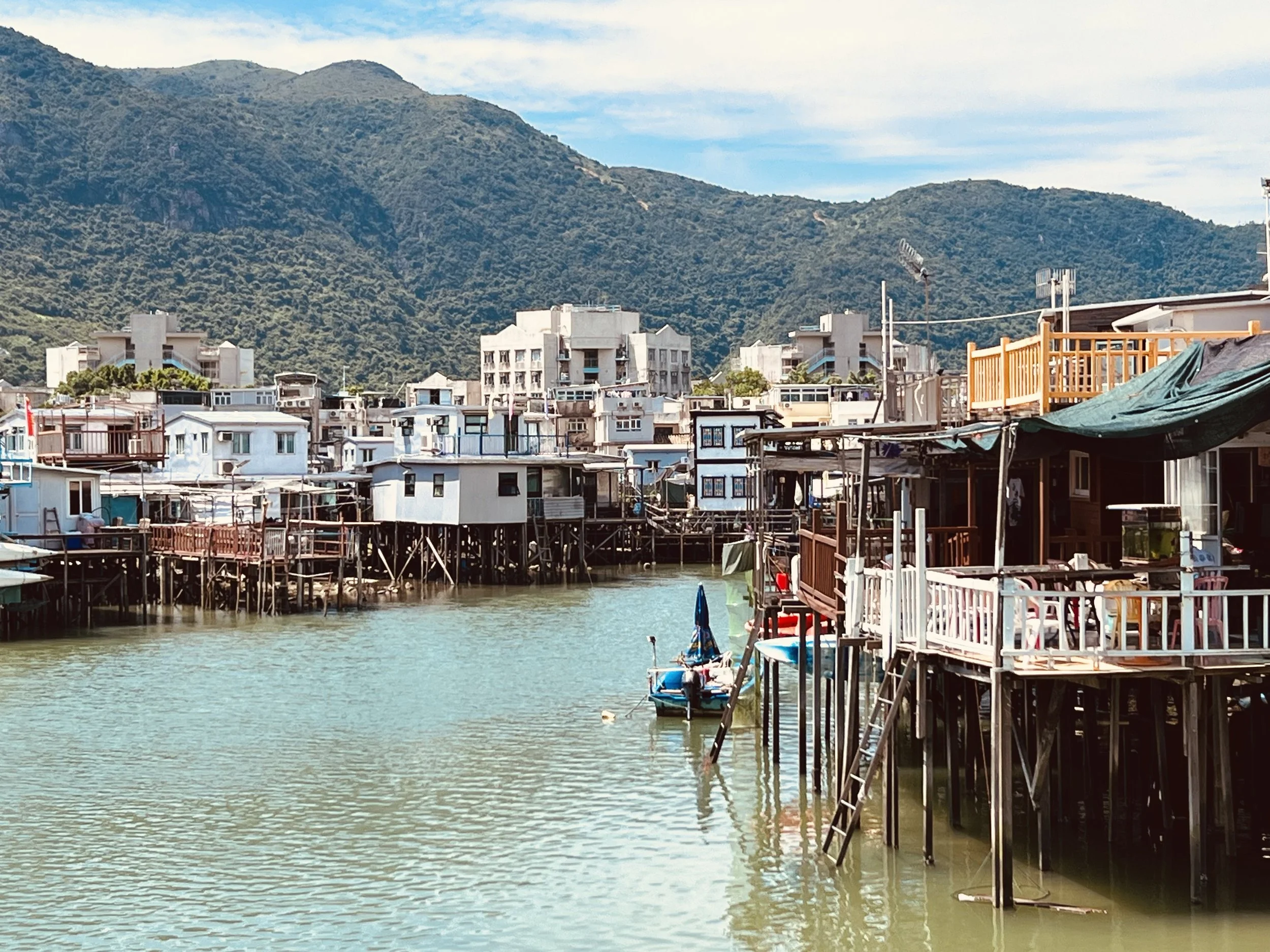
The stilt houses and canals of Tai O fishing village.
Hike Dragon’s Back
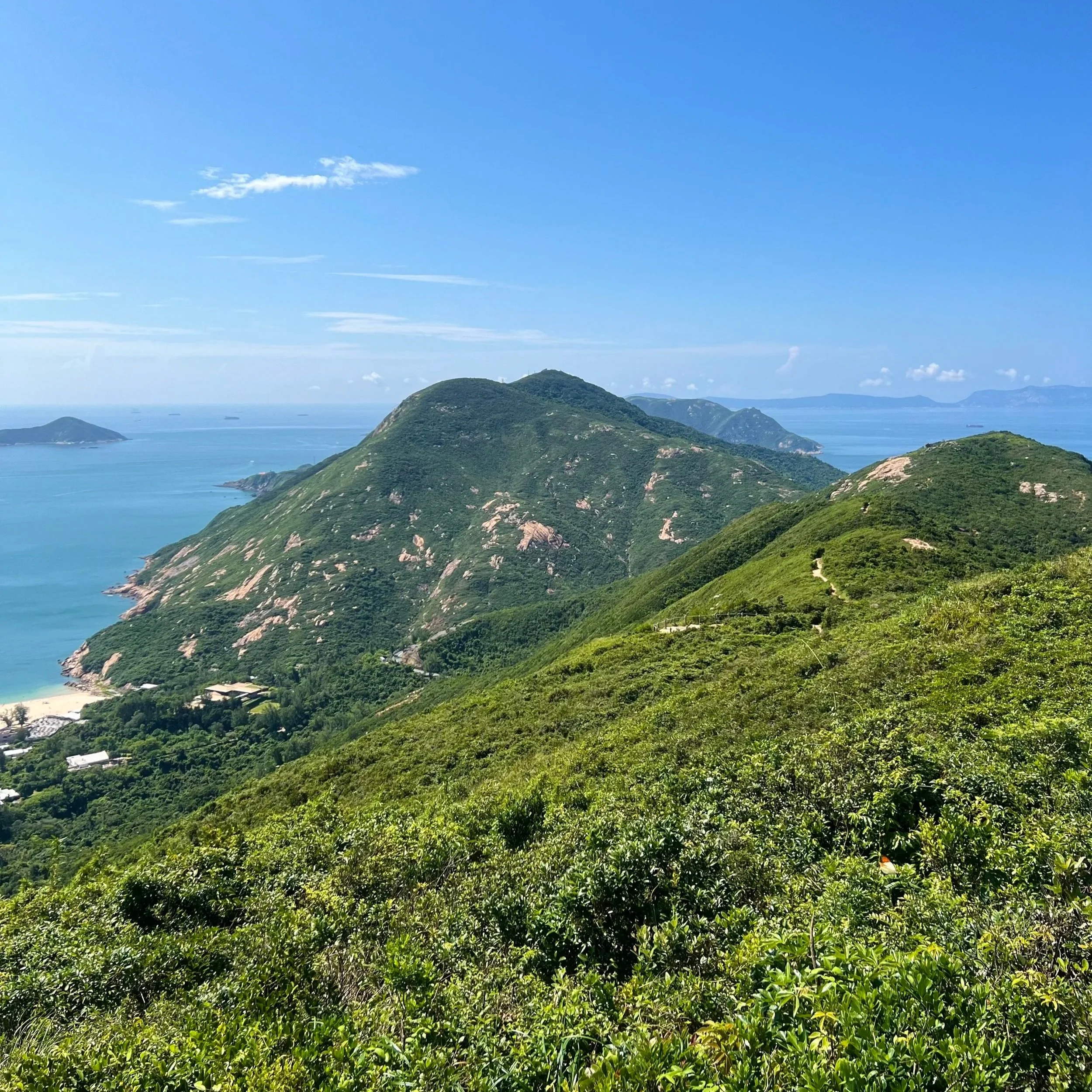
View from Shek O Peak on the Dragon Back hike.
It might surprise first-time visitors to learn that Hong Kong is one of the best hiking cities in Asia. Over 40% of the territory is protected country park, and there are well-maintained trails within easy reach of the city center. Dragon's Back, on the southeastern tip of Hong Kong Island, is widely considered the best urban hike in the city — a moderate ridge walk with sweeping views of the South China Sea, the Sai Kung Peninsula, and the outlying islands. The trail ends at Shek O Beach, where you can reward yourself with a cold drink before catching the bus back. Allow around two hours for the hike itself.
Day trip to Macau
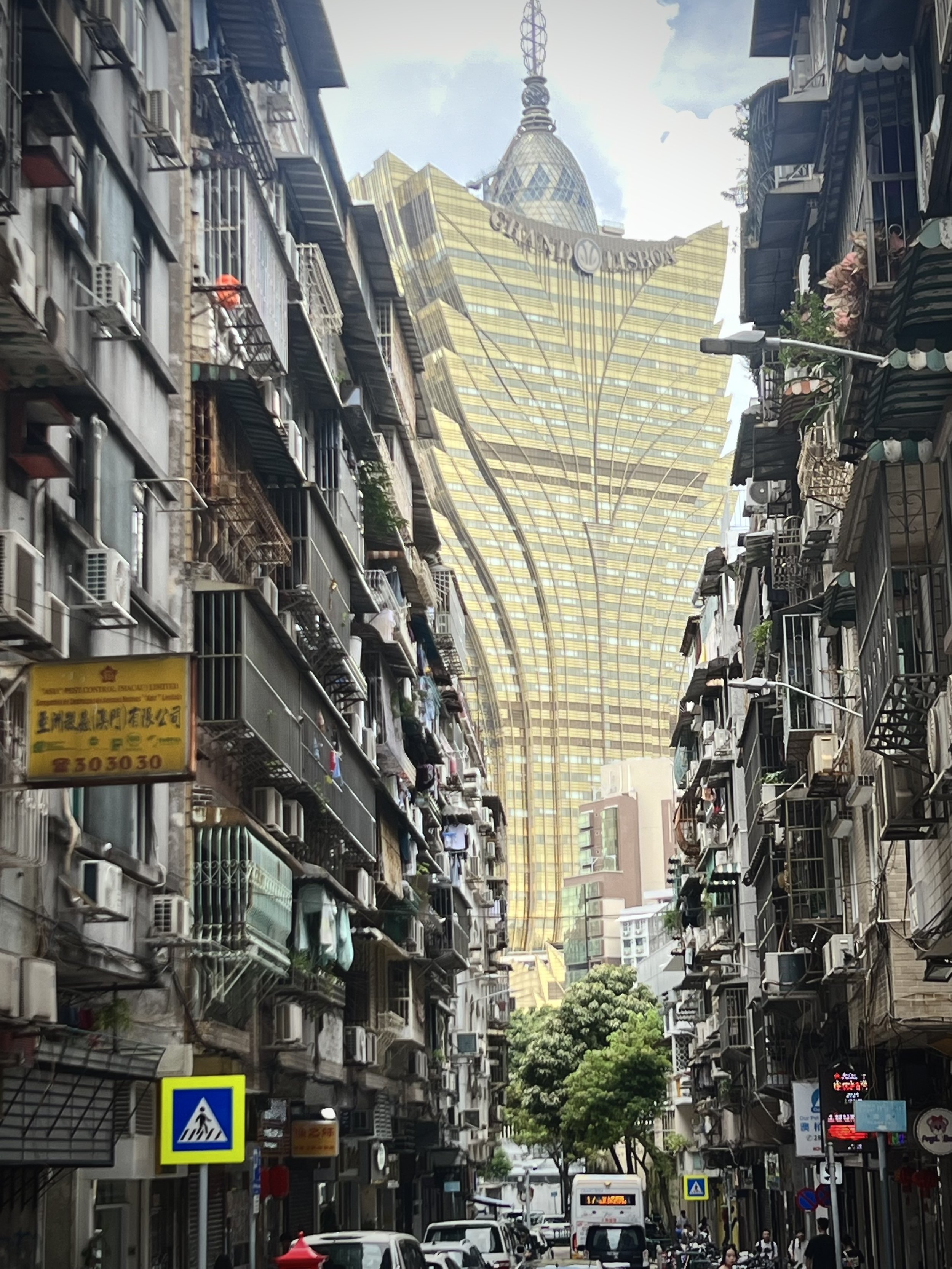
Macau is only about an hour from Hong Kong by high-speed ferry, and it is emphatically worth the trip. While most people associate it with casinos, Macau is far more interesting than its Vegas-of-the-East reputation suggests. The historic center — a UNESCO World Heritage Site — is a remarkable layering of Portuguese colonial architecture and Chinese culture: pastel-colored churches, cobblestone plazas, and crumbling baroque facades coexisting with temples and traditional shophouses. The food alone justifies the journey. Macanese cuisine is one of Asia's great undiscovered culinary traditions, a centuries-old fusion of Portuguese and Cantonese cooking. Try a pastel de nata (egg tart) from Lord Stow's Bakery in Coloane Village, and track down African chicken if you can find it. Spend a morning in the historic center, have a long lunch, and you'll be back in Hong Kong by mid-afternoon with plenty of day left.
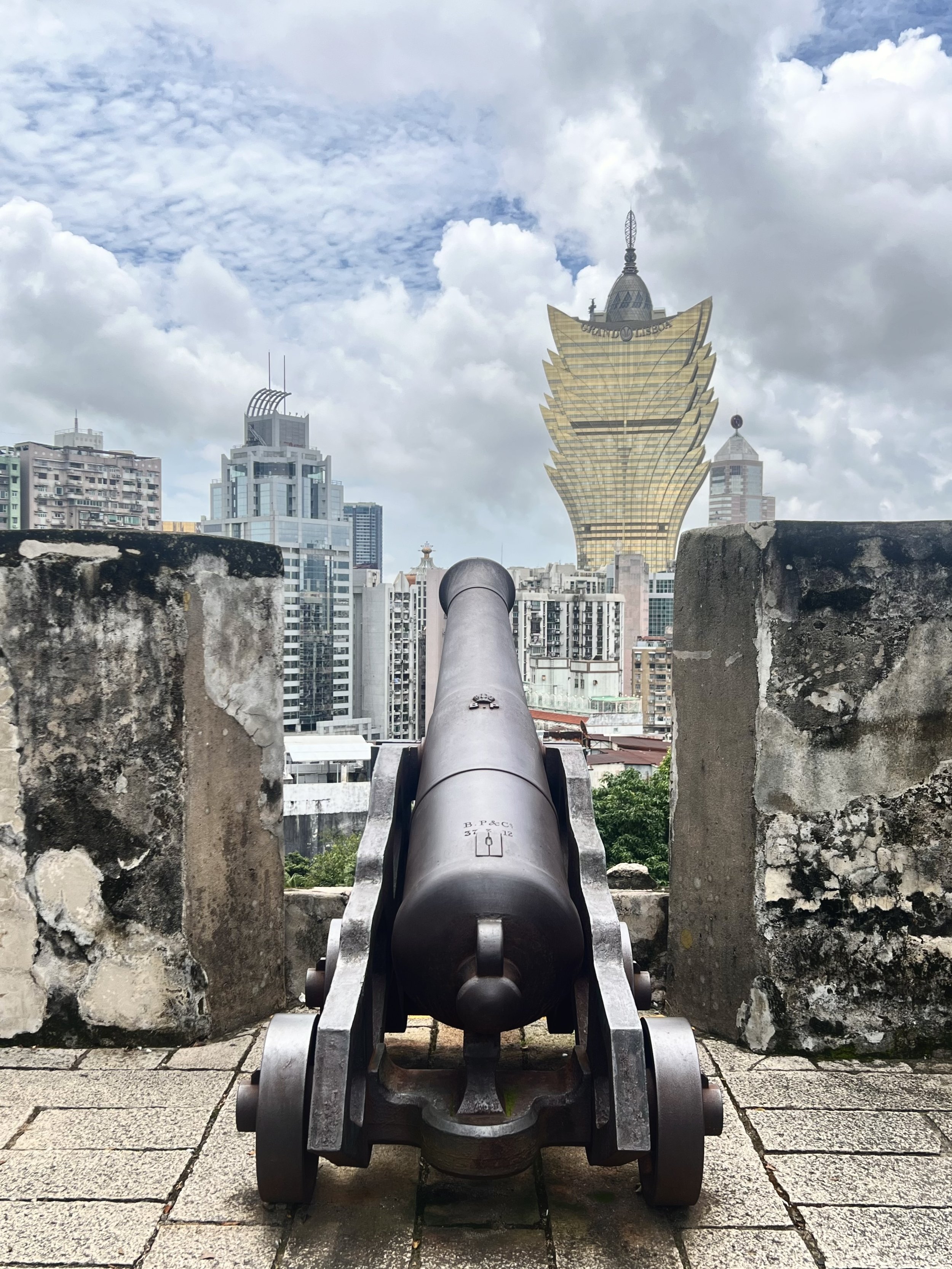
Macau skyline seen from Monte Fort.
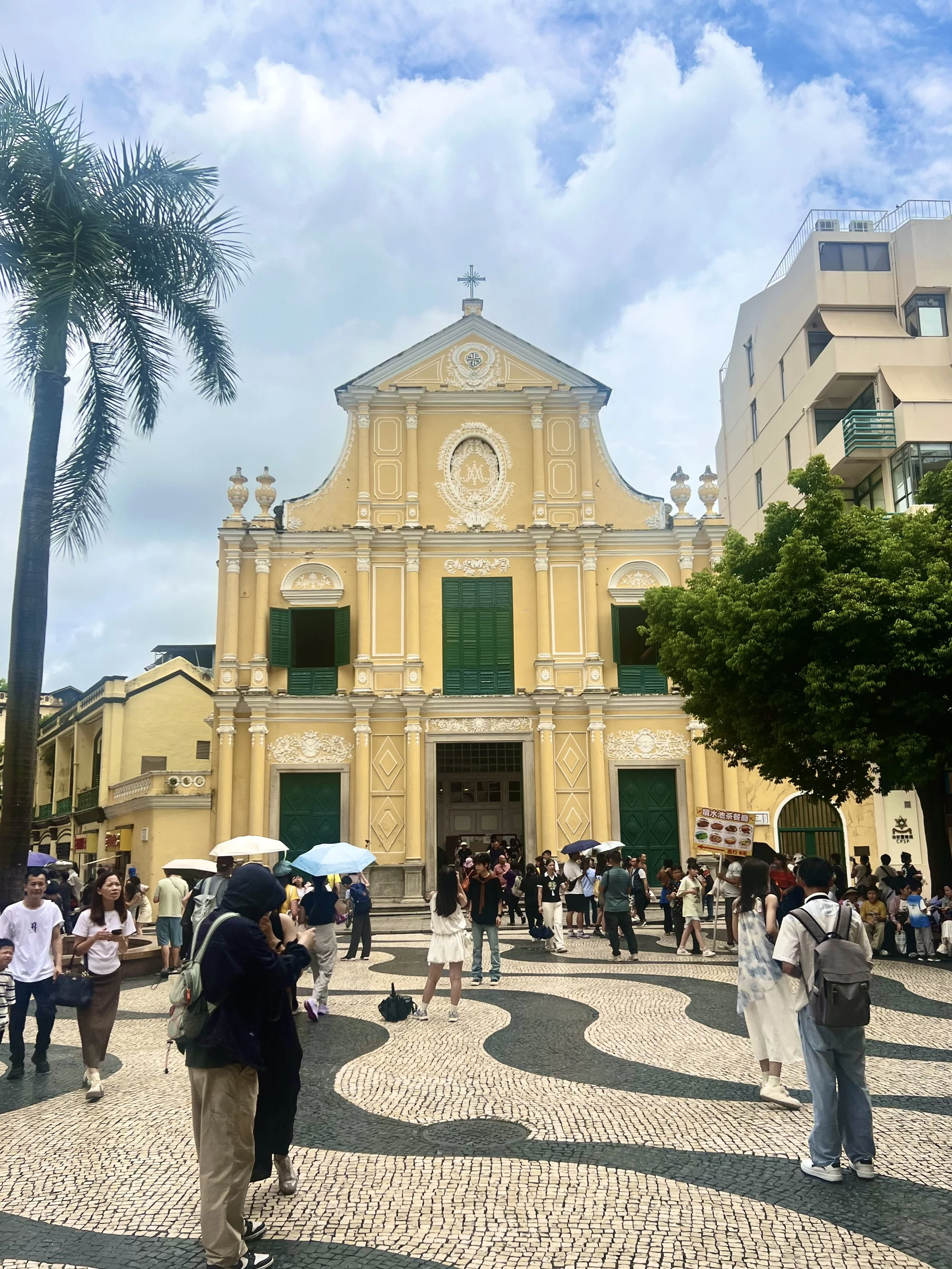
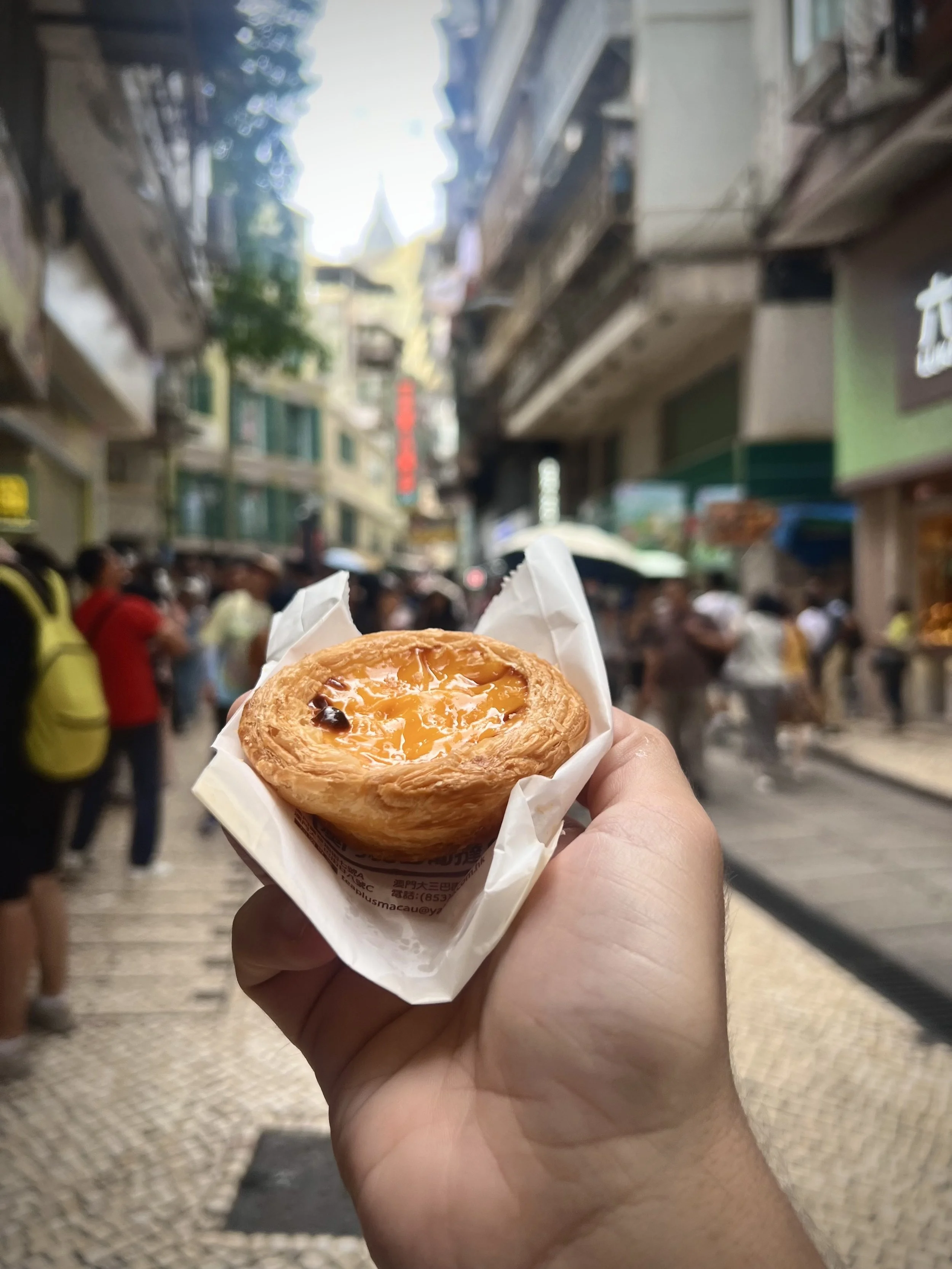
The essential Macau snack.
Where to Eat & Drink in Hong Kong
Hong Kong is one of the great food cities not just of Asia, but of the world. The Cantonese culinary tradition that forms its backbone is one of the most sophisticated in Chinese cooking, and decades of British influence and international immigration have layered additional complexity on top of that. Eating well here requires almost no effort; the harder challenge is deciding what to prioritize. Here's where I'd start.
Dim Sum
The tradition of gathering over tea and shared small plates is one of Hong Kong's defining food experiences. A proper dim sum meal is a leisurely, communal affair: bamboo steamers of har gow and siu mai arriving at the table, plates of char siu bao and turnip cake, the steady clatter of chopsticks and conversation. For the full range of options across different atmospheres and price points:
Lin Heung Tea House in Sheung Wan is the old-school choice — one of the last places in Hong Kong where the traditional dim sum cart service still operates. It's loud, chaotic, and completely authentic. Go early, be prepared to share a table with strangers, and flag down the cart ladies aggressively.
One Dim Sum in Prince Edward is a perennial local favorite — unpretentious, consistently excellent, and very affordable. Expect a queue, but it moves quickly.
Tim Ho Wan holds the distinction of being one of the most affordable Michelin-starred restaurants in the world. The original Mong Kok location is the one to go to. The baked BBQ pork buns are the signature item and they are worth every bit of the hype.
Ming Court at the Cordis Hotel in Mong Kok is the special-occasion option — refined, elegant, and expensive by Hong Kong standards. If budget isn't a concern and you want a more formal dim sum experience, this is the one.
Cha Chaan Teng
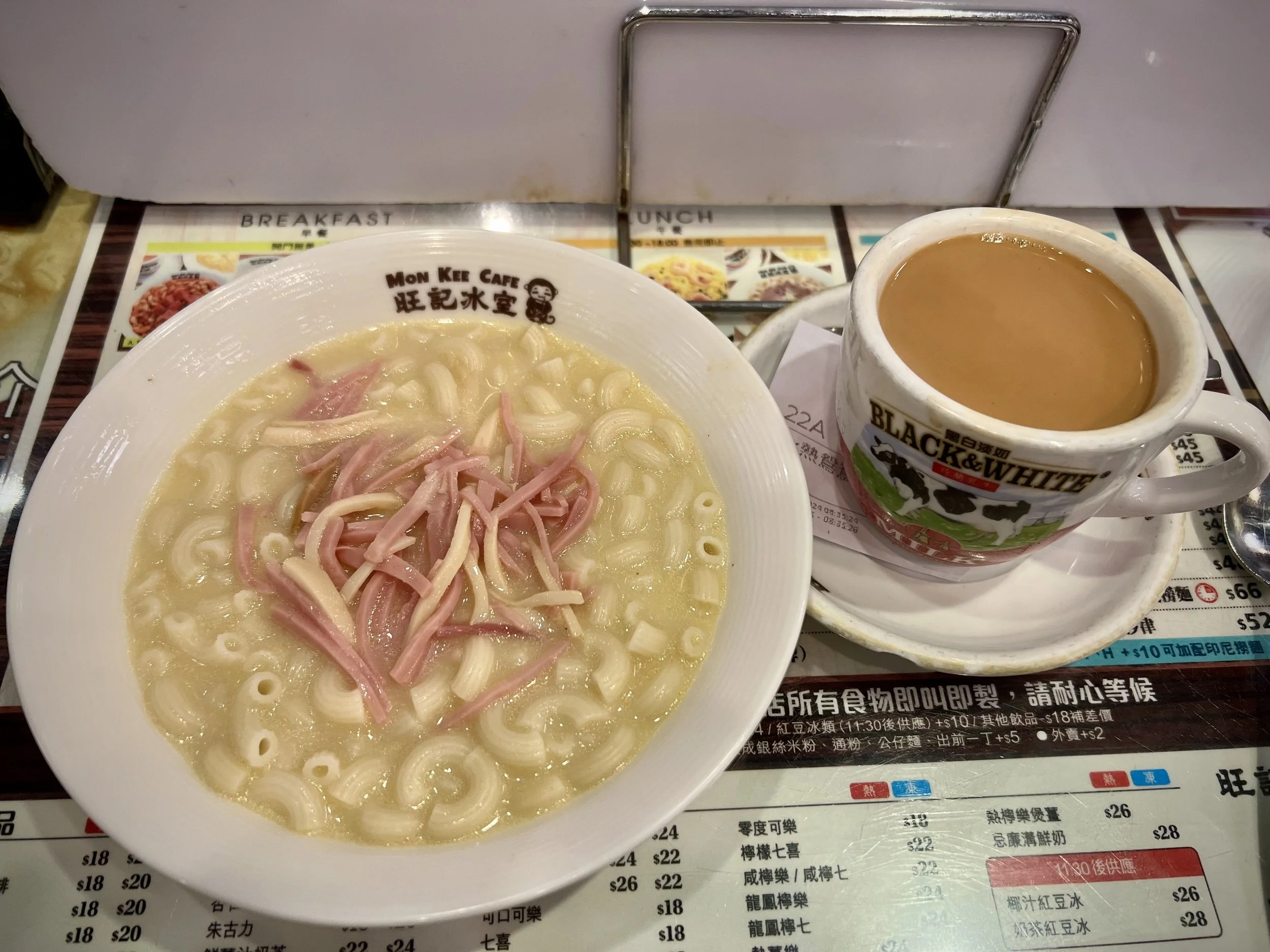
If there is one dining experience that is uniquely Hong Kong, it's the cha chaan teng. Literally translated as "tea restaurant," these are the city's casual, no-frills neighborhood diners — the kind of place where the tables are laminate, the menus are enormous, the service is brusque, and the turnover is fast. They emerged in the mid-20th century as an affordable alternative to Western-style cafes, and what developed over the decades is a menu that exists nowhere else on earth: a hybrid of Cantonese comfort food and Western diner staples filtered through a distinctly Hong Kong sensibility. Breakfast is the essential meal. You want the milk tea — thick, silky, and pulled through a stocking strainer until it achieves a sort of velvety texture — alongside buttered toast with condensed milk, HK-style scrambled eggs, and perhaps a bowl of macaroni soup with ham. The combination might sound odd, but it tastes so, so right. While you're there, order a pineapple bun — a Hong Kong classic. Ask for it with butter, which arrives as a thick cold slab pushed into a split in the warm bun. It's a simple thing, but it's one of those bites that's difficult to explain and impossible to forget. You'll find cha chaan tengs on virtually every block in every neighborhood. Don't overthink it — walk into anywhere that looks busy and full of locals, and you'll be fine. A few names that come up consistently: Lan Fong Yuen in Central (widely credited with inventing the pulled milk tea), Capital Café in Wan Chai, and Tsui Wah, which has multiple locations and stays open late.
Siu Mei (Cantonese Roast Meats)
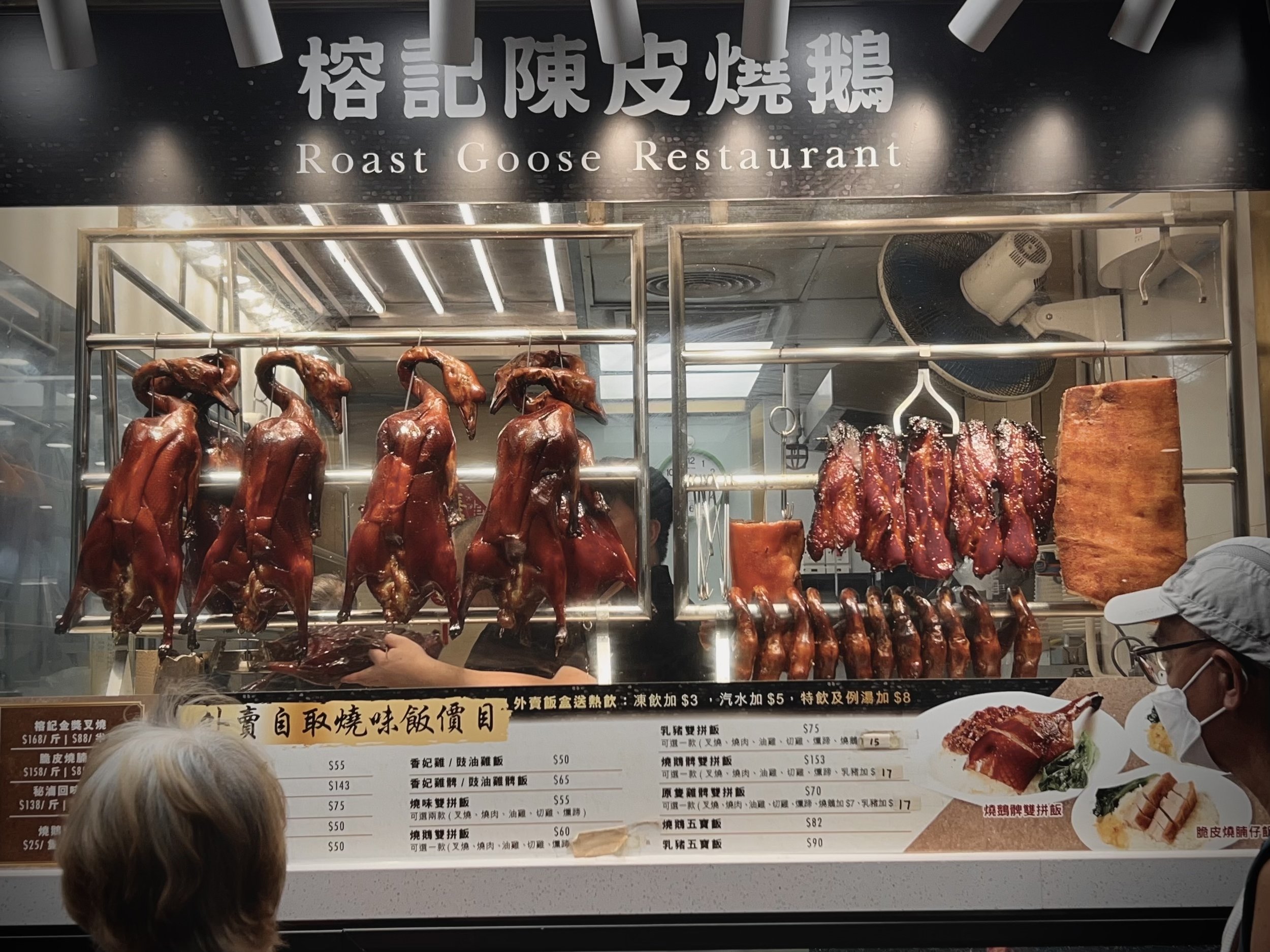
Walk through any wet market or shopping street in Hong Kong and you'll see them in the windows: whole roast geese, lacquered to a deep mahogany, hanging alongside char siu pork and crispy-skinned roast pork. This is siu mei — Cantonese roast meat — and it is one of the cornerstones of Hong Kong food culture. The best version I've had in the city is at Yat Lok in Central, a Michelin-starred roast goose specialist that has been operating since 1957. The goose over rice is the signature order, but I actually prefer the suckling pig myself. It's the kind of meal that costs almost nothing, takes ten minutes, and stays with you for years.
For Western Food: The Globe
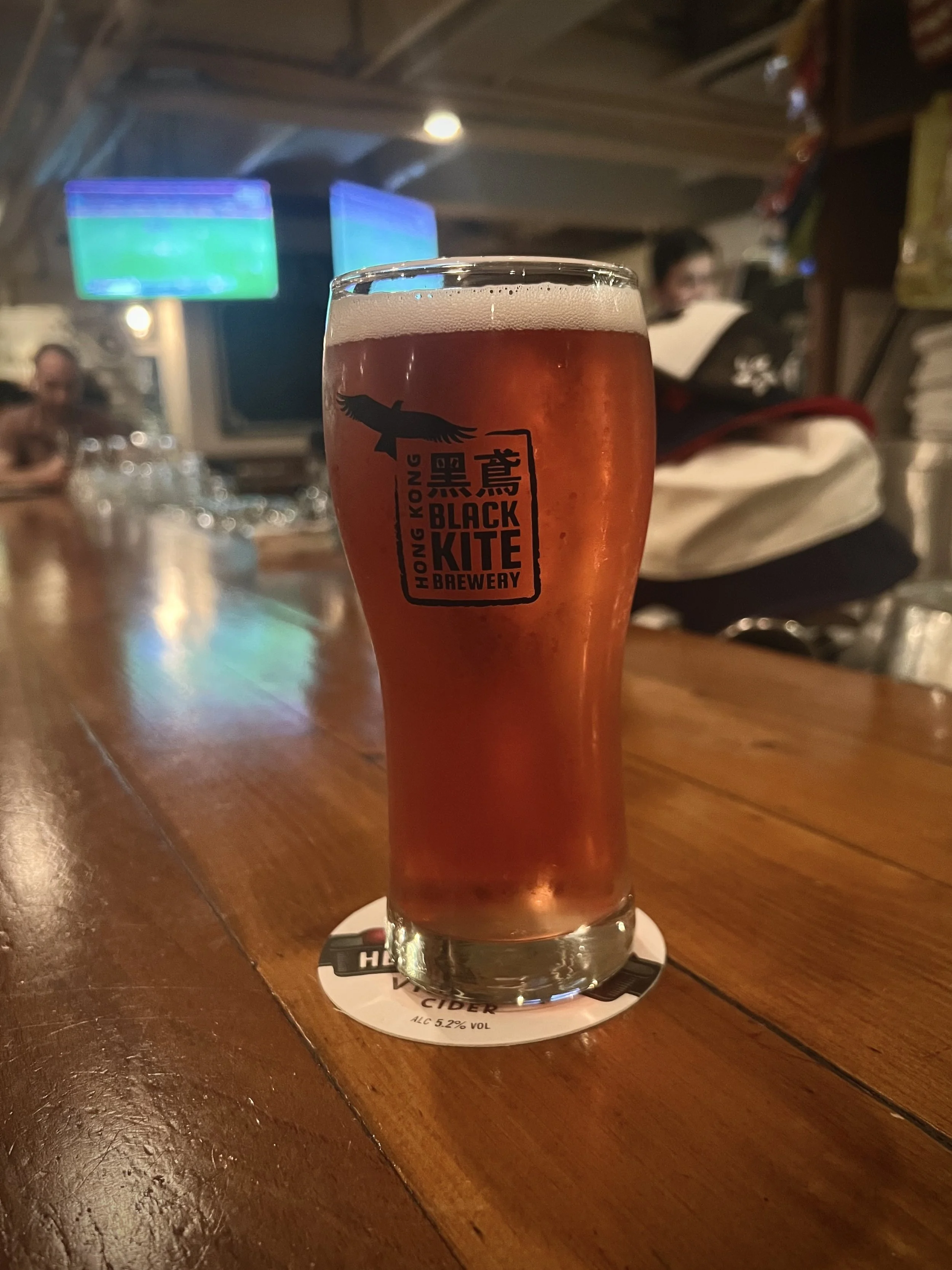
When you want a break from Cantonese cooking — and after a few days of eating your way through the city, you might — The Globe in Central is the place. A classic British pub that has been a fixture of the Hong Kong expat scene for years, it does the staples well: fish and chips, burgers, savory pies and mushy peas. More to the point, it stocks an excellent selection of local Hong Kong craft beers. It's the kind of place you go for one drink and stay for three.
Things to Know Before You Go
Get an Octopus Card
Pick one up at the airport or any MTR station as soon as you arrive and load it with a few hundred Hong Kong dollars. It works on the MTR, buses, trams, ferries, and the Peak Tram, and it's accepted at convenience stores and many shops as well. Fumbling for change on a Hong Kong tram while the line behind you grows is an experience worth avoiding. With an Octopus Card, just tap to pay and you’re good to go.
Getting around
Hong Kong's public transport network is one of the best in the world — clean, reliable, cheap, and extensive. The MTR will get you almost anywhere you need to go quickly, and the Octopus Card makes it seamless. For destinations the MTR doesn't reach, buses and minibuses cover the gaps. Taxis are also plentiful and reasonably priced by international standards, though traffic in the urban core can make them slower than the MTR for short hops.
When to visit
The best time to visit Hong Kong is October through December, when the humidity drops, the skies clear, and temperatures settle into a comfortable range around 20–25°C (68–77°F). Spring (March–May) is also pleasant, though humidity begins to creep up from April onward. Summer (June–September) is hot, oppressively humid, and prone to typhoons — not impossible, but you'll probably be changing your shirt and taking showers multiple times a day. January and February are cool and occasionally chilly, but perfectly manageable.
Visas
Most Western passport holders can enter Hong Kong visa-free for 90 days. Check your specific passport situation before you travel, as conditions can change.
Language
Cantonese is the primary spoken language. English is widely understood in tourist areas, hotels, and restaurants — a legacy of British colonial administration — and most signage is bilingual. You'll get along fine without Cantonese, though a few basic phrases (and a smile) will always be appreciated.